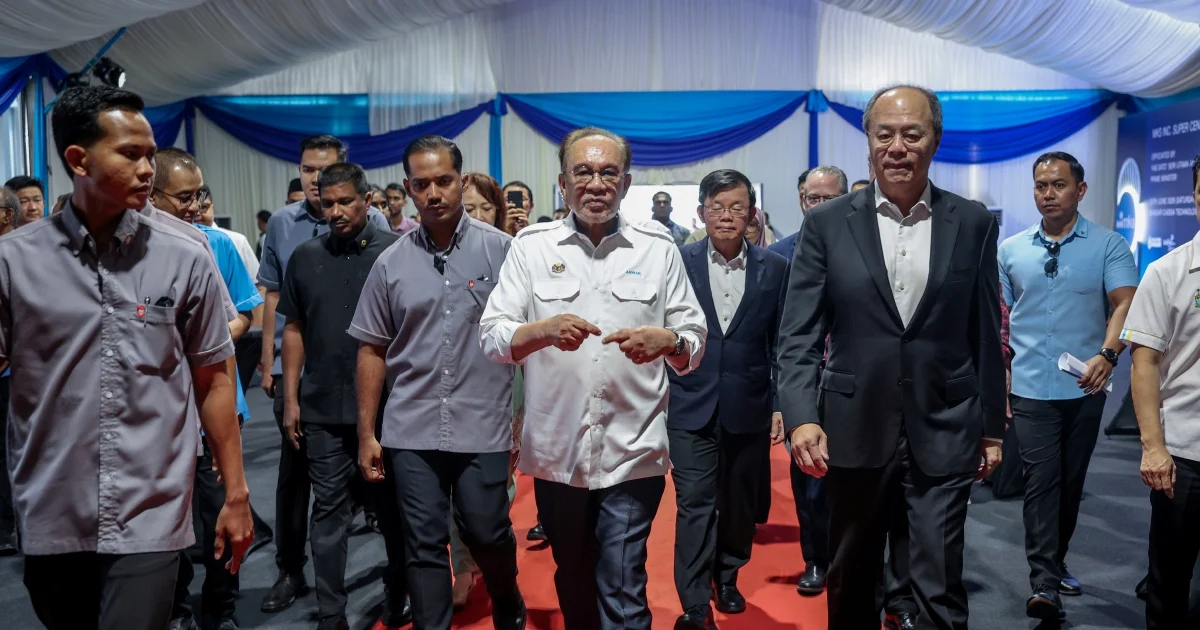
Malaysia is experiencing renewed economic momentum by positioning itself as a trusted partner willing to work constructively with nations across the geopolitical spectrum, Prime Minister Datuk Seri Anwar Ibrahim told business leaders and investors gathered in Batu Kawan. The government's refusal to align exclusively with any single bloc while remaining open to collaboration with all countries reflects a pragmatic diplomatic approach that multinational firms find increasingly attractive in an uncertain global environment.
The Prime Minister's assertion underscores a deliberate strategic recalibration. In an era of intensifying great-power competition and fragmented supply chains, foreign investors and multinational corporations are actively seeking locations that offer political stability and access to diverse markets without risking entanglement in broader geopolitical conflicts. Malaysia's geographical position spanning major shipping routes and its role as a Southeast Asian economic hub make it an especially valuable destination for companies looking to de-risk their operations while maintaining profitable operations.
Anwar's emphasis on neutrality carries particular weight given Malaysia's historical balancing act between different regional and global powers. Throughout the Cold War and since, the nation has maintained formal relationships with both Western and non-Western governments while avoiding formal military alliances that might constrain policy flexibility. This tradition of strategic autonomy appeals to investors who view politically volatile regions as liabilities and seek predictability in their operating environments.
The government's engagement strategy extends beyond diplomatic courtesy. By actively courting investment partnerships with countries representing different economic models and technological capabilities, Malaysia creates pathways for technology transfer, skills development, and integration into competing supply networks simultaneously. Rather than forcing firms to choose sides in global rivalries, Malaysian authorities offer a middle ground where companies from the United States, China, Japan, Europe, and India can establish operations and pursue business interests in parallel.
For Southeast Asian manufacturers and service providers, Malaysia's positioning holds particular significance. As regional competitors including Vietnam, Thailand, and Indonesia also vie for similar foreign direct investment, Malaysia must differentiate itself through something beyond infrastructure or labour costs. A reputation for political stability, diplomatic reasonableness, and genuine non-alignment becomes a critical competitive advantage that justifies higher operational costs or more stringent regulatory compliance.
Investor confidence feeds back into economic expansion in measurable ways. Companies establishing regional headquarters, manufacturing facilities, or research centres bring employment, tax revenue, and knowledge transfer. They also attract ancillary suppliers, service providers, and skilled workers who form the connective tissue of modern industrial ecosystems. When foreign firms view a country as genuinely open and stable across multiple geopolitical scenarios, they commit capital for longer timeframes and deeper integration rather than treating operations as temporary fixtures.
The neutrality positioning also addresses a critical vulnerability many developing nations face. Countries that appear too aligned with any single superpower or bloc invite retaliatory measures from their rivals and become caught in sanctions regimes or trade disputes that devastate domestic economies. Malaysia's explicit commitment to engagement with all major powers, conversely, provides insurance against sudden geopolitical shocks. Investors factor this resilience into their calculations, viewing Malaysia as a hedge against the destabilising effects of broader global conflicts.
Within Southeast Asia specifically, Malaysia's diplomatic balance facilitates regional integration that benefits the entire ASEAN framework. When major powers court Malaysia separately, they often engage with the broader region through Malaysian networks and relationships. This multiplier effect extends investment opportunities and political influence beyond Malaysia's borders while strengthening ASEAN cohesion and collective bargaining power in international forums.
The government's framing also acknowledges workforce and institutional realities. Malaysia's educated, multilingual population and reasonably functional governance infrastructure make it attractive for high-value activities that require cultural competence and regulatory stability. However, these advantages mean little if political instability or perceived alignment with contested agendas frightens away quality investments. By repeatedly affirming neutrality and balanced engagement, Anwar reassures potential investors that domestic political considerations will not arbitrarily reverse course or impose new constraints on business operations.
Looking forward, maintaining this diplomatic equilibrium requires consistent messaging and institutional discipline across government agencies. Ministers, officials, and state-linked enterprises must all signal the same commitment to non-alignment and openness to all serious investors. Any appearance of favouring one country or bloc over others risks undermining the credibility of Malaysia's positioning and inviting competitive poaching by rival Southeast Asian nations that can credibly offer similar stability.
The economic implications extend beyond individual firm decisions. Malaysia's positioning influences capital flows, currency valuations, and risk premiums that affect borrowing costs across the economy. When international credit markets view a country as politically trustworthy and strategically independent, debt becomes cheaper and more abundant, supporting broader development. Conversely, perception of alignment with contentious powers can drive capital outflows and raise borrowing costs even if underlying economic fundamentals remain solid.
For Malaysian policymakers, the challenge lies in translating diplomatic capital into tangible investor returns and job creation. Maintaining neutrality provides the foundation, but only genuine economic competitiveness, transparent institutions, and reliable contract enforcement convert investor interest into sustained growth. Anwar's message that neutrality strengthens confidence requires supporting execution across multiple government domains to deliver on the promise that Malaysia remains genuinely open, stable, and profitable for international business regardless of geopolitical alignments elsewhere.

