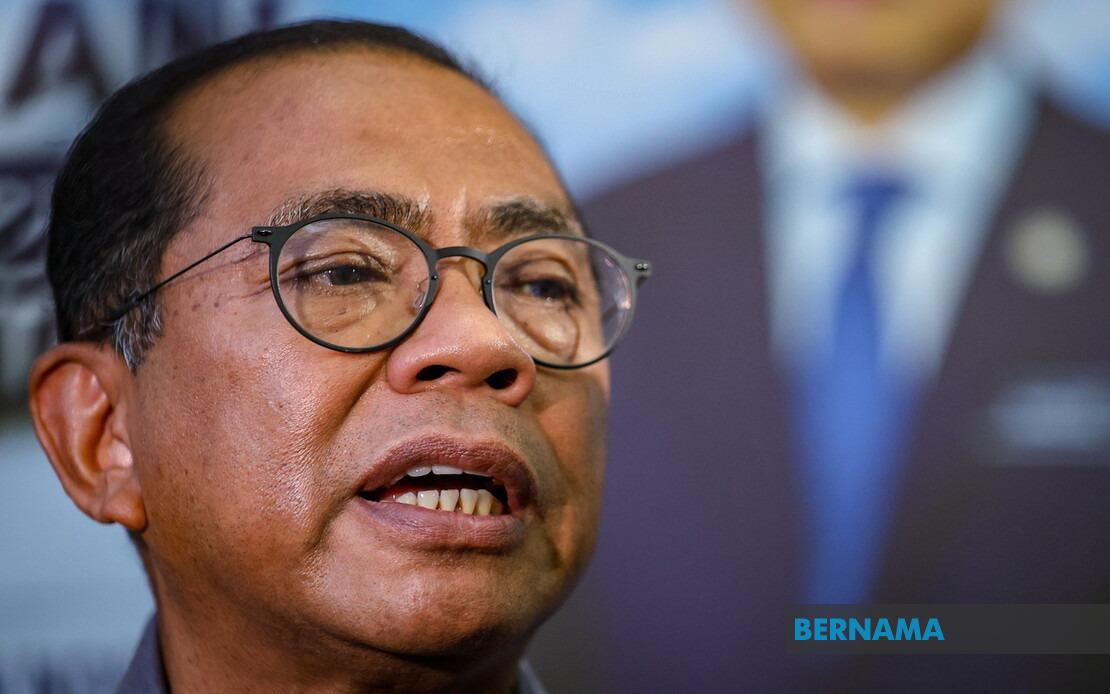
Defence Minister Datuk Seri Mohamed Khaled Nordin touched down at Noi Bai International Airport in Hanoi to begin a two-day official visit centred on broadening military and defence cooperation with Vietnam. The trip represents his inaugural journey to the Southeast Asian nation since taking up his current portfolio, underscoring the importance both governments attach to sustaining and elevating their longstanding defence relationship.
During his stay, Mohamed Khaled is scheduled to hold discussions with Vietnam's Prime Minister Le Minh Hung and Deputy Prime Minister and Minister of National Defence General Phan Van Giang. These high-level meetings provide a platform for addressing strategic defence matters and exploring avenues for expanded collaboration between the two nations' military and security establishments. The involvement of Vietnam's top defence official signals the significance Hanoi places on the engagement, reflecting mutual commitment to cementing ties in a region where security partnerships remain pivotal.
The timing of this visit occurs against the backdrop of Malaysia and Vietnam's ongoing efforts to institutionalise their defence relationship. The two countries renewed their Memorandum of Understanding on defence cooperation in December 2023, a development that reinforces their shared resolve to deepen military engagement beyond ceremonial exchanges. This formal agreement serves as the foundational framework guiding collaborative initiatives ranging from training exchanges to joint exercises and intelligence sharing protocols.
Historically, Malaysia and Vietnam have cultivated robust defence connections rooted in mutual respect and complementary strategic interests. Both nations face similar maritime security challenges in Southeast Asia, particularly regarding territorial waters, freedom of navigation, and regional stability. These shared concerns have naturally drawn their defence establishments closer, fostering regular dialogue and practical cooperation mechanisms that benefit broader regional security architecture.
Mohamed Khaled articulated an ambitious vision for the bilateral relationship, expressing hope that the current visit would catapult defence ties to unprecedented levels. His emphasis on creating fresh opportunities for collaboration suggests Malaysia intends to move beyond transactional exchanges toward deeper substantive partnerships. Such elevation could encompass expanded military personnel exchanges, enhanced technological cooperation, and joint responses to transnational security threats including maritime piracy, human trafficking, and terrorism.
For Malaysia, strengthening ties with Vietnam carries particular strategic weight given the latter's expanding regional influence and sophisticated military capabilities. Vietnam's geography, spanning the South China Sea's eastern approaches, positions it as a crucial player in regional security dynamics. Enhanced cooperation with Hanoi amplifies Malaysia's capacity to address maritime challenges and maintain a balanced approach to great power competition in Southeast Asia. Similarly, Vietnam benefits from Malaysia's experience and perspective on navigating complex regional relationships.
The renewed defence MOU signed in December 2023 reflects both countries' recognition that formalised structures improve cooperation effectiveness. Rather than relying on ad hoc arrangements, institutionalised frameworks enable consistent engagement, streamlined decision-making, and measurable progress in achieving mutual objectives. Such agreements typically outline cooperation areas, establish coordination mechanisms, and create pathways for regular ministerial consultations, precisely the infrastructure needed for sustained strategic partnership.
Regional stability considerations loom large in Malaysia-Vietnam defence cooperation. Southeast Asia confronts multifaceted security challenges ranging from maritime disputes to transnational organised crime and environmental threats. Neither Malaysia nor Vietnam can effectively address these challenges unilaterally; instead, multilateral and bilateral cooperation amplifies each nation's capacity to protect its interests and contribute to collective security. The defence minister's visit signals both governments' commitment to addressing these shared challenges through concrete military-to-military collaboration.
Looking forward, the outcomes from Mohamed Khaled's Vietnam meetings will likely establish parameters for defence cooperation intensity and scope throughout his tenure. Early visits by newly appointed defence ministers typically set strategic trajectories, outlining priorities and demonstrating commitment to key partnerships. If this visit produces tangible initiatives—whether joint training programmes, technology-sharing agreements, or expanded military exchanges—it will signal Vietnam's elevated importance within Malaysia's broader defence strategy.
The broader geopolitical context amplifies the significance of strengthening Malaysia-Vietnam defence relations. Within ASEAN, both nations hold strategic importance as middle powers capable of influencing regional outcomes. Their cooperation contributes to ASEAN cohesion and the association's capacity to maintain centrality in regional architecture amid great power competition. When Malaysia and Vietnam demonstrate commitment to bilateral defence ties, they simultaneously strengthen ASEAN's collective defence and security posture.
For Malaysian defence planners, Vietnam represents both a partner and a source of strategic learning. Vietnam's extensive experience navigating complex great power relationships, managing maritime disputes, and developing indigenous defence capabilities offers instructive lessons for Malaysian policymakers. Conversely, Malaysia's experience in managing religious diversity, regional coalition-building, and economic development provides Vietnam with valuable insights. Such mutual learning, facilitated through defence cooperation, generates benefits extending beyond military dimensions.
The visit also reflects evolving Malaysian foreign policy under Mohamed Khaled's stewardship. By prioritising Vietnam early in his tenure, he signals intention to maintain consistent engagement with significant regional partners rather than permitting defence diplomacy to atrophy. This approach recognises that durable partnerships require sustained attention and regular top-level interaction, particularly when addressing transnational challenges requiring coordinated responses. Vietnam's strategic location and growing capabilities make it an indispensable partner in Malaysia's regional defence calculus.

