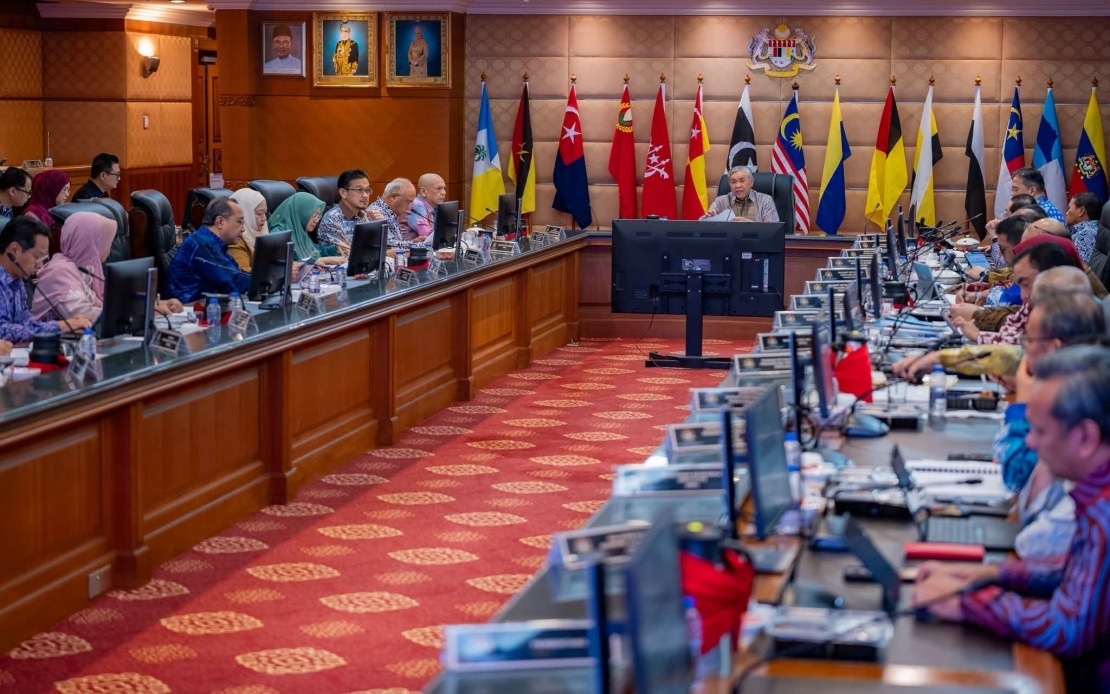
The National Cost of Living Action Council (NACCOL) held its 18th Executive Committee meeting in Putrajaya on Tuesday, unveiling a carefully calibrated approach to managing Malaysia's rice sector that attempts to balance the competing interests of domestic producers and consumers facing inflationary pressures. Chaired by Deputy Prime Minister Datuk Seri Dr Ahmad Zahid Hamidi, the session marked a significant moment in the government's broader effort to address affordability challenges that extend far beyond the supermarket checkout. The central proposal emerging from discussions involves implementing a gradual transition through subsidised rice supplies—a mechanism intended to cushion the shock for lower-income and vulnerable households before more substantial policy adjustments commence.
The administration's thinking on cost-of-living interventions has evolved considerably beyond simply managing retail prices on shelves. Ahmad Zahid articulated a more holistic vision encompassing production efficiency, logistical resilience, dietary diversity, healthcare accessibility, and educational opportunity. This multi-dimensional approach reflects growing recognition that affordability is not a single-issue challenge but rather an interlocking series of economic and social pressures that demand coordinated responses across multiple government portfolios. The council's deliberations recognised that farmers and agricultural producers face mounting operational expenses alongside consumer price concerns—a tension that demands careful navigation to prevent the sector from becoming economically unviable whilst ensuring households can afford essential staples.
One particularly noteworthy outcome involves broadening the Sumbangan Asas Rahmah (SARA) programme to encompass fresh produce beyond its current scope. The initiative would extend assistance to fruits, vegetables, and fresh protein sources—a strategically important expansion that moves government support beyond basic affordability toward nutritional security. This dimension appears especially relevant for Southeast Asian economies grappling with rising non-communicable disease burdens linked to diet-related conditions. By deliberately promoting access to healthier food options among lower-income populations through direct assistance, Malaysia is essentially attempting to address both immediate cost pressures and longer-term public health outcomes simultaneously. The proposal now requires endorsement at the main NACCOL meeting chaired by Prime Minister Datuk Seri Anwar Ibrahim before implementation.
The council recognised that external shocks beyond Malaysia's direct control increasingly threaten domestic price stability and production viability. Geopolitical tensions in West Asia, volatile global commodity markets, and mounting regulatory compliance costs for imported inputs all exert upward pressure on agricultural production expenses. Import compliance requirements, in particular, represent a structural cost burden that cannot be managed through subsidy adjustments alone. The government has committed to sustained monitoring of these international risk factors, indicating awareness that domestic policy solutions alone cannot fully insulate the economy from global instability. This acknowledgment carries particular resonance for Southeast Asian nations whose agricultural sectors remain vulnerable to international supply chain disruptions and commodity price volatility.
Farmer support mechanisms have emerged as a priority focus area, with agencies directed to refine existing programmes targeting agricultural producers alongside assistance for fishermen and other affected groups. This emphasis suggests policymakers recognise that sustainable affordability solutions must address producer viability, not merely retail pricing. Supporting farmers through market access improvements, input cost management, and targeted financial assistance represents a different intervention pathway than subsidy-dependent approaches, potentially building longer-term resilience into the sector.
Healthcare cost management received substantial attention during the session, with discussion of eleven RESET strategy initiatives designed to moderate private healthcare expense growth whilst simultaneously expanding access and treatment options through public systems. This two-pronged approach acknowledges that healthcare affordability encompasses both controlling costs within private markets and strengthening public provision. For Malaysian readers, this initiative carries particular significance given the rapid expansion of private healthcare in urban centres and the corresponding cost pressures on middle-income households previously reliant on subsidised public services. The RESET strategy's emphasis on balancing affordability with service quality and accessibility reflects an evolving policy sophistication.
Education financing also formed a critical component of council discussions, with Ahmad Zahid highlighting that 62,937 Form Six and university students received assistance totalling RM589.6 million across thirteen tertiary education aid schemes during the previous year. This data point underscores both the scale of government tertiary education support and the continued reliance on targeted assistance programmes for cost management. The Deputy Prime Minister's emphasis on ensuring that financial constraints do not obstruct talent development reflects broader recognition that education affordability intersects directly with social mobility and human capital accumulation.
The council's deliberations situate these discrete initiatives within the broader Cost of Living Action Plan 2030—a multi-year framework designed to coordinate interventions across sectors rather than pursuing disconnected policy adjustments. This structural approach suggests government strategy has shifted away from ad-hoc responses toward systemic coordination. The integration of rice policy, food assistance expansion, healthcare cost management, and education financing within a unified planning framework indicates recognition that cost-of-living challenges manifest across interconnected domains requiring coherent rather than fragmented responses. For Malaysian policymakers and regional observers, this integrated planning methodology may offer lessons for managing inflation and affordability across diverse policy areas.
The rice roadmap's design reveals particular nuance in attempting to protect vulnerable populations whilst maintaining producer viability. Rather than imposing price controls that risk production disincentives, the transitional framework via subsidised supplies attempts to create a gradual adjustment period. This approach potentially allows markets and producer economics to shift over time whilst preventing immediate shocks to either household budgets or farm incomes. The distinction matters considerably in agricultural policy debates, where sudden price shifts can trigger widespread farmer distress or production adjustments that generate secondary supply chain disruptions.
Looking forward, the council's work suggests Malaysia is attempting to build a more comprehensive cost-of-living management system that extends beyond traditional price intervention tools. The emphasis on production cost management, supply chain efficiency, dietary quality, healthcare accessibility, and education financing reflects an understanding that modern affordability challenges require multi-sectoral policy integration. As regional economies increasingly grapple with persistent inflation, supply chain volatility, and middle-class cost-of-living pressures, the Malaysian government's approach offers one model for coordinated intervention across diverse policy domains aimed at sustaining both consumer affordability and producer viability.

