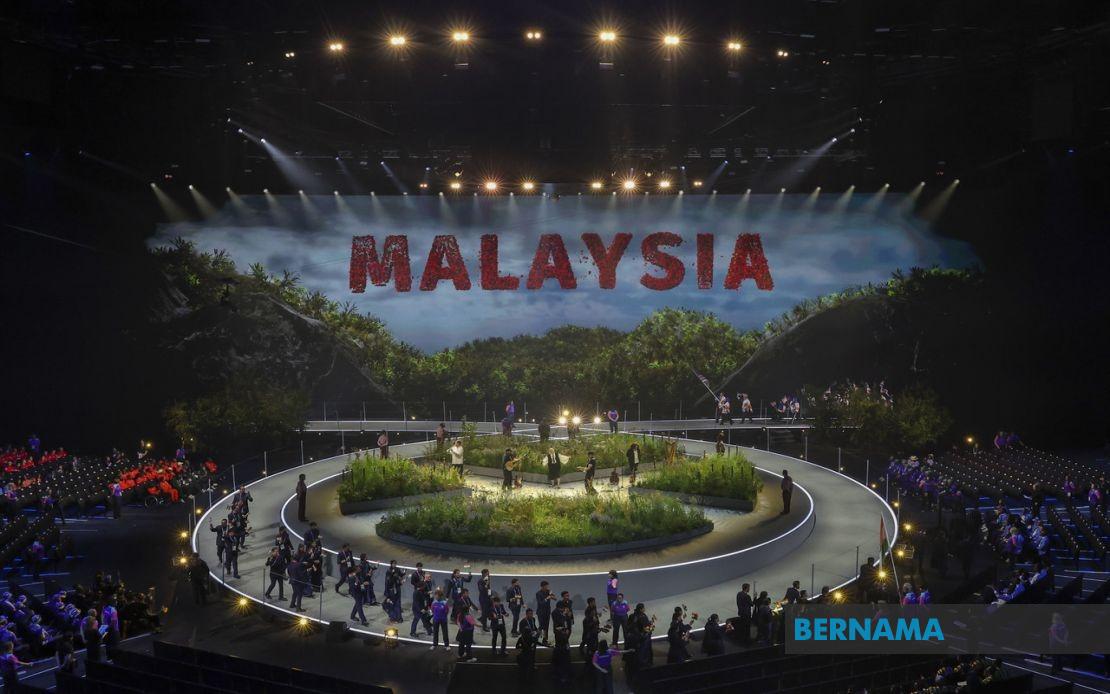
Malaysia's Cabinet has formally recognised the outstanding success of the national contingent at the Glasgow 2026 Commonwealth Games, with senior government officials emphasising the achievement's significance for the country's sporting future. During a post-Cabinet meeting press conference in Putrajaya, Communications Minister Datuk Seri Fahmi Fadzil conveyed the government's congratulations to all athletes who participated in the international competition, noting that their accomplishments have reinforced Malaysia's standing in the Commonwealth Games arena.
The Malaysian team surpassed pre-Games expectations by capturing eight gold medals, three silver medals, and five bronze medals—a haul that significantly exceeded the initial target of five gold medals. This performance marks a watershed moment for Malaysian sport, representing the country's most successful Commonwealth Games campaign since the New Delhi 2010 edition, when the nation secured twelve gold medals. The improvement reflects years of investment in athlete development and sports infrastructure, offering validation for the government's commitment to nurturing homegrown talent and promoting excellence at the international level.
Recognising the tangible contributions of athletes to national pride, the government has allocated RM1.1 million through the Sports Victory Incentive Scheme, commonly known as SHAKAM, to reward the medal-winning athletes. This financial recognition serves a dual purpose: it acknowledges the dedication and sacrifice demanded of elite competitors and establishes a template for future incentivisation of sporting excellence. For Malaysian athletes operating in an increasingly competitive global environment, such schemes provide crucial financial support that can facilitate training, recovery, and preparation for subsequent competitions.
Fahmi emphasised that the collective success achieved in Glasgow carries significance extending far beyond the immediate accolades and medal counts. The minister articulated the government's perspective that the achievements of these athletes function as catalysts for inspiration among the broader sporting community. By demonstrating what disciplined training, strategic investment, and national support can accomplish, the Glasgow contingent sets a benchmark for emerging competitors and younger athletes still developing their careers. This inspirational dimension is particularly important in a nation where sporting pathways remain developing and where international success stories can mobilise grassroots participation.
The timing of this Cabinet recognition also reflects broader policy priorities within the MADANI government framework. The administration's engagement with sporting achievement signals commitment to nation-building through collective endeavours that transcend political divisions. In Malaysia's contemporary context, where sports increasingly serve as unifying national narratives, the government's public celebration of the contingent demonstrates awareness of sport's role in fostering social cohesion and positive national identity. This approach aligns with international trends where governments leverage sporting successes as soft power tools and sources of legitimate national pride.
From a Southeast Asian perspective, Malaysia's Commonwealth Games performance carries competitive implications. The region hosts several emerging sporting nations, and Malaysia's demonstrated capacity to excel provides both competitive pressure and a regional benchmark. Other Southeast Asian countries competing in the Commonwealth Games will observe Malaysia's strategic approach to athlete development and resource allocation, potentially prompting adjustments to their own sporting policies. The competition for regional sporting dominance remains fluid, and performances such as Glasgow 2026 contribute to the evolving hierarchy of sporting prowess across the region.
The allocation of RM1.1 million through SHAKAM reflects structured government thinking about incentive design. The scheme targets financial resources directly to medal-winners, creating clear performance metrics and measurable outcomes. However, such mechanisms also raise considerations about sustainable athlete development beyond immediate reward structures. Countries that achieve sustained excellence typically combine immediate incentives with long-term institutional support—coaching infrastructure, sports science services, and competitive opportunities. Malaysia's continued success will likely depend on maintaining both the incentive schemes and the underlying institutional ecosystems that enable athlete development.
The Commonwealth Games context itself warrants consideration for Malaysian observers. The Games represent one of the world's major multi-sport competitions, second only to the Olympic Games in scope and prestige. For nations like Malaysia that may not dominate Olympic medal tallies, the Commonwealth Games provides a crucial platform for demonstrating sporting capability and generating international recognition. The Glasgow edition offered approximately 140 nations and territories the opportunity to compete, creating a more inclusive competitive environment than Olympic competition. Malaysia's success within this framework underscores the importance of tailoring sporting investments to competitions where national strengths can be maximally leveraged.
Looking forward, the Cabinet's endorsement of the contingent's achievements carries implications for future sports policy prioritisation. Government ministers and officials who witness success tend to maintain or increase investment in successful programmes. The Glasgow performance thus creates momentum for continued resource allocation to sports development initiatives, elite athlete support programmes, and facilities infrastructure. This positive feedback loop—success leading to investment leading to further success—represents an opportunity for Malaysian sport to consolidate gains and establish patterns of sustained competitive excellence across multiple quadrennial cycles.
The broader narrative surrounding Malaysia's Commonwealth Games performance extends beyond medal counts to encompass questions of national capacity, organisational effectiveness, and the returns on public investment in sport. By achieving results that exceeded official targets, the Malaysian contingent demonstrated not merely individual athletic excellence but also the effectiveness of the selection, training, and support systems coordinating the effort. This systemic success offers lessons applicable to other sectors where Malaysia aspires to international competitiveness, suggesting that strategic investment, clear target-setting, and institutional coordination yield measurable results.
As the MADANI government continues its tenure, sports achievements provide accessible platforms for demonstrating governance effectiveness and commitment to national development. The Cabinet's public recognition of the Glasgow contingent therefore serves multiple functions simultaneously—acknowledging athlete effort, incentivising future excellence, projecting national confidence internationally, and affirming the government's engagement with nation-building priorities. For Malaysian readers, the significance extends beyond sporting satisfaction to encompass what the Commonwealth Games success reveals about national capacity and future potential.

