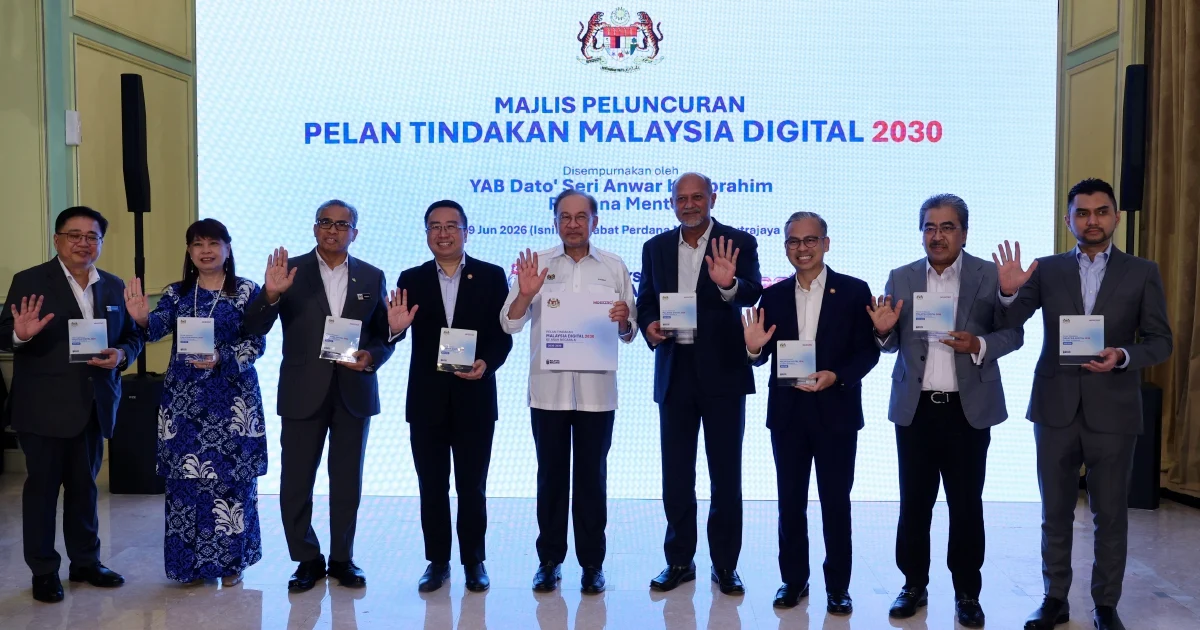
Prime Minister Datuk Seri Anwar Ibrahim launched Malaysia Digital 2030 in Putrajaya, unveiling an ambitious national action plan spanning 2026 to 2030 that fundamentally reorients Malaysia's approach to technological development. The initiative represents far more than incremental policy adjustments; it signals a deliberate, systemic shift in how the country positions itself within the global digital economy. Rather than remaining dependent on imported technology and foreign expertise, Malaysia intends to cultivate homegrown innovation capabilities, establishing itself as a meaningful contributor to the digital ecosystem that increasingly shapes global commerce and geopolitics.
The timing of this strategic pivot reflects broader anxieties across Southeast Asia about technological sovereignty and economic resilience. Nations in the region have historically occupied roles as manufacturing bases or consumer markets for digital services developed elsewhere. Malaysia Digital 2030 challenges this pattern by committing substantial resources and policy attention to building domestic research capacity, nurturing local talent, and creating conditions where Malaysian innovators can develop competitive advantage in artificial intelligence and related fields. This ambition extends beyond mere technological achievement; it touches on questions of national self-determination in an era when digital capabilities increasingly determine economic competitiveness and strategic influence.
The framework encompasses multiple interconnected dimensions rather than focusing narrowly on any single technological frontier. Artificial intelligence represents a central pillar, but the initiative recognizes that meaningful progress requires simultaneous attention to digital infrastructure, workforce development, regulatory environments, and institutional capacity. This holistic approach acknowledges that technological advancement rarely occurs in isolation. Without adequate broadband connectivity reaching underserved communities, talent development initiatives cannot reach their full potential. Without forward-thinking regulatory frameworks that encourage experimentation while protecting public interests, innovative enterprises struggle to scale. The comprehensiveness of the approach suggests policymakers understand these systemic interdependencies.
Workforce transformation emerges as a critical component. Malaysia must develop sufficient numbers of skilled professionals in artificial intelligence, data science, cybersecurity, and related domains to support an innovation-driven economy. Current educational outputs fall short of these demands, particularly at advanced technical levels. The MD2030 framework likely includes commitments to expand computer science curricula, strengthen partnerships between universities and industry, and create pathways for mid-career professionals to acquire emerging technical skills. These investments require sustained commitment and funding, but without them, the nation risks launching innovation initiatives dependent on importing foreign talent at considerable expense.
Private sector engagement proves essential for translating policy intentions into concrete economic outcomes. The government cannot build an innovation ecosystem through public investment alone. Malaysia must attract and retain technology companies willing to establish research centres and innovation hubs within the country. This requires not only competitive tax incentives but also regulatory predictability, strong intellectual property protections, and access to quality talent. Existing multinational technology companies with Malaysian operations may expand their research activities, while startups and scaleups need access to venture capital and mentorship networks that nurture early-stage ventures through difficult growth phases.
Regional positioning constitutes another strategic dimension often overlooked in discussions of digital policy. Southeast Asia represents a market of over 600 million people increasingly embracing digital services. Malaysian companies developing artificial intelligence solutions, fintech platforms, or digital services face opportunities to expand across the region and beyond. Success in these markets amplifies the return on innovation investments and creates powerful network effects. A thriving digital innovation sector generates positive spillovers throughout the economy—attracting talent, creating employment, and strengthening Malaysia's standing within global technology networks.
The transition from technology consumer to technology producer necessarily involves risks and uncertainties. Some initiatives will yield disappointing results. Some startups will fail. Some research projects will not deliver anticipated breakthroughs. Successful innovation ecosystems accommodate failure as part of the learning process rather than treating every unsuccessful venture as evidence of policy failure. Malaysian policymakers must maintain commitment even when individual initiatives produce disappointing outcomes, provided that overall systemic progress remains evident.
International collaboration complements rather than contradicts the emphasis on homegrown innovation. Malaysia can benefit tremendously from partnerships with leading technology nations, universities, and research institutions. Such collaborations accelerate knowledge transfer, expose Malaysian researchers to global best practices, and create opportunities for joint ventures combining Malaysian market understanding with foreign technical expertise. The goal remains building domestic capacity rather than perpetual dependence on external actors, but constructive partnerships accelerate progress toward this objective.
Successfully executing Malaysia Digital 2030 requires sustained political commitment across multiple election cycles and government transitions. Technology policy horizons extend well beyond conventional parliamentary terms, and initiatives launched during one administration may not deliver visible results until subsequent governments hold office. Ensuring continuity despite inevitable political changes represents a persistent challenge for long-term strategic initiatives. Establishing cross-party consensus on digital development priorities and insulating key institutions from short-term political pressures can help achieve the consistency necessary for meaningful progress.
The MD2030 launch signals Malaysian aspirations to participate more actively in shaping the digital future rather than passively consuming technologies developed elsewhere. Whether the nation succeeds in achieving its ambitious objectives depends not on the eloquence of policy announcements but on sustained investment, institutional capacity, talent development, and private sector participation over the coming years. The strategic direction appears sound; execution will determine whether Malaysia's digital 2030 vision transforms from aspiration into tangible economic reality.

