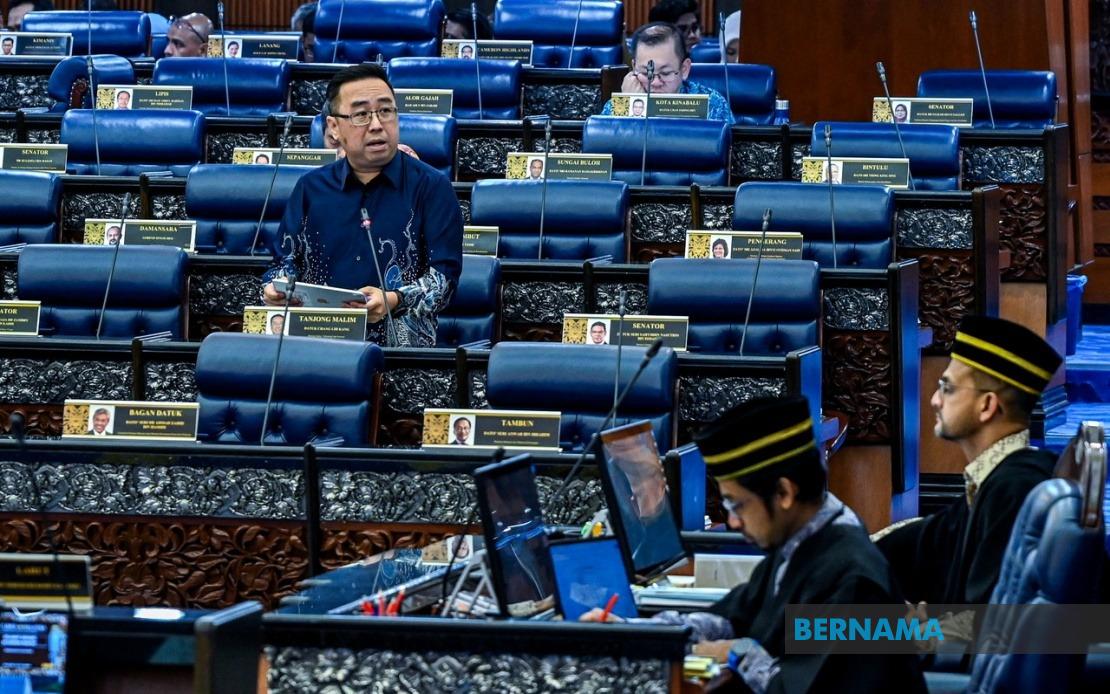
Malaysia is positioning itself to launch homegrown advanced semiconductor packaging technology into commercial production within the next two years, following a targeted investment from the Malaysia Science Endowment (MSE) programme. The government's strategy centres on a RM185 million pilot initiative designed to transform laboratory-stage research into market-ready solutions, according to statements made to the Dewan Rakyat by Science, Technology and Innovation Minister Datuk Chang Lih Kang. This carefully orchestrated transition reflects a broader push to elevate the country's role in the global semiconductor supply chain beyond basic assembly operations.
The pilot project brings together five local companies alongside government institutions in a consortium structure intended to collectively develop and refine the advanced packaging capabilities. Rather than allocating funds as straightforward government contracts, MSE is channelling the RM185 million as grants to systematically advance the technology's maturity level. The funding specifically targets elevating the Technology Readiness Level (TRL) from stage 5, which indicates research is moving beyond laboratory proof-of-concept, to stage 9, which designates the technology as ready for full commercial deployment. This structured approach ensures that the technology reaches genuine market-readiness before industry handover occurs.
The two-year capacity-building window serves multiple strategic objectives beyond simply perfecting the technology itself. During this period, participating Malaysian companies will undergo intensive training and knowledge transfer in advanced packaging operations, developing the manufacturing expertise and supply chain management capabilities required to operate competitively at global standards. This focus on internal skill development distinguishes the programme from initiatives that might simply import foreign technology or outsource critical operations. By embedding technical capability within local firms, the government aims to create sustainable competitive advantage rather than temporary advantage dependent on continued subsidies.
Minister Chang explicitly articulated the government's determination to transition the project to full industry self-sufficiency after the initial two-year phase concludes. Once the technology achieves TRL 9 status and demonstrates commercial viability, complete responsibility passes to the participating companies, who must then independently secure customer contracts and arrange their own financing for further scaling and production expansion. This deliberate shift away from government support prevents what might otherwise become chronic dependence on public funding and ensures that only genuinely viable commercial applications proceed to large-scale manufacturing. The approach reflects international best practice, where government support typically focuses on the most uncertain and capital-intensive early stages of technology development.
The strategic context for this investment extends well beyond packaging technology itself. The semiconductor industry globally is experiencing fundamental transformation, with advanced packaging increasingly recognised as a critical competitive frontier separate from and equally important as chip design and fabrication. Malaysia's existing semiconductor ecosystem, which has historically concentrated on assembly and testing of imported components, faces both challenge and opportunity. By developing local advanced packaging capabilities, Malaysia can capture substantially higher value-added activities while simultaneously reducing vulnerability to supply chain disruptions that have periodically constrained global semiconductor availability.
The technology programme explicitly targets applications in several high-growth sectors that are reshaping global technology infrastructure. Artificial intelligence systems, data centre infrastructure, high-performance computing applications, intelligent automotive systems, fifth-generation mobile networks, and emerging quantum computing platforms all depend critically on advanced packaging solutions that can manage power delivery, thermal management, and signal integrity at unprecedented scales and speeds. By positioning Malaysian companies to serve these expanding markets, the initiative creates long-term revenue streams while contributing to national technological sovereignty.
The consortium approach embedded within the pilot project merits particular attention, as it represents a deliberate policy choice to foster collaboration rather than competition during this critical development phase. By requiring five local companies and government institutions to work together toward shared objectives, the structure encourages knowledge-sharing, enables risk distribution across multiple organisations, and builds interconnected networks that can persist and develop beyond the formal pilot period. This collaborative framework differs markedly from approaches that might simply award contracts to individual companies, and reflects growing international recognition that complex technological challenges often benefit from collective problem-solving.
Minister Chang contextualised the advanced packaging initiative as integral to Malaysia's broader semiconductor sector transformation strategy. Rather than remaining confined to lower-value assembly operations where labour costs and regulatory compliance increasingly challenge competitiveness, the country aims to shift toward technology-intensive activities requiring advanced manufacturing capability, intellectual property development, and continuous innovation. The MSE programme exemplifies this strategic redirection, investing government resources precisely where private industry typically exhibits most caution—in the transition from proven technology to scaled commercial production, where technical risk remains significant but substantial capital requirements deter venture investment.
The timing of this initiative responds to broader global dynamics reshaping semiconductor manufacturing geography. Major semiconductor-consuming regions, including the European Union and the United States, have implemented policies designed to diversify supply chain concentration away from Taiwan and South Korea. Malaysia, benefiting from proximity to regional demand centres, established semiconductor infrastructure, and supportive policy environments, represents an attractive location for companies seeking to develop alternative sourcing options. Advanced packaging capabilities represent precisely the type of specialised, technology-intensive activity that attracts high-value manufacturing investment.
The programme's emphasis on developing local intellectual property and technological capabilities extends beyond immediate commercial returns. As Malaysian companies gain expertise in advanced packaging processes, they simultaneously build organisational capabilities that facilitate movement into related semiconductor fields, from interconnect technology to specialised thermal management solutions. These capabilities accumulate within local firms and institutions, creating foundation for sustained innovation independent of future government support.
Successful commercialisation of this technology would represent a significant milestone in Malaysia's semiconductor sector evolution. International precedent demonstrates that countries developing advanced packaging expertise often leverage this capability to attract higher-value semiconductor manufacturing investment and expand into related technology domains. The two-year development window, while aggressive, aligns with international benchmarks for technology maturation when adequate funding and focused effort are mobilised. The explicit commitment to industry handover and self-sufficiency distinguishes this programme from perpetual government support schemes, suggesting realistic expectations about both timeline and eventual outcomes.

