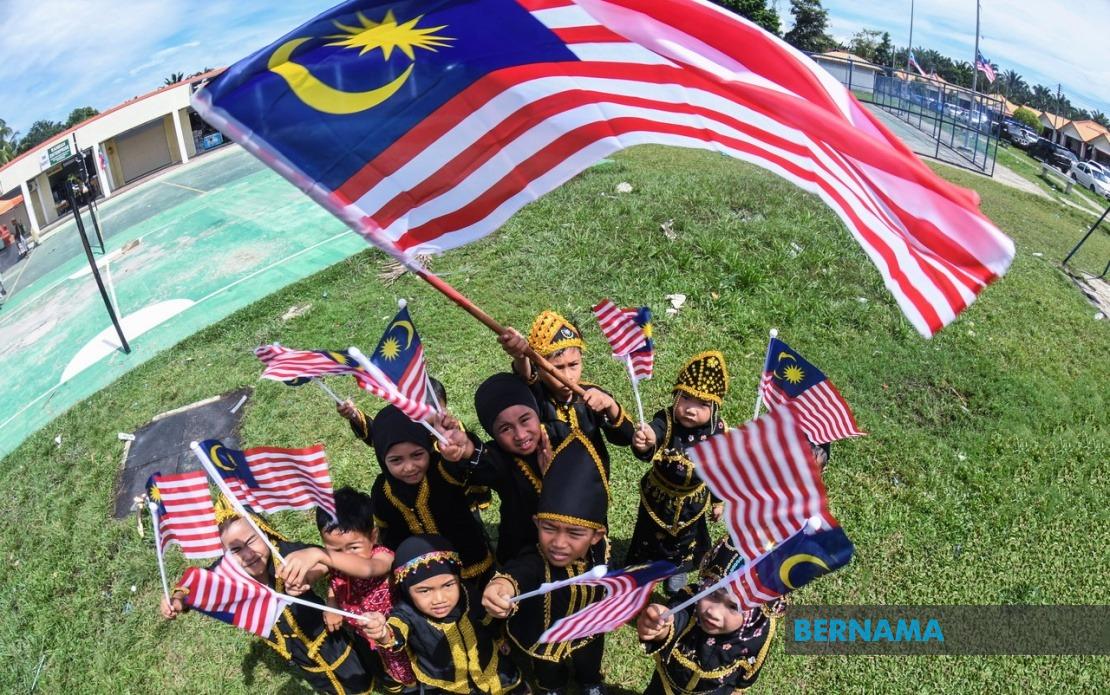
The forthcoming launch of Malaysia's 2026 National Month and Fly the Jalur Gemilang campaign reflects a notable shift in how the nation approaches its most significant patriotic observances. Rather than the expansive public gatherings that characterised celebrations in recent years, authorities have opted for an understated yet symbolically rich ceremony scheduled for Sunday at the Ministry of Health Training Institute Sultan Azlan Shah in Tanjung Rambutan, Ipoh. Prime Minister Datuk Seri Anwar Ibrahim is expected to officiate the event beginning at 10 am, with the proceedings broadcast across multiple platforms to maximise reach despite the scaled-down physical footprint.
This departure from precedent carries practical and philosophical significance. The Information Department's Communications and Community Development Division director Muhammad Najmi Mustapha explained that the decision reflects awareness of contemporary global realities, specifically the energy supply crisis affecting nations worldwide and the destabilising impact of ongoing conflicts in West Asia. By shifting from the open-air spectacles held in Muar, Johor last year and Cyberjaya in 2024, the government aims to demonstrate fiscal prudence without sacrificing the essence of national celebration. The move represents a maturation in how Malaysia recalibrates public festivities during periods of economic uncertainty, a challenge resonating across Southeast Asia as nations grapple with inflation and energy costs.
The indoor venue format necessitates creative distribution of the celebratory spirit beyond the physical gathering. Organisers have leveraged broadcast infrastructure spanning Radio Televisyen Malaysia and the Malaysian National News Agency, alongside digital streaming on Merdeka360's Facebook Live page and the Ministry of Communications' platforms. This multimedia approach ensures that Malaysians across all states can participate in the ceremonial moment synchronously, potentially deepening the collective experience despite geographical dispersal. The strategy underscores how modern patriotic expression increasingly depends on technological intermediaries, transforming national celebrations from place-based events into distributed digital phenomena.
Central to sustaining patriotic momentum throughout 2026 is the continuation and expansion of the '1 Rumah 1 Jalur Gemilang' campaign, which encourages individual households to display the national flag. Introduced several years prior, this grassroots initiative has evolved significantly by incorporating two newly established clusters focused on houses of worship and sports organisations. Combined with the existing seven clusters spanning education, higher education, health, security, community engagement, industrial sectors, and government agencies, the programme now encompasses virtually all institutional and domestic dimensions of Malaysian society. This expansion reflects an implicit acknowledgement that national patriotism flourishes when citizens perceive flag-flying and national sentiment as organic expressions across diverse social contexts rather than top-down impositions.
The thematic framework anchoring these celebrations carries particular resonance for Malaysian policymakers and development advocates. The chosen rubric 'Malaysia MADANI: Kesejahteraan Dinikmati' (Malaysia MADANI: Shared Prosperity Enjoyed), announced by Communications Minister Datuk Seri Fahmi Fadzil, explicitly links patriotic sentiment to tangible welfare improvements and inclusive economic outcomes. This framing suggests that contemporary Malaysian nationalism increasingly emphasises substantive benefits—healthcare access, educational advancement, economic participation—rather than symbolic pageantry alone. For regional observers, the theme reflects how Southeast Asian nations are recalibrating nationalism to address citizen expectations around governance quality and equitable resource distribution, a significant departure from purely ceremonial nationalism.
The digital mobilisation strategy coordinating the campaign across social media platforms represents another evolution in patriotic expression. By encouraging Malaysians to adopt the Jalur Gemilang as profile pictures and share content using designated hashtags—#HKHM2026, #MalaysiaMADANI, #KesejahteraanDinikmati, and #Merdeka360—authorities harness voluntary peer-to-peer amplification of national messages. This decentralised approach contrasts with traditional top-down communication, allowing individual citizens to become custodians and propagators of national sentiment within their personal networks. For youth particularly, whose engagement with nationalism increasingly occurs through digital channels, this methodology proves more authentic than institutional appeals.
The timing of these celebrations surrounding National Day on August 31 and Malaysia Day in September carries particular significance given Malaysia's complex federal composition and the historical relationship between different states and the federation. By emphasising modest yet vibrant commemoration at Dataran Putrajaya, organisers signal that national unity need not depend on grandiose displays. Instead, the framework encourages distributed, community-level manifestations of patriotism facilitated through the flag-flying campaign and digital participation. This decentralisation proves especially valuable in a nation where regional identities, state politics, and federal structures sometimes create competing loyalties.
The economic implications of scaling back physical celebrations merit consideration beyond mere cost savings. Modest events reduce infrastructure demands, environmental footprints, and logistical burdens on host cities, allowing resources to flow toward substantive development initiatives. Simultaneously, the approach acknowledges that sustained patriotism derives less from spectacular one-off events than from consistent institutional performance and citizen welfare improvements. This reorientation aligns with evolving thinking across the region regarding sustainable governance and public resource allocation.
From a Southeast Asian perspective, Malaysia's approach offers lessons regarding how mid-income nations navigate patriotic expression during periods of economic constraint. The emphasis on institutional participation across health, education, security, and community sectors ensures that national sentiment becomes embedded within everyday governance structures rather than confined to ceremonial moments. This embedding proves particularly valuable when economic pressures tempt citizens toward cynicism regarding national institutions. By inviting these institutions to actively participate in flag-flying campaigns and national celebrations, authorities reinforce their role in delivering Malaysia MADANI's promised prosperity.
The expansion of the flag campaign to encompass houses of worship and sports organisations reflects sophisticated understanding of how contemporary Malaysians construct social identity through multiple overlapping communities. Rather than assuming patriotism flows vertically from state to citizen, this approach recognises that individuals experience belonging through religious congregations, athletic associations, educational institutions, and workplace communities. By encouraging patriotic expression within these trusted social contexts, authorities leverage existing social capital and peer influence networks to sustain national sentiment organically.
Looking toward the August 31 National Day observance at Dataran Putrajaya, the modestly vibrant scale promises to maintain dignified commemoration while respecting economic realities. This calibration represents a calculated choice to preserve ceremony's meaningfulness whilst avoiding the spectacle that can ring hollow when citizens struggle with cost-of-living pressures. The decision implicitly acknowledges that patriotism in 2026 proves more durable when it coexists with visible government attention to material welfare and economic inclusion.
The broader narrative emerging from these planning decisions suggests Malaysian governance is recalibrating how it cultivates national sentiment for an audience increasingly sophisticated about reconciling patriotic expression with pragmatic assessment of institutional performance. The emphasis on patriotism nurtured through distributed participation, institutional integration, and explicit linkage to welfare outcomes represents a maturation beyond ceremonial nationalism. Whether this approach successfully sustains patriotic engagement while managing economic constraints will provide important evidence regarding Southeast Asian approaches to national identity in an era of fiscal pressure and digital mediation.

