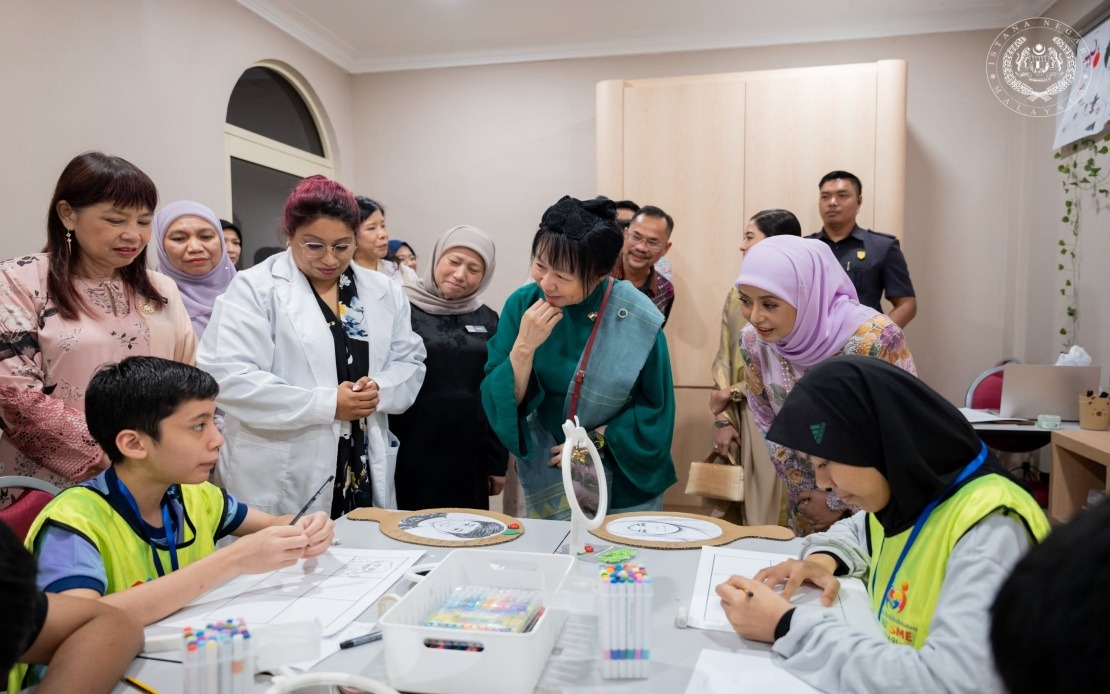
The visit of Singapore First Lady Jane Ittogi Shanmugaratnam to the Bangi Autism Service Centre in Malaysia on July 14 marked a significant moment of regional collaboration on social welfare matters. Accompanying her was Her Majesty Raja Zarith Sofiah, Queen of Malaysia, alongside other senior Malaysian officials, in what formed part of the broader state visit by Singapore President Tharman Shanmugaratnam to the country. The engagement underscored how neighbouring nations in Southeast Asia are increasingly using high-level diplomatic visits to highlight shared priorities in disability care and social development.
The Bangi Autism Service Centre, situated in the Klang Valley region, served as the venue for this diplomatic encounter, with Jane Ittogi being formally received by Raja Zarith Sofiah upon arrival. Also in attendance was Tunku Tun Aminah Sultan Ibrahim, along with a delegation that included Prime Minister's wife Datuk Seri Dr Wan Azizah Wan Ismail, signalling the Malaysian government's commitment to elevating autism support services within national discourse. The presence of Women, Family and Community Development Minister Datuk Seri Nancy Shukri, Deputy Minister Lim Hui Ying, and senior officials from the Social Welfare Department demonstrated that autism advocacy occupies a substantive position in Malaysia's social policy agenda.
During their tour of the facility, the visitors gained comprehensive exposure to the centre's operational model and therapeutic offerings. They examined the Activities of Daily Living Room, where individuals with autism develop essential self-care competencies, visited the Occupational Therapy Room where rehabilitation strategies are implemented, and observed gymnasium sessions that promote physical health and development. This exposure allowed the First Lady of Singapore to witness firsthand how Malaysia is structuring its approach to autism intervention, potentially informing future bilateral dialogue on best practices and programme design.
The statistical backdrop to this visit carries particular weight for understanding Malaysia's evolving response to autism spectrum disorder. Women, Family and Community Development Minister Nancy Shukri disclosed that 93,199 individuals with autism had been formally registered with the Social Welfare Department as of June, a figure that underscores the substantial scale of the population requiring specialised services across the country. Notably, Shukri projected that this registration number would likely climb further, driven by heightened public awareness campaigns and expanding diagnostic capacity within the healthcare system. This trajectory reflects a maturing recognition within Malaysia that autism is not a marginal health concern but a mainstream policy priority demanding sustained resource allocation.
The infrastructure supporting autism services in Malaysia reflects innovative partnership models that blend state provision with civil society expertise. The Bangi Autism Service Centre itself operates through a structured collaboration between government agencies and non-governmental organisations, specifically the National Autism Society of Malaysia, which brings grassroots advocacy experience, and the Damansara Damai Community-Based Rehabilitation Centre, which contributes localised therapeutic delivery. This arrangement mirrors international trends toward public-private partnerships in disability services, allowing governments to leverage specialist knowledge and operational flexibility that NGOs possess while maintaining overall strategic direction.
From a bilateral perspective, the visit carried symbolic importance in demonstrating how Malaysia and Singapore, despite being separate nations with distinct healthcare systems, recognise common ground in confronting developmental disabilities. Singapore, with its advanced healthcare infrastructure and high diagnostic prevalence of autism, has experienced years ahead of Malaysia in developing comprehensive support ecosystems. By facilitating Jane Ittogi's exposure to Malaysian programmes, both governments signal willingness to exchange knowledge, compare approaches, and potentially collaborate on research or training initiatives that could benefit both populations. Such engagement reflects mature diplomacy that extends beyond trade and security into the human development sphere.
The timing of this engagement within a presidential state visit also sends a message about how autism and family welfare have secured elevation within highest-level diplomatic protocols. Rather than confining such visits to ceremonial state functions or economic forums, the inclusion of a centre for individuals with autism demonstrates that both governments view disability inclusion and social welfare as matters worthy of vice-regal and first-lady attention. This positioning may help normalise autism in public conversation and signal to service providers, families, and affected individuals that their concerns receive validation at the highest political levels.
For Malaysia specifically, the visit carries implications for domestic policy momentum. With registered autism numbers exceeding 93,000, the nation faces sustained demand for screening services, therapeutic interventions, educational accommodations, and long-term community support. The public visibility afforded by the presence of the Queen and Singapore's First Lady at a dedicated autism centre may reinforce the case for continued budgetary investment and legislative development in this area. It also provides an opportunity to highlight the effectiveness of partnership models that combine state capacity with NGO specialisation, potentially influencing how future social service infrastructure is designed and financed.
The nature of the facility itself—with its focus on activities of daily living, occupational therapy, and gymnasium-based development—reflects an international consensus that autism support must be multidimensional. Rather than narrowly treating autism as a clinical diagnosis to be medicalised, the Bangi centre's approach emphasises skill-building, independence promotion, and integrated community participation. This philosophy aligns with contemporary disability support thinking across developed economies, where the emphasis has shifted toward enabling individuals to participate meaningfully in employment, education, and social life rather than segregating them into specialised institutions.
The approximately 11:30 am conclusion of the visit, though brief in duration, accomplished substantive objectives. Both nations' representatives gained operational understanding of current service delivery models, senior Malaysian officials received international validation of their policy directions, and the public received visible evidence of high-level political commitment to disability inclusion. Such visits, while modest in scale, accumulate into broader cultural shifts where autism transitions from being viewed as a private family burden to a public health priority commanding government attention and international engagement.

