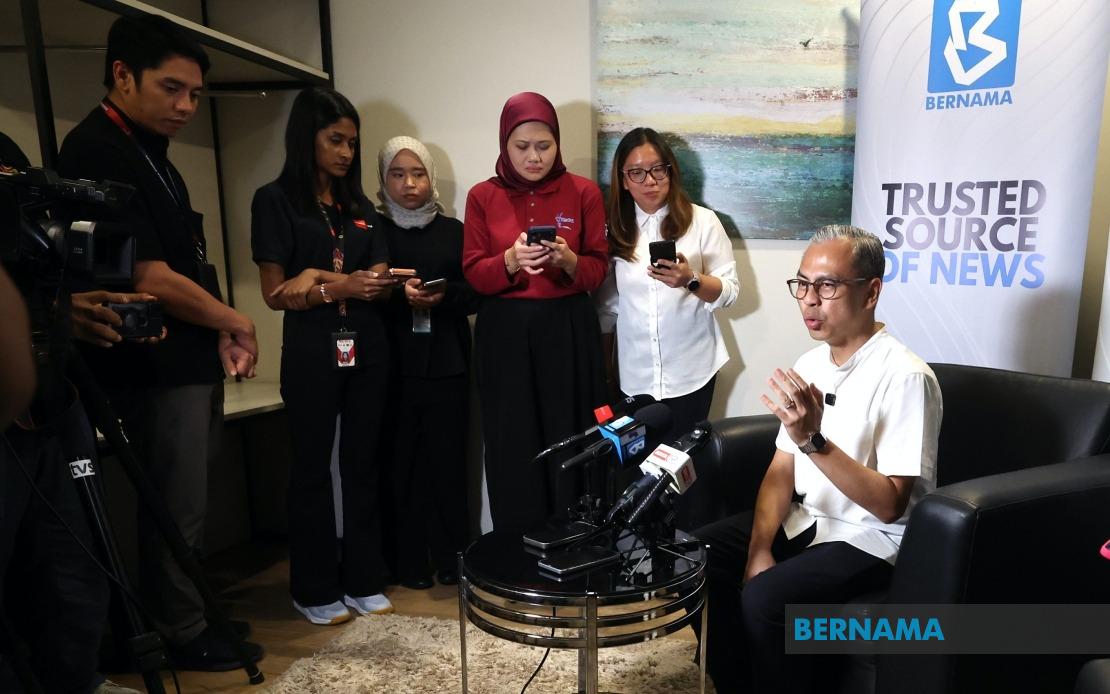
The Malaysian Media Council requires substantial institutional strengthening to function effectively as the country's primary self-regulatory authority for media standards and ethical conduct. Speaking during a visit to the Malaysian National News Agency operations centre in Johor Bahru on July 7, Communications Minister Datuk Fahmi Fadzil outlined the government's commitment to supporting the nascent council during its formative years while simultaneously pushing for expanded membership across traditional and digital media sectors.
Fahmi's remarks come amid efforts to establish a more cohesive framework for managing media-related disputes and complaints. The government has committed to providing active support to accelerate the council's development, recognising that as a newly formed body, it requires institutional resources and administrative backing to establish credibility and operational capacity. This hands-on approach reflects concerns that without adequate foundational support, the council risks remaining a symbolic body lacking teeth or influence within the competitive media landscape.
Central to the minister's vision is the expansion of the Malaysian Media Council's membership base beyond traditional print and broadcast organisations. By encouraging greater participation from established media houses, the council can address industry-wide issues through collaborative self-regulation rather than relying solely on government intervention. This approach theoretically protects editorial independence while maintaining professional standards, a balance that Malaysian media has struggled to achieve amid periodic tensions between press freedom and regulatory oversight.
Prime Minister Datuk Seri Anwar Ibrahim reinforced this framework by announcing that complaints against journalists from recognised media organisations would no longer trigger automatic government action. Instead, such grievances must first be channelled through the Malaysian Media Council, creating a buffer between politicians and journalists. This mechanism aims to prevent arbitrary investigations or prosecutions, addressing longstanding concerns that media practitioners have faced disproportionate legal pressure in previous administrations.
The inclusion of social media platforms within the council's remit represents a significant expansion of the regulatory scope. Fahmi identified a critical gap in how digital platforms moderate content, noting that most operate under guidelines developed without consideration of Malaysian cultural sensitivities, religious boundaries, or local regulatory contexts. This mismatch has created instances where graphic or sensitive content circulates unchecked—he cited a recent Banting incident where details of a stabbing victim and police investigations were disseminated widely across social platforms despite obvious public interest restrictions.
The vulnerability of Malaysian audiences to uncontextualised or inflammatory content shared on social media has become increasingly apparent, particularly during politically sensitive periods or when content involving minors is involved. Unlike traditional media organisations that employ editorial standards and employ trained journalists, social media platforms operate on algorithmic promotion systems that prioritise engagement over responsibility. Fahmi's push for these platforms to join the Malaysian Media Council, should they choose to, signals recognition that contemporary media regulation cannot ignore the role of Facebook, TikTok, WhatsApp, and similar channels in shaping public discourse.
However, persuading multinational social media corporations to participate in a Malaysian self-regulatory council presents formidable challenges. These companies typically resist government involvement in content moderation and may view joining the council as setting a precedent for deeper state intervention. They argue that their global community standards supersede local preferences, though this position creates friction with governments worldwide seeking culturally appropriate content moderation.
The Malaysian Media Council initiative also addresses Malaysia's standing in international media freedom assessments. The country has experienced declining rankings in global indices such as Reporters Without Borders' Press Freedom Index, partly due to perceptions of regulatory pressure on journalists and concerns about editorial independence. Fahmi acknowledged that demonstrating genuine self-regulatory capacity through the council could improve Malaysia's international profile by showing that the industry polices itself rather than operating under state surveillance.
The success of this model depends critically on whether the Malaysian Media Council develops genuine independence from political influence. History demonstrates that self-regulatory bodies in developing democracies often become captured by either industry interests or government pressure. The council must navigate between legitimising its authority among media practitioners—many of whom remain sceptical of government-backed institutions—while demonstrating to the public and international observers that it represents more than a cosmetic exercise.
For Malaysian news organisations and digital publishers, the implications are substantial. Joining the council creates both accountability mechanisms and protections, potentially offering journalists recourse to an industry body rather than facing legal action through criminal statutes or defamation suits. Yet participation also implies acceptance of ethical standards and disciplinary processes, which some independent operators may resist. The tension between autonomy and accountability will define how the council evolves.
The broader regional context adds urgency to Malaysia's regulatory rethinking. Across Southeast Asia, governments grapple with balancing press freedom, national security concerns, and social harmony in increasingly digitalised societies. Malaysia's approach—attempting to shift responsibility from government agencies to industry self-regulation—offers a potential model, though success remains uncertain. Thailand, Indonesia, and Singapore have attempted similar initiatives with mixed results, suggesting that institutional design and genuine independence matter enormously.
Fahmi's emphasis on the Malaysian Media Council as a vehicle for improving media ethics and governance reflects contemporary realities that no single government agency or media owner can effectively moderate the modern information ecosystem. Social media platforms, news websites, traditional broadcasters, and digital-native publishers operate simultaneously, creating a complex landscape where outdated regulatory approaches fail. Whether the Malaysian Media Council can adapt sufficiently to manage this complexity while maintaining independence and credibility remains the central question facing Malaysia's media governance going forward.

