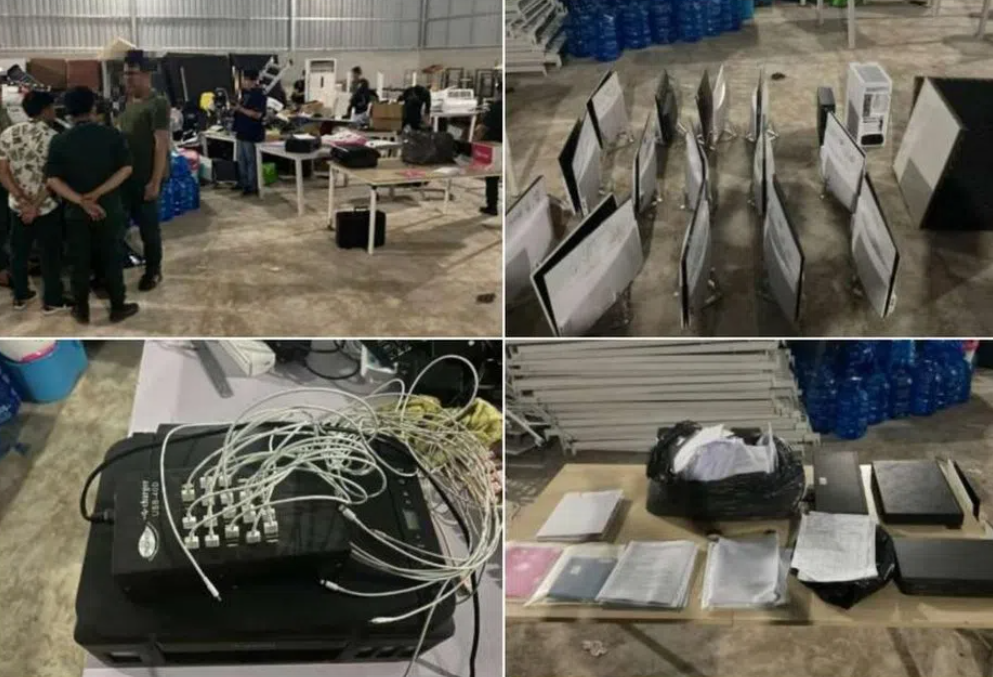
A Malaysian man has been jailed for his involvement with a major organised crime syndicate operating from Cambodia, despite his spectacularly brief tenure in the role. Yip Chee Ming, 30, was sentenced on Friday, June 26, to 16 months and two weeks' imprisonment after pleading guilty to membership in an organised crime group. His case highlights the expanding network of scam operations across Southeast Asia and Singapore's enforcement response to transnational fraud networks.
Yip's journey into the criminal underworld began with a casual conversation. In October 2024, a friend identified as Jason approached him about lucrative work with a scam operation based in Phnom Penh, Cambodia. The opportunity seemed promising enough that both agreed to investigate further. They were added to a Telegram group by Tang Soon Wah, identified as one of the syndicate's key organisers, who personally invited them to visit the operation's compound in Cambodia to assess the setup before committing fully.
The scam organisation itself was a sophisticated enterprise structured with multiple layers of responsibility. The Phnom Penh compound, housed in a five-storey building with security guards stationed at the entrance, operated with clear hierarchical divisions. Leadership handled overall criminal operations and compensation structures, supervisors and trainers managed the callers directly, and a dedicated money laundering unit converted criminal proceeds into cryptocurrency. The syndicate maintained at least 78 suspected members across various roles, indicating a substantial criminal infrastructure operating in plain sight.
Yip and Jason returned to Malaysia to consider their options before committing, but eventually travelled back to Cambodia on November 21, 2024. The next day, Yip commenced his employment, tasked with impersonating bank officers during telephone calls targeting Singaporean victims. The compensation package was enticing—US$1,800 monthly in cryptocurrency plus one per cent commission from each person successfully defrauded. For comparison, this represented substantially more than many legitimate jobs in the region at the time.
However, Yip proved wholly unsuited to the deception work. Despite receiving detailed scripts from his trainers and coaching on how to adopt a convincing Singaporean accent, he failed to successfully scam anyone during his first day of employment. Hoping for better results, he persisted on November 23, attempting again to con victims following the syndicate's established playbook. His second day of efforts proved equally fruitless. Tang Soon Wah, apparently unimpressed by the lack of results and unwilling to continue investing resources in an unproductive operative, terminated Yip's employment the same day, simultaneously deleting their communications.
Yip's premature dismissal meant he never participated in actual fraud despite his organisational membership, a distinction that likely influenced but did not eliminate his criminal liability. The broader operation he briefly joined was devastatingly effective in the hands of more capable operators. Between September 3, 2024, and September 5, 2025, the syndicate orchestrated at least 528 reported scam cases against Singaporean targets, collectively extracting approximately S$52.5 million from victims. This scale of operation—targeting citizens of a wealthy, digitally sophisticated nation—demonstrates how advanced scam operations have become in exploiting vulnerable populations across borders.
Yip's arrest came in Singapore on September 9, 2025, following a joint enforcement operation conducted by Singapore Police and the Cambodian National Police that dismantled the larger criminal network. Twelve individuals were charged as alleged syndicate members, including nine Singaporeans, one Malaysian (Muhamad Asyraf Anuar, 29), and one Filipino woman (De Villar Rizalyn Panganiban, 34). The multinational composition of both perpetrators and targets underscores how scam networks recruit operatives from across the region to target wealthy nations, creating a complex enforcement challenge requiring international coordination.
The syndicate's specialisation in government official impersonation scams reflects an alarming trend in the broader fraud landscape. Despite overall scam cases declining in Singapore during 2025, government official impersonation schemes surged dramatically, more than doubling from 1,504 cases in 2024 to 3,363 in 2025. This category has become the fifth most prevalent scam type, suggesting that as consumers become more vigilant about traditional fraud tactics, scammers have adapted by exploiting authority and trust in institutional figures. The approach of mimicking government officials appears to bypass normal scepticism more effectively than other impersonation methods.
The sophistication of the syndicate's operations extended beyond mere telephone scripts. Trainers provided callers with specific guidance on sounding authentically Singaporean, recognising that accent and speech patterns significantly influence victim credibility assessments. The layered structure with dedicated money laundering units converting proceeds into cryptocurrency reflects understanding of modern financial surveillance and the need to obscure fund flows. These organisational elements suggest that such operations benefit from professional criminal expertise rather than amateur exploitation.
Under Singapore law, membership in an organised crime group carries serious penalties: fines up to S$100,000, imprisonment up to five years, or both. Yip's sentence of 16 months and two weeks sits substantially below the maximum, likely reflecting both his limited actual participation in successful crimes and his guilty plea, which saved court resources. An additional charge related to cheating was taken into consideration during sentencing, demonstrating the potential for greater liability had he remained longer in the role or successfully defrauded victims.
Yip's case serves as cautionary evidence of how criminal recruitment networks operate across Southeast Asia, targeting individuals through personal connections and presenting lucrative opportunities with minimal apparent risk. For Malaysia, the case underscores vulnerabilities in how recruitment of scammers occurs domestically and how Malaysian citizens are being drawn into transnational crime syndicates. The involvement of Singaporean citizens as participants rather than merely victims also highlights how organised crime exploits human capital across international borders.
Looking forward, authorities across Southeast Asia face mounting challenges addressing the infrastructure enabling such operations. While destroying individual scam compounds and arresting specific operatives provides temporary disruption, the underlying demand for scam services, cryptocurrency conversion capabilities, and cross-border recruitment networks remain largely intact. Yip's incompetence inadvertently worked against the syndicate's interests but cannot substitute for more comprehensive disruption of the criminal enterprise model itself. As law enforcement agencies strengthen regional cooperation, they increasingly recognise that preventing scam recruitment in home countries remains equally critical to disrupting operations in Cambodia or other regional bases.

