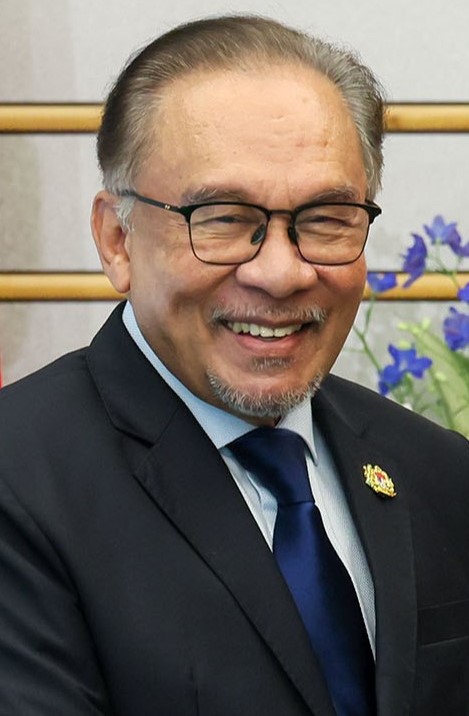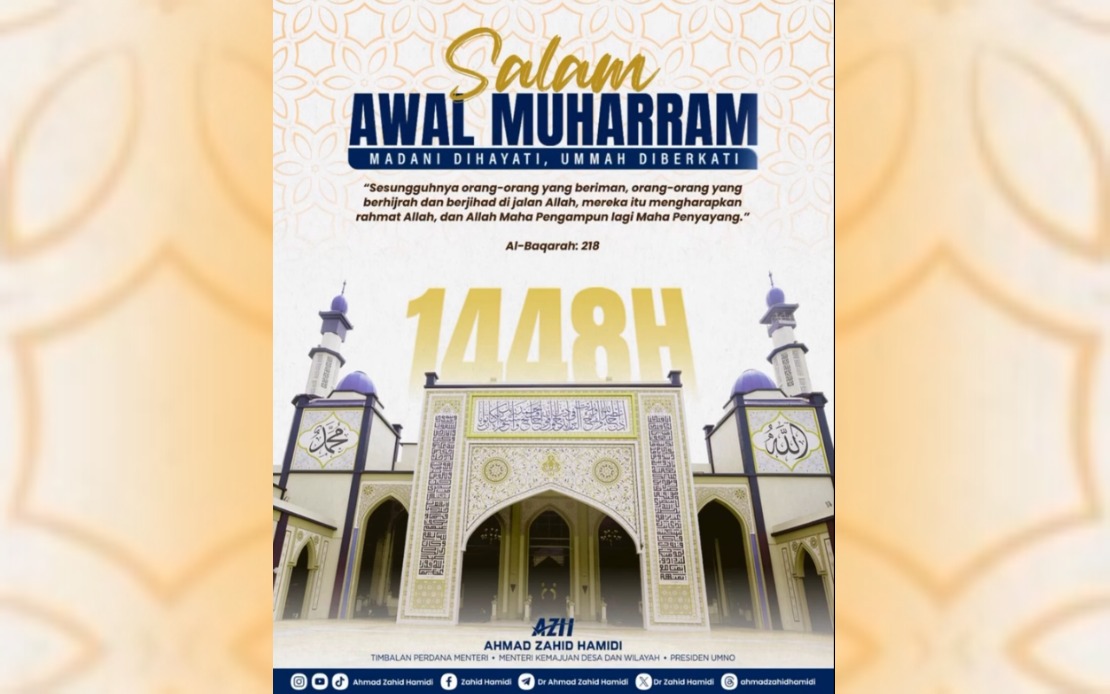
Malaysia's top government leaders have launched a coordinated appeal for citizens to embrace the profound spiritual and social principles embedded in the concept of Hijrah as the nation transitions into the Islamic year 1448H. The message, delivered on Awal Muharram, seeks to leverage this significant religious milestone as a catalyst for personal transformation and collective national progress, particularly as Malaysia navigates an increasingly volatile global landscape.
Deputy Prime Minister Datuk Seri Dr Ahmad Zahid Hamidi positioned Maal Hijrah beyond a mere calendar change, framing it instead as a powerful reminder that meaningful development demands more than rhetoric. He emphasized that the Hijrah narrative—rooted in the Prophet Muhammad's migration and the founding principles of Islamic civilization—encapsulates essential human qualities of discipline, sustained effort and determined commitment. According to Zahid, these attributes must form the backbone of how Malaysians approach their roles as leaders, workers and community members, whether in government, business or civil society.
Zahid's articulation suggests a deliberate effort to connect ancient Islamic history with contemporary governance challenges. The Hijrah, he argued, underscores that institutional and personal reform require sacrifice and perseverance—virtues that prove especially relevant as Malaysia grapples with modernization pressures and evolving global expectations. His call for Malaysians to embrace reform, acknowledge weaknesses and pursue continuous improvement carries implicit messaging about the government's own commitment to accountability and self-examination during a period of political transition and evolving public expectations.
Deputy Prime Minister Datuk Seri Fadillah Yusof approached the Hijrah theme through a more pragmatic economic and social lens. He contextualized the new Islamic year within Malaysia's immediate challenges: global supply chain disruptions, inflationary pressures and broader international economic uncertainty that directly impact Malaysian households. Fadillah invoked Islamic teachings on moderation and resource stewardship as practical frameworks for navigating these hardships. His emphasis on prudent spending, wise energy consumption and waste reduction transforms religious observance into concrete behavioral guidance applicable across socioeconomic strata.
This framing carries particular resonance for Malaysian families experiencing cost-of-living pressures. By linking Hijrah principles to everyday financial discipline—distinguishing between needs and wants, combating food and water wastage—Fadillah positions religious reflection as a tool for household resilience. Significantly, he underscores that individual actions, when aggregated across millions of citizens, generate measurable national impact on family welfare, community stability and overall prosperity. This messaging attempts to build social consensus around collective sacrifice during economically strained times.
Fadillah also prioritized unity and social cohesion, warning against allowing societal differences to fracture national solidarity. His emphasis on mutual respect, interfaith cooperation and togetherness addresses the delicate balance required in Malaysia's multiethnic, multireligious context. The implicit recognition that external economic pressures might amplify internal tensions underscores the strategic importance of preemptively reinforcing national unity narratives. This reflects a governance understanding that economic resilience depends partly on maintaining social peace and preventing divisive tensions.
Communications Minister Datuk Fahmi Fadzil contributed a more introspective dimension, characterizing the Islamic New Year as an opportunity for personal reflection and spiritual recommitment. His emphasis on Hijrah as embodying courage for positive change, patience amid adversity and sincerity in all endeavors appeals to individual agency and internal motivation. Unlike top-down directives, Fahmi's formulation invites citizens to internalize Hijrah values voluntarily, creating space for personal interpretation while maintaining core messaging about moral fortitude and authentic commitment.
Religious Affairs Minister Zulkifli Hasan provided specific spiritual guidance, differentiating between the public holiday dimension and the deeper personal significance of Awal Muharram. His recommendation that Muslims engage in year-end and year-beginning prayers, coupled with emphasis on self-reflection and improvement (Islah), grounds abstract principles in concrete religious practice. By encouraging family participation in these prayers, Zulkifli reinforces that spiritual renewal operates simultaneously at individual, familial and communal levels. This approach validates both private religious devotion and collective national ceremonies.
The breadth of Cabinet participation—encompassing ministers responsible for agriculture, science, women's affairs, law, education, national unity, trade, digital affairs, health, human resources and youth—demonstrates that the government perceives Hijrah messaging as transcending Islamic affairs to encompass all portfolio areas. This orchestrated multivocal approach suggests deliberate messaging strategy aimed at conveying governmental unity and comprehensive national commitment to the Hijrah spirit across all institutional domains. Each ministry's endorsement implicitly suggests how its specific responsibilities align with broader values of reform, resilience and collective progress.
For Malaysian audiences, this coordinated appeal carries several practical implications. First, it signals that government leadership perceives the current moment—characterized by economic uncertainty, geopolitical volatility and social dynamism—as requiring renewed emphasis on foundational values and national solidarity. Second, the messaging attempts to reframe economic hardship not as a crisis demanding blame but as an opportunity for cultural and spiritual recommitment. Third, the focus on unity, moderation and collective responsibility suggests governmental concern about potential social fracturing during economically stressed periods.
The Hijrah concept itself offers Southeast Asian context worth noting. As increasingly economically integrated nation-states navigate global pressures while maintaining distinct cultural-religious identities, the Hijrah principle—emphasizing both transformative change and spiritual continuity—provides a culturally resonant framework for managing modernization without abandoning traditional values. For Malaysia specifically, where Islam and nation-building remain intertwined, Hijrah messaging allows government to appeal to religious sensibilities while advancing secular governance objectives around economic resilience and social stability.
Ultimately, these ministerial statements position the Islamic New Year as more than religious commemoration. They frame it as a comprehensive call for national renewal encompassing personal transformation, family strengthening, community cohesion and institutional reform. Whether this messaging generates substantive behavioral change or remains ceremonial remains to be observed, but the coordinated emphasis reflects government recognition that navigating contemporary challenges requires reconnecting citizens with foundational principles of sacrifice, discipline and collective responsibility that the Hijrah symbolizes in Islamic tradition.