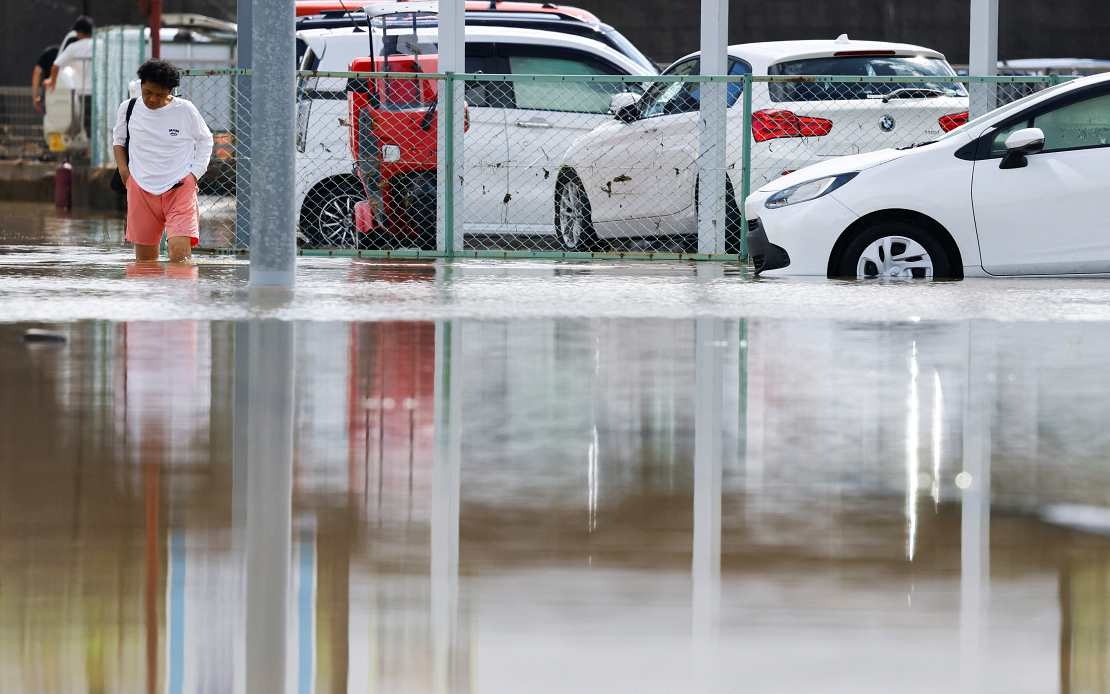
The Malaysian Embassy in Tokyo has issued a formal travel advisory cautioning Malaysians residing in or visiting Japan to refrain from undertaking non-essential journeys as the nation's eastern region grapples with extraordinary flooding triggered by relentless rainfall. The warning, disseminated through official channels on Friday, underscores the severity of weather conditions now affecting Chiba Prefecture and neighbouring districts within the Kanto metropolitan area, where transport infrastructure has sustained substantial damage and operational capacity has been severely compromised.
The scale of disruption across Japan's eastern transportation network has proven unprecedented in its reach and impact. Both road and rail systems serving the region have experienced major service interruptions, leaving significant numbers of travellers stranded and unable to complete their journeys. The situation proved particularly acute at Narita International Airport, one of the nation's primary aviation hubs, where approximately 7,000 people found themselves unable to depart or proceed with their travel plans due to flooded access routes and suspended ground transport services. Some travellers endured extended overnight periods at the airport awaiting restoration of normal operations.
Metereological authorities in Japan have responded by issuing the highest-level alert available in their warning system. The Japan Meteorological Agency deployed its most severe Level 5 rain warning designation across more than one-third of municipalities across Chiba Prefecture, a designation reserved for conditions posing catastrophic risk to public safety. This exceptional escalation reflects the extraordinary intensity and persistence of the rainfall phenomenon, which has defied normal seasonal patterns and exceeded established meteorological thresholds.
The human toll of the disaster has mounted steadily as rescue and recovery operations continue. According to reporting from Kyodo News, no fewer than eight deaths have been attributed to the torrential conditions, with that figure potentially rising as additional areas are assessed and emergency response operations gain further access to affected communities. These fatalities underscore the genuine danger posed by the current conditions and validate the Malaysian Embassy's decision to issue urgent guidance to its citizens.
Government authorities responding to the emergency determined that the situation warranted mass evacuation measures to protect public safety. At peak escalation, evacuation orders encompassed more than 400,000 residents, representing one of Japan's larger emergency displacement operations in recent years. Such sweeping orders indicate that authorities assessed risk levels as sufficiently elevated that sheltering in affected areas posed unacceptable danger to residents, particularly those in low-lying zones vulnerable to flash flooding and water accumulation.
The Malaysian Embassy has provided explicit guidance directing citizens to take specific precautions aligned with Japanese official recommendations. Malaysians are instructed to maintain distance from flooded zones and geographically low areas where water accumulation and fast-moving currents pose particular hazard. The advisory emphasises the necessity of heightened personal vigilance, continuous monitoring of evolving local conditions, and close attention to official transport notifications and evacuation instructions issued by Japanese regional and national authorities. This graduated response framework allows individuals to make informed decisions about their movements and activities as conditions develop.
To access the most current meteorological intelligence and authoritative weather forecasting, the embassy has directed Malaysians toward the Japan Meteorological Agency's official information portal at www.jma.go.jp/jma/indexe.html, which provides real-time updates, active warnings, and detailed advisories in English. This resource proves invaluable for Malaysian nationals seeking to understand precise weather trajectories, anticipated rainfall intensity, and zones experiencing the most acute hazard conditions. Regular consultation of this platform enables proactive rather than reactive decision-making regarding travel and activity planning.
For Malaysians encountering urgent situations requiring immediate consular assistance, the embassy has established multiple communication channels designed to accommodate both routine and emergency circumstances. During standard office operating hours, Malaysian nationals may contact the Embassy of Malaysia in Tokyo directly at the primary telephone line +81-3-3476-3840. For situations arising outside regular business hours, an emergency hotline has been activated at +81-70-1471-9756, ensuring that urgent matters receive prompt attention regardless of time considerations. Electronic communication options have also been made available through dedicated email addresses [email protected] and [email protected] for citizens preferring written documentation of their requests.
The severity of this weather event carries broader implications for understanding climate resilience in developed economies and the vulnerability of even sophisticated infrastructure systems to extreme precipitation events. Japan's experience with this flooding episode provides valuable cautionary lessons for Southeast Asian nations including Malaysia, which face their own seasonal flooding risks and transport dependency challenges. The disruption to Narita airport operations particularly resonates given similar vulnerabilities affecting Malaysia's major aviation facilities and their susceptibility to weather-related service interruptions.
The advisory reflects a broader trend of escalating extreme weather phenomena across East and Southeast Asia, with precipitation intensity and unpredictability increasingly exceeding historical baselines upon which infrastructure design and emergency response protocols were established. For Malaysian expatriates and business travellers in Japan, this episode underscores the importance of maintaining awareness of environmental conditions in host countries, maintaining accessible communication with Malaysian diplomatic missions, and exercising flexible travel planning that accommodates sudden disruption scenarios. The embassy's proactive outreach demonstrates Malaysia's commitment to safeguarding citizens abroad while reinforcing the importance of informed self-protection during meteorological emergencies.

