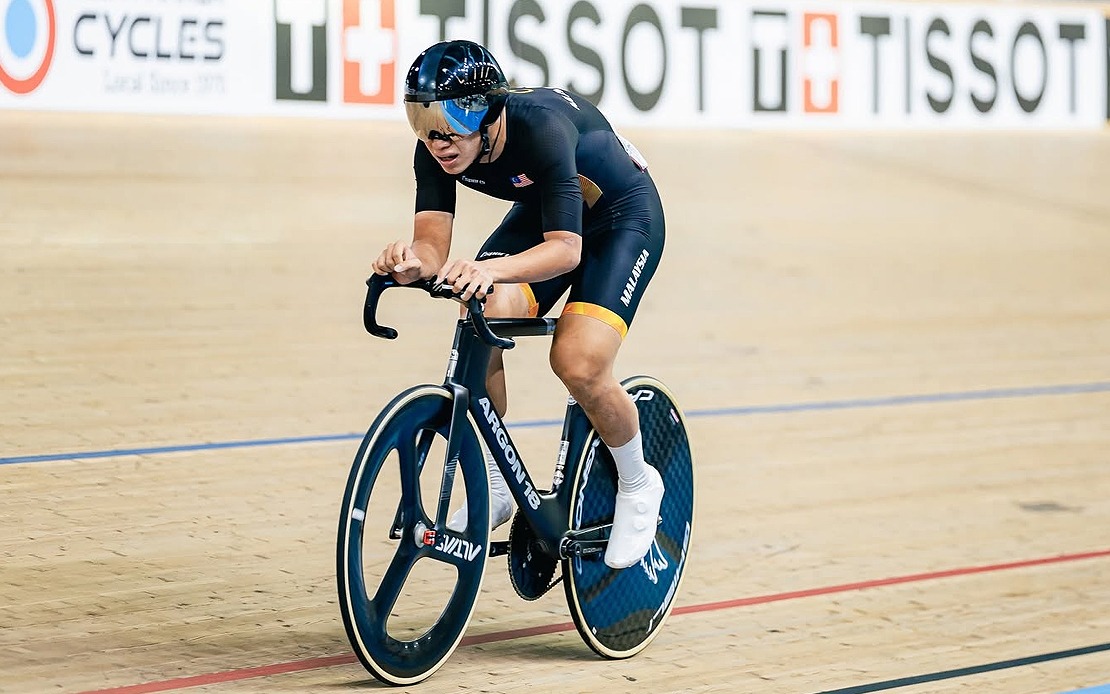
Malaysian track cyclist Lau New Joe is in stable condition and has received medical clearance to return to Malaysia following a crash during the men's 10-kilometre scratch race final at the 2026 Glasgow Commonwealth Games on Saturday. The collision, which involved nine riders at the Sir Chris Hoy Velodrome, occurred moments before the final lap as competitors began their sprint toward the finish line. New Joe was extracted from the track on a stretcher and listed as "Did Not Finish" in the official race results.
Immediate medical assessment at Queen Elizabeth University Hospital revealed that while the athlete sustained facial bone fractures and dental injuries, there were no internal injuries of serious concern. Dr Kamarul Hashimy Hussein, the chief medical officer for the Malaysian contingent, confirmed that computed tomography scans showed no evidence of brain bleeding—a significant relief given the severity of the impact. The diagnostic process was thorough, with full-body X-rays and a CT scan completed to rule out hidden complications.
The dental and maxillofacial damage requires ongoing specialist care. New Joe suffered fractured teeth along with the facial fractures, necessitating multiple treatment sessions once he returns to Malaysia. Two maxillofacial specialists attended to him immediately after his hospital admission, providing treatment that extended into the early morning hours. The National Sports Institute has taken responsibility for coordinating his follow-up care and ensuring that the dental injuries receive proper attention through qualified specialists.
Beyond the physical injuries, Dr Kamarul emphasized the importance of psychological support throughout the recovery process. The medical team recognizes that New Joe's mental resilience and competitive drive are assets that must be nurtured during rehabilitation. The athlete's strong desire to return to competition, despite the traumatic incident, reflects the mindset required at elite levels of sport, but officials are aware that comprehensive mental health monitoring will be essential alongside physical recovery.
The recovery timeline remains uncertain, with fitness assessments planned to evaluate New Joe's stamina and muscular endurance before clearance to compete. Dr Kamarul indicated that the team's ambitious goal is to have the athlete ready for potential selection at the Asian Games, scheduled to run from September 19 to October 4. This timeline is aggressive but reflects both the athlete's eagerness and the medical team's confidence in his recovery trajectory.
New Joe's participation in Glasgow represented his inaugural appearance at a Commonwealth Games, making the incident particularly unfortunate timing in his international career. The scratch race is a demanding discipline that requires tactical awareness, speed, and rapid reaction times—all capacities that will need reassessment before the athlete can safely return to track cycling at competitive levels. The crash itself, involving multiple riders, underscores the inherent risks of velodrome competition where high speeds and close proximity between competitors create hazardous situations.
The incident has prompted discussion within Malaysian cycling circles about safety protocols at major international competitions. While the specific cause of the nine-rider crash has not been detailed in official statements, such occurrences typically stem from a combination of tactical maneuvers, equipment issues, or split-second judgment errors that cascade into multi-rider collisions. The international cycling federation continues to review velodrome safety standards, though Glasgow's Sir Chris Hoy Velodrome is considered one of the world's premier track cycling venues.
New Joe's scheduled return on August 3 means he will travel home with the broader Malaysian contingent rather than remaining in Glasgow for extended treatment. This decision reflects confidence in his stability and the assessment that continued hospitalization in the United Kingdom is unnecessary. However, the coordination of his care between British medical professionals and Malaysian specialists underscores the complexity of international sports medicine, where seamless handover of patient information and treatment plans becomes crucial.
The broader implications for Malaysian cycling are noteworthy. New Joe's status as a debutant at Commonwealth level suggests he represents emerging talent within the national program. His recovery and eventual return to competition will test both personal resilience and the support systems available through the National Sports Institute. Success in his rehabilitation could provide valuable lessons for managing athlete injuries at a time when Malaysian cycling aims to elevate its performance at regional and global events.
Dr Kamarul's statement that New Joe "has a strong mentality, a winning spirit and is still eager to return to competition" suggests the athlete's psychological state remains positive despite the trauma. This attitude, while commendable, requires careful management to ensure that pressure to return quickly does not compromise full recovery. Medical professionals will need to balance New Joe's competitive ambitions with evidence-based timelines for safe return to the demanding physical demands of track cycling.
The incident serves as a reminder that even at world-class venues and with elite medical support on standby, track cycling remains a high-risk sport. The rapid response of Queen Elizabeth University Hospital's emergency and specialist departments, combined with the Malaysian team's coordinated medical oversight, exemplifies the infrastructure that protects athletes at major international games. For New Joe and the Malaysian cycling program, the focus now shifts from acute emergency management to rehabilitation and conditional return to training and competition.

