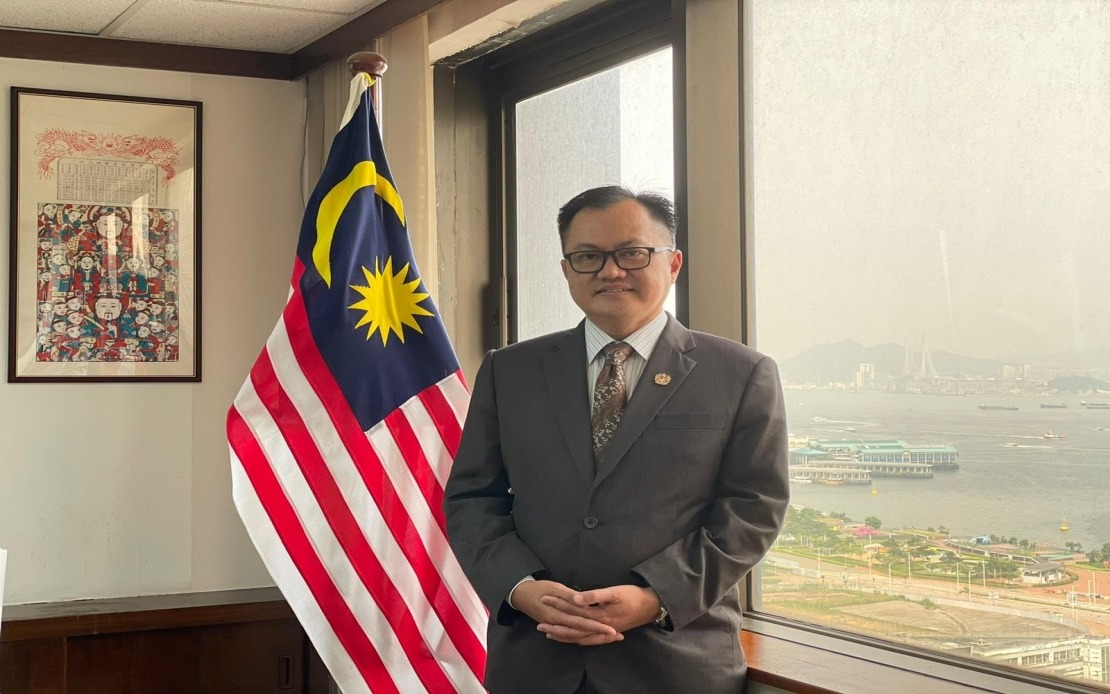
The Consulate General of Malaysia in Hong Kong has pushed back against media suggestions that Malaysian expatriates faced barriers to participation in the recent Johor state election due to insufficient information, contending that the diplomatic mission had undertaken a comprehensive awareness campaign targeting the territory's voter population. Consul General Muzambli Markam detailed the consulate's efforts in a formal response to a South China Morning Post article that had portrayed overseas Malaysians as hindered by tight registration deadlines and limited knowledge of voting procedures. The dispute highlights the growing tensions between Malaysian diplomatic missions abroad and international media outlets covering diaspora electoral participation, an issue gaining prominence as Malaysia's overseas population expands and engagement with home country politics deepens.
Muzambli outlined a multi-pronged communication strategy that the consulate had employed throughout the Johor election period, emphasizing the distribution of advisories and instructional guides via official communication channels. The mission had also partnered with the Malaysian Association of Hong Kong to amplify messaging around registration windows and voter eligibility criteria, according to the consul general's account. These efforts, he argued, demonstrated the consulate's commitment to ensuring that the estimated Malaysian population in Hong Kong possessed adequate information to navigate the voting process. The involvement of MAHK, a civil society organization representing the Malaysian community, suggests that the consulate had attempted to leverage established community networks to extend its reach beyond formal diplomatic channels.
The core disagreement between the consulate and the SCMP centres on whether the information campaign was sufficiently visible and accessible to the general Malaysian population in Hong Kong. Muzambli specifically challenged the article's headline, which described eligible voters as being "locked out" of state elections, arguing that such phrasing misrepresented both the Election Commission's efforts and broader Malaysian government commitment to facilitating diaspora voting. The consul general contended that the newspaper had omitted important context that he claimed to have provided prior to publication, resulting in what he characterised as an inaccurate and misleading narrative. This disagreement reflects a broader challenge facing Malaysian diplomacy: balancing the need for transparency and accountability with the frustration that foreign media coverage can overshadow government initiatives.
A significant point of contention involves the consulate's role in the voter registration process. The SCMP article had apparently suggested that the consulate's lack of comprehensive local voter statistics indicated administrative weakness or indifference. Muzambli reframed this aspect differently, describing the consulate's non-involvement in registration as a deliberate design choice rather than a limitation. He highlighted that the Election Commission had modernised its overseas voting system through the MySPR online portal, enabling Malaysians abroad to submit registration applications directly to the centralised system without requiring consular intermediation. This direct-to-voter technological infrastructure, the consul general argued, represented an advancement in electoral efficiency and security rather than an administrative gap.
The transition to digital-first overseas voting represents a significant shift in how Malaysia engages with its diaspora electorate. The MySPR portal allows Malaysian citizens living abroad to bypass traditional bureaucratic channels and submit applications electronically, potentially reducing processing times and documentation requirements. However, this digitalization assumes adequate technological access and digital literacy among overseas voters, assumptions that may not hold uniformly across all communities or age groups. For Malaysia's expatriate population in Hong Kong, predominantly comprised of professionals and skilled workers with reasonable digital access, the online system likely functions effectively. Yet the controversy suggests that awareness of the system's existence and functionality may still lag behind the government's expectations.
The broader implications for Malaysia's relationship with overseas voting are substantial. As the country continues to develop its electoral infrastructure for diaspora participation, tensions between advancing technological systems and ensuring equitable access will persist. The fact that a diplomatic mission felt compelled to formally respond to media criticism indicates that concerns about voter participation among expatriates resonate with both press outlets and government officials. For Malaysian readers, particularly those considering relocation abroad or with family members overseas, the exchange highlights the need to independently verify voting procedures and deadlines rather than relying solely on embassy communications or press coverage.
The involvement of community organizations like MAHK underscores an important reality about diaspora political engagement: official government channels often prove less effective than grassroots networks in reaching target populations. Malaysian associations in overseas cities serve as crucial nodes for community information distribution and collective action. The consulate's willingness to partner with such organizations suggests recognition of this principle, though the SCMP article's framing suggests these partnerships may not have been sufficiently prominent or well-publicized to reach all interested voters. The disconnect between what the consulate perceives as adequate outreach and what overseas media coverage suggests voters actually received points to a persistent gap in communication effectiveness.
From a Southeast Asian perspective, Malaysia's experience with overseas voting mirrors challenges faced by other regional nations with significant expatriate populations. Singapore, Indonesia, and the Philippines all grapple with ensuring that citizens abroad can meaningfully participate in elections despite geographical distance and bureaucratic complexity. The reliance on digital infrastructure like MySPR reflects global trends toward modernizing electoral systems, though implementation success depends heavily on awareness campaigns and community engagement. Malaysia's approach of combining digital systems with diplomatic and civil society outreach represents a reasonable middle ground, though the Johor election dispute suggests room for improvement in coordination and messaging.
The Consul General's response also reflects the diplomatic imperative to defend institutional credibility while addressing legitimate questions about electoral access. Muzambli's emphasis on Malaysia's commitment to facilitating diaspora voting rights serves both to rebut immediate criticism and to reinforce the government's narrative about democratic governance and citizen engagement. Yet his defense also implicitly acknowledges that the SCMP article resonated with some readers, suggesting that the consulate's communication efforts, while genuine, may not have achieved the visibility necessary to counter perceptions of voter exclusion. This tension between institutional effort and perceived outcome will likely persist as Malaysia continues to manage overseas electoral participation.
Looking forward, the Johor election episode offers lessons for Malaysian diplomacy and electoral administration. The consulate's defense suggests that future campaigns should prioritize not only the dissemination of information but also verification that awareness has actually reached target populations. Engaging with media outlets before publication, as Muzambli indicated the consulate had attempted, remains important, but more proactive media engagement and public visibility of outreach efforts might prevent similar controversies. For overseas Malaysians, the exchange underscores the importance of confirming voting procedures through multiple sources and allowing adequate time for registration, rather than depending on any single institutional communication channel.

