Financial institutions across Malaysia are imposing stricter sustainability disclosure requirements as a condition for lending, fundamentally reshaping how companies access capital. Banks and other lenders now routinely demand that loan applicants provide comprehensive environmental, social and governance (ESG) reports demonstrating their sustainability credentials. This shift reflects a global trend where institutional investors and creditors view sustainability performance as a material factor in credit risk assessment and long-term viability.
While publicly listed Malaysian companies face mandatory sustainability reporting obligations under Bursa Malaysia rules, unlisted firms and small and medium enterprises currently have no such requirement. However, the emerging banking practice of requiring ESG documentation is effectively creating a de facto sustainability reporting obligation for any business seeking external financing. Prathab V, principal consultant at ESGright Sdn Bhd, explains that companies meeting these expectations gain significant competitive advantages through improved access to capital and international markets, whereas those lagging behind risk gradual marginalisation as competitors embrace sustainability practices.
The government and its regulatory bodies have actively championed sustainability reporting adoption, recognising that corporate environmental and social practices increasingly influence investment decisions, financing terms, risk management frameworks and strategic corporate planning. Malaysia has emerged as a regional leader in this domain, boasting one of the highest concentrations of professionally trained GRI sustainability practitioners in ASEAN. ESGright itself has established itself as the fifth largest GRI professional trainer globally by participant numbers in 2025, with third-place ranking across the Asia-Pacific region since 2023.
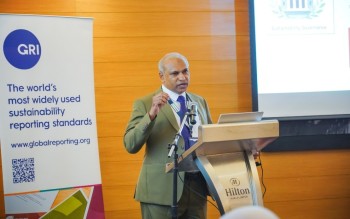
A recent summit convened by ESGright and the Global Reporting Initiative (GRI), an international standards-setting body for sustainability reporting, brought together approximately forty corporate leaders and industry stakeholders representing combined market capitalisation exceeding RM380 billion. This gathering underscored the significance of these discussions among Malaysia's most influential market actors. The dialogue revealed widespread recognition that sustainability reporting, once dismissed as peripheral to core business concerns, now constitutes an essential dimension of corporate strategy and stakeholder engagement.
ESGright's recent designation as Malaysia's first approved education partner by the International Financial Reporting Standards (IFRS) Foundation signals deepening professionalisation in this field. The partnership enables delivery of globally recognised qualifications focused on sustainability-related financial disclosures aligned with International Sustainability Standards Board (ISSB) standards, equipping corporate professionals, investors, auditors and sustainability practitioners with requisite technical knowledge. This institutional development indicates that Malaysian corporations increasingly view sustainability competency as a core professional requirement rather than an optional specialisation.
GRI Chief Executive Officer Robin Hodess acknowledged that developing markets such as ASEAN demonstrate strong business commitment to ESG and sustainability practices. However, she emphasised that SMEs face fundamentally different constraints compared to large corporations, particularly regarding resource availability and technical expertise. Hodess advocated for proportionate sustainability reporting frameworks tailored to SME capabilities rather than imposing identical requirements across all business sizes. Such calibrated approaches would enable smaller enterprises to progress on their sustainability journeys without imposing unsustainable compliance burdens that might actually discourage participation.
For SMEs operating as suppliers to larger corporations, sustainability reporting presents both a challenge and an opportunity. Supply chain sustainability has become increasingly important to major companies and international purchasers, meaning suppliers demonstrating robust ESG practices gain preferential access to lucrative procurement opportunities. Conversely, suppliers unable or unwilling to meet these expectations risk exclusion from supply chains, directly threatening revenue and competitiveness. This dynamic creates powerful market incentives for SME adoption of sustainability practices, though access to training and expertise remains uneven across Malaysia's diverse business ecosystem.
Many leading Malaysian companies, particularly Bursa-listed firms, embraced ESG reporting well before regulatory mandates, recognising that international competition and export markets increasingly demand sustainability credentials. These early adopters recognised that embedding ESG practices into business operations facilitates product exports and enhances competitiveness across international markets where environmental and social standards carry commercial weight. Their experience demonstrates that proactive sustainability adoption, rather than mere regulatory compliance, generates tangible market advantages in an interconnected global economy.
Despite these benefits, companies navigating the ESG landscape face mounting complexity stemming from proliferating reporting frameworks and disclosure standards. The absence of unified global standards means corporations often must satisfy multiple, occasionally contradictory reporting requirements from different jurisdictions, industry bodies and stakeholders. This regulatory fragmentation creates what practitioners term "compliance fatigue"—the exhaustion resulting from endless documentation requirements that divert management attention and resources from core business objectives. Companies must simultaneously satisfy shareholder profit expectations and increasingly demanding sustainability stakeholder demands, requiring sophisticated prioritisation and strategic focus.
Prathab V advocates a pragmatic approach to resolving this tension. Rather than attempting comprehensive excellence across all sustainability dimensions, he recommends that companies identify specific areas where they can make the greatest meaningful contribution—whether environmental conservation, biodiversity protection, labour rights or community development—and concentrate their efforts accordingly. This focused strategy generates more substantial positive impact than superficial efforts across multiple domains simultaneously. Such selectivity also reduces compliance burden while allowing companies to develop genuine expertise and authentic commitment in chosen areas, creating credibility with stakeholders rather than appearing to pursue sustainability performatively.
The emerging requirement for sustainability documentation represents a significant structural shift in Malaysian corporate finance. What began as aspirational guidelines has evolved into de facto lending conditions enforced by financial institutions wielding ultimate capital control. This evolution demonstrates how market mechanisms can drive regulatory change more effectively than formal legislation alone. As Malaysia continues developing world-class sustainability reporting capacity and expertise, Malaysian companies of all sizes face incentives to move beyond viewing sustainability as peripheral compliance obligation and embrace it as central to competitive strategy and long-term value creation in an increasingly sustainability-conscious global economy.

