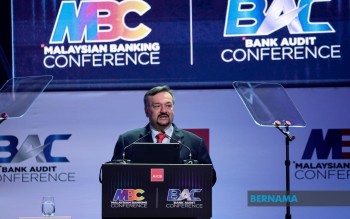
Malaysia's banking leadership is being urged to shift its focus from simply deploying artificial intelligence towards building frameworks of trust, accountability and robust governance around these powerful technologies. The Asian Institute of Chartered Bankers delivered this message at a major industry gathering this week, emphasising that the real challenge facing the sector is not whether to adopt AI but how to do so responsibly and sustainably as the nation's financial system undergoes transformation under the Financial Sector Blueprint.
The dual conferences—the 4th Malaysian Banking Conference and 2nd Bank Audit Conference—brought together more than 1,000 senior figures from banks, audit firms and financial regulators at the Kuala Lumpur Convention Centre on July 7-8. The gatherings were opened by Minister of Finance II Datuk Seri Amir Hamzah Azizan and Bank Negara Malaysia governor Datuk Seri Abdul Rasheed Ghaffour, underscoring the strategic importance the government places on how Malaysia's financial institutions navigate AI integration while managing mounting pressures from cyber threats, climate transition demands and geopolitical volatility.
A landmark research report unveiled at the conference provides sobering evidence of the gap between AI deployment and genuine institutional confidence in these systems. The AICB-Ecosystm report, compiled from responses by nearly 90 senior leaders across commercial banks, digital banks and development financial institutions, reveals that despite AI already being operational in critical functions—customer onboarding verification, fraud detection, money laundering prevention and staff productivity tools—only one quarter of respondents feel sufficiently confident in AI-generated outputs to rely on them for significant business decisions. This finding signals a crucial inflection point for Malaysia's banking sector: the industry has moved past experimentation and pilot projects, but remains hesitant about scaling AI deployment without stronger governance foundations.
The trust deficit identified in the research reflects deeper concerns about AI systems' reliability, explainability and alignment with regulatory expectations. As Malaysian banks process increasingly complex datasets and make decisions affecting millions of customers and billions of ringgit in assets, the stakes of AI implementation errors grow exponentially. Financial institutions cannot simply deploy algorithms optimised for accuracy without addressing the governance frameworks, audit trails and human oversight mechanisms that regulators and the public expect from systemically important institutions. The 25 percent confidence figure suggests that three-quarters of banking leaders recognise significant implementation gaps before they can confidently delegate critical business decisions to artificial intelligence.
Amir Hamzah's remarks at the conference emphasised a particularly Malaysian approach to technological governance: industry-led standard-setting rather than top-down government mandates. He highlighted the AI Governance Framework developed by AICB's Chief Risk Officers' Forum—developed with Bank Negara Malaysia's support and endorsed by the Association of Banks in Malaysia—as exemplifying how trust in financial systems is constructed from within through professional discipline and collective responsibility rather than imposed through regulation alone. This approach reflects a philosophy that sustainable AI adoption requires buy-in from banking institutions themselves, not merely compliance with external directives.
Bank Negara Malaysia's governor reinforced this message by stressing that genuine innovation encompasses far more than technology implementation; it demands strong leadership and governance structures ensuring that whatever systems banks build remain worthy of public trust and genuinely serve society's interests. This framing positions AI governance not as a compliance burden but as foundational to the banking sector's long-term viability and social license to operate. As Malaysian banks compete regionally and globally, their ability to implement AI responsibly becomes a competitive advantage rather than merely a technical capability.
The AICB has launched complementary initiatives to address the talent and capability dimensions of trusted AI implementation. The Future Skills Framework and FSF Xcel programme, developed collaboratively with industry partners, identify the critical competencies that banking professionals need to navigate an AI-enabled financial system. Investment in talent development emerges from the conferences as inseparable from technical AI capability—banks cannot build trustworthy AI systems without professionals who understand both the technology's potential and its limitations, who can interpret algorithmic outputs intelligently and who can maintain human judgment in decision-making processes increasingly mediated by machines.
For Malaysian banking professionals, the message from these conferences carries practical implications. The sector is signalling that careers in finance will increasingly require not just banking expertise but sophisticated understanding of AI systems, data governance, cybersecurity and regulatory requirements. The AICB's emphasis on professional excellence and continuous development suggests that Malaysian banks view their workforce as central to responsible AI adoption—not merely as users of AI tools but as stewards of systems that shape financial inclusion, risk management and economic opportunity across the nation.
The regional context amplifies the urgency of Malaysia's banking leadership on AI governance. Financial institutions across Southeast Asia confront identical questions about AI implementation, cybersecurity resilience, climate risk management and talent development. By convening industry dialogue, establishing governance frameworks and sharing practical approaches, Malaysian banking institutions position themselves as thought leaders addressing challenges that will define regional financial competitiveness over the next decade. The MBC 4.0 and BAC 2.0 served as platforms for cross-border exchange, allowing Malaysian banks to learn from peers navigating similar transformation pressures while contributing their own insights to emerging industry standards.
The research finding that AI is already embedded in critical banking functions—Know Your Customer onboarding, fraud detection, anti-money laundering compliance—yet generates limited confidence in outputs suggests that implementation is advancing faster than institutional readiness. This gap underscores the conferences' core message: banks must pause, consolidate and strengthen governance frameworks around existing AI deployments before accelerating further adoption. This measured approach, grounded in trust-building rather than rapid scaling, may ultimately serve Malaysian banks better than rushing toward AI-intensive operations without adequate safeguards.
Looking forward, the AICB's positioning as Malaysia's leading professional body for banking places it at the intersection of industry practice, regulatory expectation and professional standards development. The organisation's commitment to advancing professional banking education, developing the next generation of banking talent and fostering thought leadership suggests that Malaysian banking will increasingly be defined not by the sophistication of AI systems deployed but by the calibre of professionals governing those systems and the robustness of frameworks ensuring they operate in the public interest.
For Malaysian policymakers and banking leaders, the message from this week's conferences is clear: the financial sector's future depends not on winning the race to deploy AI but on winning the competition to implement AI responsibly. As Malaysia's banking sector advances its digital transformation, trust—built through strong governance, capable talent, transparent frameworks and genuine public benefit—emerges as the ultimate competitive advantage in an increasingly technology-mediated financial landscape.

