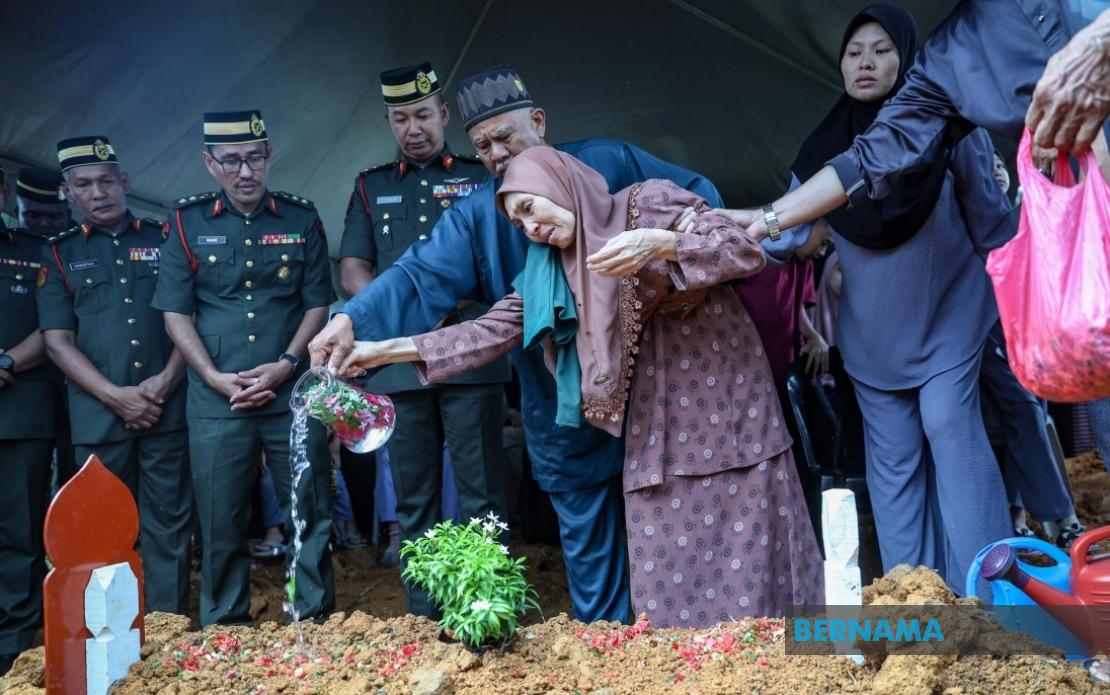
The funeral of Malaysian Army Private Siti Khadijah Sungip concluded in Kluang on June 17, bringing to an end a tragic episode for the 24-year-old soldier's family and the military establishment. Sungip, who served with the First Squadron of the Royal Engineer Regiment, died following injuries sustained during a grenade throwing exercise at Hobart Camp in Gurun, Kedah the previous day. The burial ceremony at Taman Sri Lambak Muslim Cemetery drew a large gathering of military personnel, family members, and well-wishers who came to pay their final respects to the fallen soldier.
The incident that claimed Sungip's life occurred at 10.57 am on June 16 at the target range facility. During what should have been routine grenade throwing training, an explosion of significant force injured both Sungip and fellow serviceman Corporal Norazmi Abu Bakar from the Sixth Battalion of the Royal Malay Regiment. Both soldiers sustained critical wounds that would prove unsurvivable as they were being transported to Sultan Abdul Halim Hospital in Sungai Petani. The exact circumstances surrounding the explosion remain under investigation, though the Malaysian Army has confirmed that both casualties occurred as a direct result of the blast during the training session.
Following her death, Sungip's body was transferred to Sultanah Bahiyah Hospital in Alor Setar for post-mortem examination, a procedure that was completed at approximately 2.30 am on June 17. Her remains were then transported back to her family's residence in Taman Sri Lambak, arriving at 12.10 pm. The journey was accompanied by Lieutenant Muhammad Lutfil Hadi Osman, who served as the First Field Troop Leader, along with four members of the Royal Engineer Regiment to ensure proper military protocol and respect for the deceased.
The funeral arrangements reflected the military traditions and Islamic customs observed within the Malaysian Armed Forces. Prior to the burial ceremony, Sungip's body was taken to the Darul Iman Mosque where funeral prayers were conducted, led by Major Mohd Azlan Shah Abdul Razak from the TDM Field Engineering Institute. The ritual of prayer and remembrance provided an opportunity for colleagues, superiors, and family members to gather in collective grief and acknowledgement of her service to the nation.
A poignant moment during the funeral ceremony involved the symbolic presentation of the Jalur Gemilang, Malaysia's national flag, to Sungip's next of kin. The Brigadier General Datuk Zulhelmy Masdar, who holds the position of Commander of the 7th Brigade under the Headquarters of the 7th Malaysian Infantry Brigade at Mahkota Camp, officially handed the flag to Sungip's father, Sungip Jais, aged 65. This gesture carries profound significance within military culture, representing the nation's recognition of the sacrifice made by the deceased and the honor bestowed upon the family.
The loss of Sungip raises important questions about training safety protocols within the Malaysian Armed Forces. Grenade throwing exercises are fundamental to military preparedness and infantry training, yet they involve inherent risks when live ordnance is used. The incident at Hobart Camp suggests that a comprehensive review of safety measures, training procedures, and supervision practices may be warranted to prevent similar tragedies in the future. Such training fatalities, while rare, carry significant implications for military morale and public confidence in the armed forces' commitment to personnel welfare.
For the Malaysian military community, the deaths of both Sungip and Corporal Norazmi Abu Bakar represent a sobering reminder of the dangers inherent in military service beyond combat operations. Both soldiers were engaged in routine training exercises designed to build operational capability, yet both paid with their lives. Their sacrifice, while unintended, underscores the commitment required of those who serve in uniform and the trust placed in military leadership to maintain standards of safety and care.
The incident also highlights the role of female personnel within the Malaysian military structure. Sungip's service in the Royal Engineer Regiment demonstrates the growing integration of women into technical and operational military roles. Her death raises awareness about the equal risks faced by all military personnel regardless of gender, and the importance of ensuring that safety standards protect all members of the armed forces equally.
The military community's response to the tragedy, evidenced by the significant attendance at the funeral ceremony and the formal presentation of honors, reflects institutional respect for those who fall in service. The presence of senior officers and the careful adherence to military funeral protocols demonstrate that Sungip's death is being treated with appropriate gravity and recognition. Her family's loss is also the nation's loss, as a trained soldier and professional is removed from active service.
Investigations into the exact cause of the explosion are expected to continue, and findings may inform procedural changes across training facilities. The Malaysian Army's commitment to transparency regarding the incident and the circumstances surrounding it will be crucial to maintaining public and institutional trust. How military leadership addresses the findings and implements any necessary changes will signal to both personnel and civilians that safety concerns are taken seriously at the highest levels.