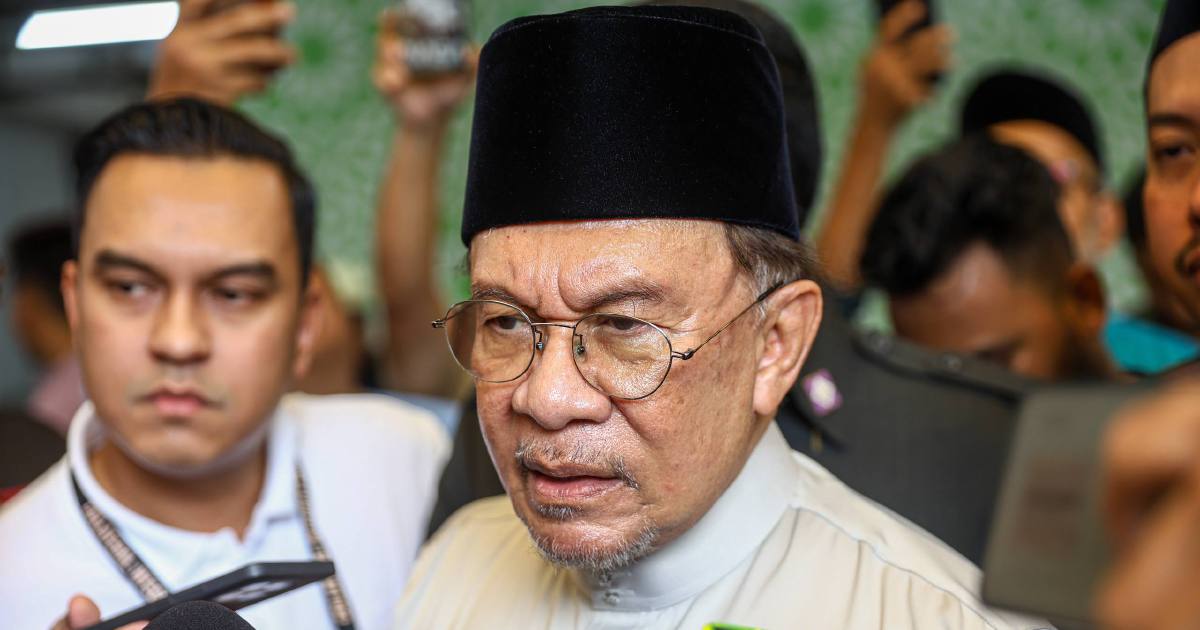
Prime Minister Datuk Seri Anwar Ibrahim has made clear that Malaysia will not waiver in its legal position against Low Taek Jho, the fugitive businessman widely known as Jho Low, even should he secure a presidential pardon from the United States. His statement underscores the government's resolve to pursue accountability measures independently of any leniency granted by foreign jurisdictions.
The remarks reflect the delicate balance Malaysia must navigate in its relationship with the United States while protecting its own interests in one of Southeast Asia's most complex financial crimes. Jho Low became the public face of alleged embezzlement from the 1Malaysia Development Berhad investment fund, a scandal that reverberated through Malaysian politics and economy since its exposure in 2015. His current status as a fugitive, widely believed to be residing outside Malaysia, has complicated efforts to bring him before Malaysian courts.
Anwar's position is significant because it demonstrates that Malaysia views its legal obligations and moral imperative to prosecute suspected criminals as paramount, irrespective of diplomatic considerations. The 1MDB affair resulted in billions of ringgit in losses and implicated numerous officials and business figures across multiple countries. Jho Low's alleged central role in orchestrating the fund diversion made him a focal point of investigations by Malaysian authorities, American law enforcement agencies, and international financial regulators.
The potential for a US presidential pardon introduces a complicated variable into an already intricate international legal landscape. Such a move would theoretically shield Jho Low from American federal prosecution but would hold no bearing on Malaysian criminal law or the jurisdiction of Malaysian courts. This distinction is crucial for understanding Anwar's statement: Malaysia operates within its own legal framework and can independently pursue charges regardless of outcomes in other countries.
From Malaysia's perspective, allowing a US pardon to influence its domestic legal position would effectively permit foreign policy considerations to override rule of law principles. This would set a troubling precedent for other high-profile cases and undermine public confidence in the judicial system's independence. Malaysian citizens, particularly those affected by the 1MDB scandal's broader economic impact, expect their government to pursue justice through available legal channels.
The international dimension of the Jho Low case illustrates how financial crimes increasingly transcend borders, requiring coordination among multiple jurisdictions. Malaysia has worked with American authorities, Swiss regulators, Singapore's financial watchdogs, and other nations to trace funds allegedly siphoned from 1MDB. These cooperative efforts have resulted in recovery of substantial assets and prosecutions in various countries, creating a complex web of legal proceedings that cannot simply be unwound by a single pardon.
For regional observers, Anwar's statement carries implications beyond the immediate Jho Low matter. It signals Malaysia's commitment to maintaining institutional integrity and pursuing accountability for major crimes, messages that matter to both domestic stakeholders and international investors concerned about governance standards. The reaffirmation of Malaysia's independent legal position also reflects confidence in the country's judicial processes and investigative capabilities.
The timing of Anwar's remarks may reflect concerns about speculation regarding potential clemency measures. Political developments in the United States, including leadership transitions and shifting approaches to high-profile cases, create uncertainty that governments worldwide must address proactively. By clearly articulating Malaysia's stance now, Anwar prevents ambiguity about the government's intentions and forestalls any misunderstanding that might arise later.
Historically, the 1MDB scandal prompted soul-searching within Malaysian institutions and contributed to broader conversations about accountability, transparency, and governance reform. The various criminal proceedings against individuals connected to the fund, including high-ranking officials and financiers, have proceeded through Malaysian courts with considerable international attention. Maintaining momentum in cases involving remaining fugitives reinforces the message that no amount of international travel or foreign protection can indefinitely shield individuals from facing Malaysia's justice system.
Anwar's statement also reflects practical realities of international law enforcement. While a US pardon might affect criminal liability in American courts, it cannot erase evidence of wrongdoing in other jurisdictions or compel those jurisdictions to abandon their cases. Malaysia retains multiple avenues for pursuing Jho Low, including extradition requests if he surfaces in cooperating nations, asset seizure and recovery efforts, and continued investigation and prosecution in absentia if circumstances permit.
Looking forward, Malaysia's unwavering position provides a framework for coordinated international action against financial crimes. Other Southeast Asian nations facing similar challenges with fugitive perpetrators of major frauds may view Malaysia's approach as establishing important precedent about the limits of foreign clemency in resolving cross-border criminal matters. This consistency strengthens the region's collective approach to combating financial misconduct and protecting public assets.
The broader significance of Anwar's remarks extends to questions of institutional autonomy and judicial independence. By emphasizing that Malaysia's legal position remains unchanged regardless of external developments, the Prime Minister affirms that Malaysia's courts and prosecutors answer to Malaysian law and Malaysian citizens, not to decisions made in foreign capitals. This principle forms the bedrock of a functioning legal system and remains essential to public trust in institutions.

