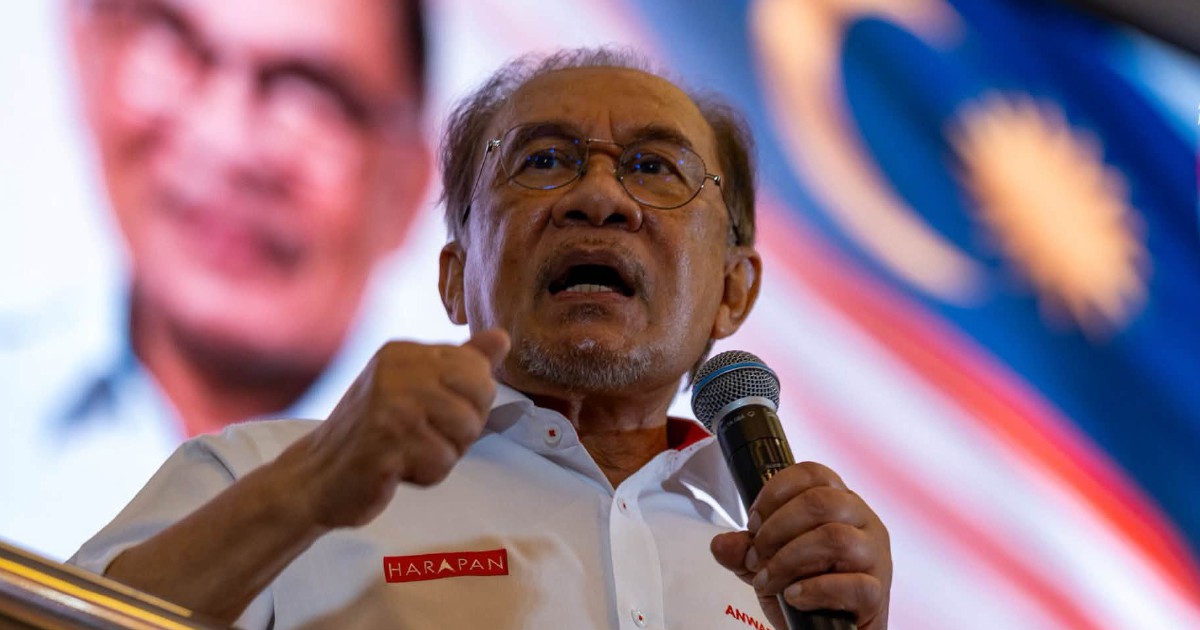
Prime Minister Datuk Seri Anwar Ibrahim has firmly stated that Malaysia will not be seeking Singapore's cooperation to facilitate voting arrangements for Malaysians employed on the island-state during the forthcoming Johor state election on July 11. The clarification comes amid broader discussions about cross-border worker participation in domestic elections and the logistical challenges faced by the estimated hundreds of thousands of Malaysians who commute daily to Singapore for employment.
The decision reflects Malaysia's approach to electoral management, which traditionally relies on domestic institutional frameworks rather than foreign government intermediation. Anwar's statement indicates that the government intends to administer the Johor election through established Malaysian electoral procedures without formalising arrangements with Singapore authorities. This approach maintains Malaysia's sovereignty over its electoral processes while acknowledging the practical constraints faced by workers unable to return home on polling day.
The Johor election represents a significant political contest in one of Malaysia's most economically developed states and a traditional stronghold of United Malays National Organisation-led coalitions. The July 11 date has been anticipated as part of the state government's electoral calendar, and the conduct of the election will be closely monitored by political observers across the region. The question of cross-border voter participation has emerged as a recurring policy issue in recent election cycles, given Johor's geographical proximity to Singapore and the scale of daily labour migration across the Causeway.
Thousands of Malaysians, predominantly from Johor, Selangor, and Perak, undertake daily journeys to Singapore for employment in sectors ranging from finance and technology to manufacturing and services. Many of these workers face genuine difficulties in returning to Malaysia specifically to cast their votes, particularly when elections fall on weekdays. The absence of postal voting or overseas voting facilities for domestic elections has traditionally complicated participation rates among this demographic.
Previously, Malaysian civil society organisations and political parties have raised the issue of voter accessibility for cross-border workers, contending that current electoral arrangements inadvertently disenfranchise working citizens. Some have proposed alternative mechanisms including extended voting periods or special polling stations in border towns. The government's decision not to pursue Singapore's involvement suggests that any solutions will likely be developed within Malaysia's own electoral framework rather than through bilateral arrangements.
Singapore's role as a potential facilitating jurisdiction would have been unprecedented in Malaysian electoral administration. While some democracies permit diplomatic missions or special arrangements for overseas citizens, Malaysia has historically restricted voting to citizens present within the country. The government's position maintains this precedent, suggesting a preference for traditional polling procedures centred on Malaysian territory and institutions.
For workers in Singapore, the July 11 election date presents a practical dilemma. Those wishing to vote must either take leave from employment to return to their Johor constituencies or forgo participation. This situation affects not only the electoral legitimacy of the state government but also raises questions about the inclusivity of Malaysia's democratic processes in an increasingly mobile region. The lack of alternative voting mechanisms means that economically productive citizens contributing to both Malaysia and Singapore's economic systems face barriers to exercising fundamental political rights.
The timing and scale of cross-border labour movement also intersects with Malaysia's broader economic strategy. Johor, in particular, has developed significant dependencies on both attracting skilled Malaysian workers from Singapore and facilitating their onward employment across the Causeway. Any electoral arrangements that either complicated or simplified cross-border movement could inadvertently affect labour market dynamics that have become embedded in regional economic practices.
Anwar's clarification may also reflect considerations about maintaining Malaysia's independent electoral administration and avoiding perception that foreign governments influence domestic political processes. By maintaining that voting arrangements remain Malaysia's exclusive responsibility, the government reinforces the principle that electoral integrity depends on domestic institutional autonomy. This position resonates with broader commitments to electoral sovereignty that many developing democracies prioritise in their international relations.
The decision leaves open the possibility that Malaysia might independently develop mechanisms to facilitate cross-border voter participation in future elections. Options could include mobile polling units in border towns, extended voting periods, or legislative changes permitting postal voting for citizens demonstrably unable to return home on polling day. Each approach would require amendments to electoral legislation and coordination among state electoral commissions, but would preserve Malaysia's electoral independence while addressing legitimate accessibility concerns.
Looking forward, the July 11 Johor election will provide empirical data on cross-border worker participation rates under current arrangements. Election Commission documentation of voter turnout by constituency and demographic analysis of participation patterns could inform future policy discussions about whether Malaysia's electoral framework adequately accommodates modern population mobility and labour market realities in the region.
The clarification also reflects Malaysia's careful calibration of relations with Singapore across multiple domains. While bilateral cooperation occurs in security, trade, and infrastructure matters, electoral administration remains distinctly national. Anwar's statement reinforces that distinction, signalling that despite deep economic interdependence, Malaysia preserves exclusive authority over its political processes and citizen voting rights within national territory.

