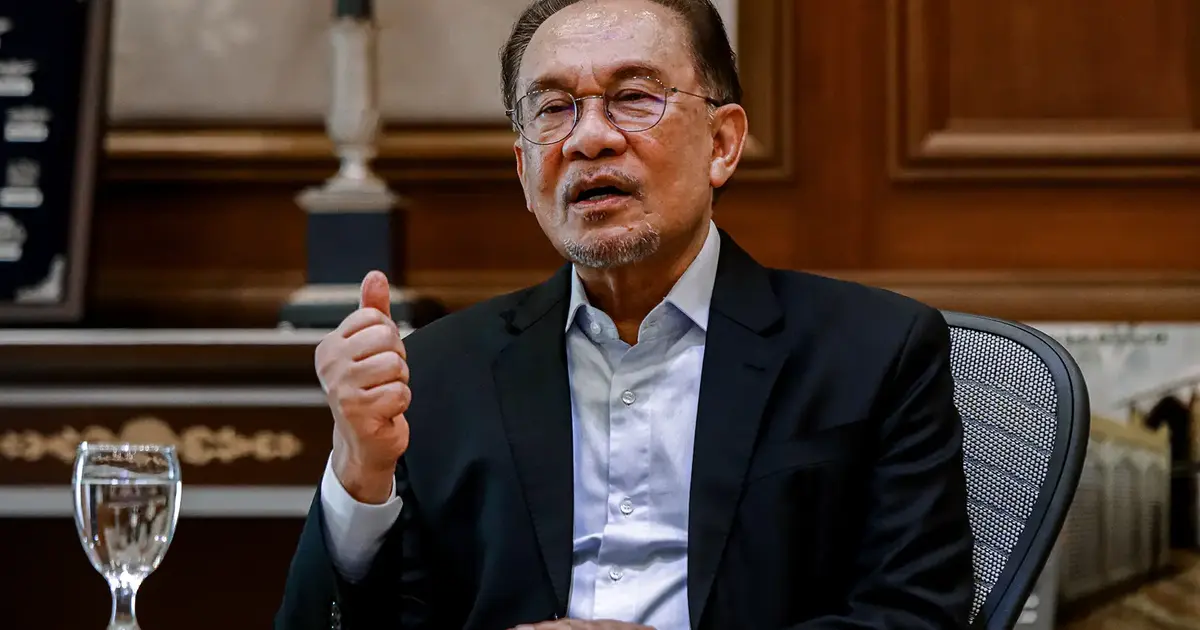
Prime Minister Anwar Ibrahim has delivered a forceful message to European nations, asserting that developing countries will no longer accept what he characterises as unfair and discriminatory treatment in their international dealings. Speaking with conviction about the principle of equitable relations, Anwar positioned Malaysia and other emerging economies as increasingly willing to seek alternative avenues rather than submit to what he views as double standards applied by Western nations. The statement reflects a broader shift in Malaysia's diplomatic stance, signalling a more assertive posture in bilateral negotiations with developed economies.
Anwar specifically referenced Malaysia's ongoing defence-related dispute with Norway as a concrete illustration of the frustrations developing nations face when engaging with European counterparts. This dispute, which has been a source of tension between the two countries, exemplifies the kind of selective application of rules and standards that Anwar believes disadvantages emerging markets. By publicly invoking this case, the Prime Minister underscored that Malaysia will not silently endure what it perceives as unreasonable or biased treatment, particularly in sensitive defence and security matters where national interests are at stake.
The Norwegian dispute centres on defence procurement and related commercial issues where Malaysia has apparently felt constrained by Norwegian positions or conditions. Rather than accept such constraints, Anwar's comments suggest Malaysia will actively explore partnerships and solutions with other nations willing to engage on terms Malaysia considers fairer. This approach aligns with Malaysia's diversified foreign policy strategy, which emphasises maintaining relationships across multiple power blocs rather than remaining dependent on traditional Western partners.
For Malaysian readers, the implications are significant. The Prime Minister's rhetoric signals to the domestic audience that the government is willing to stand firm against external pressure and champion the interests of developing nations more broadly. This resonates with a constituency that has grown weary of perceived Western hegemonies and the imposition of standards that are inconsistently applied globally. By framing the issue in terms of principle rather than narrow bilateral grievance, Anwar elevates the dispute beyond Malaysia to encompass the entire developing world, positioning himself as a voice for the Global South.
The timing of such declarations is noteworthy. They arrive amid growing economic and geopolitical competition between Western nations and rising powers, particularly China and India. By publicly rejecting what he terms unfair European treatment, Anwar signals Malaysia's openness to deepening ties with alternative partners who may offer more favourable terms or less prescriptive conditions. This could range from expanded defence cooperation with non-traditional partners to enhanced economic integration within regional frameworks that prioritise mutual respect over hierarchical relationships.
For Southeast Asia more broadly, Anwar's statements carry weight beyond Malaysia's borders. The region has increasingly sought to maintain strategic autonomy by avoiding over-dependence on any single power or bloc. Malaysia's willingness to push back against perceived European unfairness provides encouragement to other ASEAN members similarly frustrated by what they view as selective application of international norms. This could strengthen the collective bargaining position of Southeast Asian nations in future negotiations with developed economies, whether on trade, investment, or security matters.
The defence sphere represents a particularly sensitive domain where such disputes carry strategic implications. European nations have occasionally imposed restrictions or conditions on defence sales and cooperation with developing countries, ostensibly based on concerns about proliferation, human rights, or democratic governance. Malaysia's grievance likely relates to such restrictions or conditions that it views as unjustly limiting its sovereign choices. By rejecting such constraints, Anwar signals that Malaysia will seek defence partnerships with nations less inclined to impose what Kuala Lumpur considers politically motivated conditions.
This assertiveness also reflects evolving domestic politics within Malaysia. A Prime Minister who demonstrates firmness toward external powers gains credibility domestically, particularly among constituencies concerned about national sovereignty and dignity. By publicly confronting what he characterises as European unfairness, Anwar strengthens his political position while addressing a sentiment that resonates across Malaysian society, transcending traditional party or ideological divides.
Looking forward, Anwar's stance suggests Malaysia will pursue a more transactional approach to international relations, evaluating partnerships based on mutual benefit and respect for sovereignty rather than ideological alignment or historical ties. This calculus extends beyond defence matters to encompass trade agreements, investment frameworks, and diplomatic engagement. European nations hoping to maintain influence in Malaysia and the broader Southeast Asian region will need to recalibrate their approach, recognising that developing nations increasingly possess alternatives and the confidence to exercise them.
The Prime Minister's comments ultimately signal a rebalancing of Malaysia's international positioning. Rather than accepting hierarchical relationships characteristic of postcolonial structures, Malaysia is asserting itself as a nation with choices and the capacity to diversify partnerships. This reflects both the changing global order and the maturation of Malaysian foreign policy thinking, where the days of accepting unfavourable terms simply because they emanate from developed nations appear to be waning.

