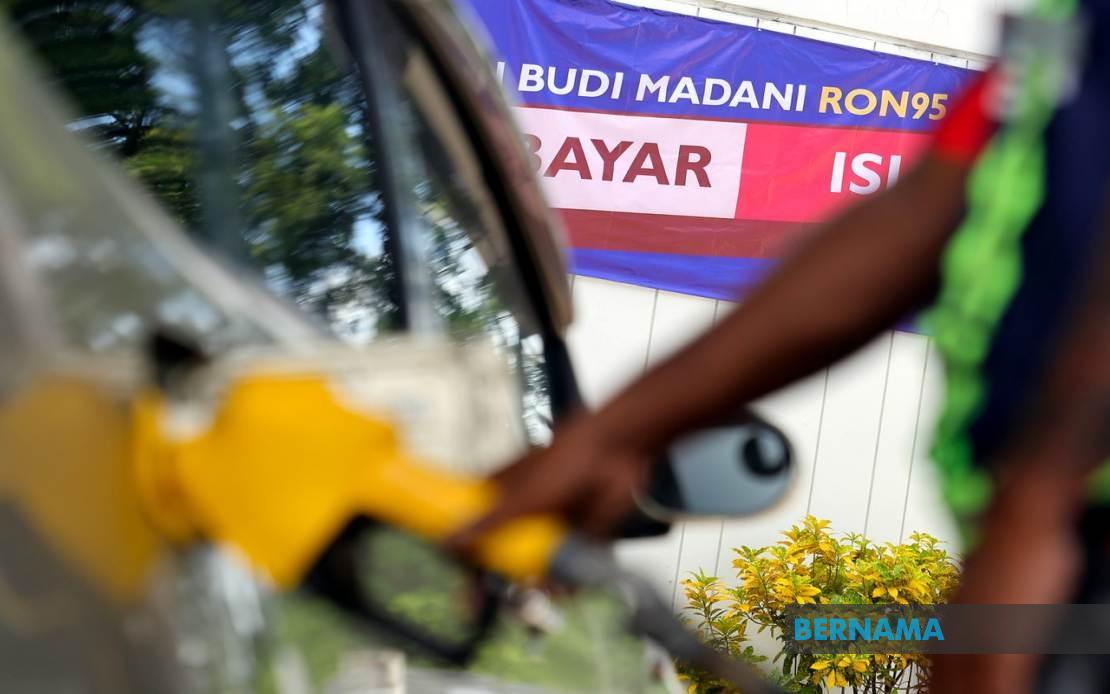
The Malaysian government has committed to sustaining its full slate of social assistance programmes even as petroleum subsidies are projected to cost the federal budget nearly RM40 billion in 2024, according to Deputy Finance Minister Liew Chin Tong. Speaking during parliamentary question time, Liew reaffirmed that neither existing subsidies nor cash assistance schemes—including the Sumbangan Tunai Rahmah direct cash transfer and the Sumbangan Asas Rahmah basic assistance grant—would be trimmed to offset the mounting energy costs driven by geopolitical tensions in West Asia.
The significant subsidy outlay reflects the intersection of two policy priorities: maintaining price stability for consumers and absorbing the impact of volatile global petroleum markets. When oil prices spiked in March and April 2024 amid regional instability, international benchmark prices climbed as high as RM5 per litre. Without intervention, Malaysian motorists would have faced corresponding pump price increases that could have cascaded through the broader economy, pushing up transport and logistics costs. Instead, the government's commitment to price controls shielded households from these shocks, with consumers continuing to pay RM1.99 per litre during the most acute phase of the crisis.
The mechanism anchoring this stability is the BUDI MADANI RON95 programme, introduced in September 2023. The scheme combines two policy tools that work in tandem: a fixed retail price for the standard 95-octane petrol grade and a consumption quota system that rations supply. Rather than letting market forces determine prices, the government absorbs the differential between its capped retail price and the actual cost of importing petroleum products. This approach prioritises affordability over market efficiency, a trade-off that most emerging economies struggle to sustain over extended periods owing to fiscal constraints.
Liew's parliamentary response addressed concerns from Hulu Langat member Mohd Sany Hamzan about whether the government might be forced to pare back assistance programmes in other sectors—including food subsidies, school support, and the direct cash transfer initiatives—to manage the ballooning petroleum subsidy bill. Such worry is not unfounded; many governments facing steep subsidy costs have historically been pressured by international financial institutions or fiscal realities to choose between maintaining energy price caps and funding social programmes. The Deputy Finance Minister's unequivocal rejection of any reduction suggests either considerable fiscal space, confidence in continued revenue performance, or a political calculation that scaling back assistance would be electorally damaging.
The implicit framing in Liew's statement positions Malaysia's fuel subsidy architecture as a competitive advantage rather than a liability. He highlighted the supply security dimension, noting that Malaysia's domestic petroleum production and government stock management ensure consistent fuel availability at petrol stations nationwide, contrasting this with import-dependent economies that may face occasional supply disruptions. The combination of price stability and supply assurance creates predictability for businesses and households, reducing the inflation pass-through that would otherwise occur when global commodity prices spike.
Context matters significantly for Malaysian policymakers. The country's petroleum sector remains a substantial revenue contributor to the federal budget through taxes and royalties from major oil and gas producing states. However, price subsidies represent a direct expenditure rather than foregone revenue, making the fiscal impact more immediately visible. The RM40 billion projection assumes sustained geopolitical tensions in the Middle East; any escalation or de-escalation would shift the subsidy burden upward or downward respectively. This embedded uncertainty complicates medium-term budgeting and makes forward-looking fiscal commitments inherently risky.
The political economy of subsidies in Malaysia reflects deeper structural realities. Direct cash transfers like Sumbangan Tunai Rahmah and Sumbangan Asas Rahmah are relatively recent innovations, introduced or expanded to provide targeted relief to lower-income groups. These programmes enjoy broad support across the political spectrum because they are transparent, verifiable, and clearly visible to recipients. By contrast, fuel price caps operate as implicit subsidies that benefit all consumers but are less visible and often take for granted. Maintaining both simultaneously sends a message that the government prioritises protecting household purchasing power across multiple dimensions—energy, cash income, and food security.
For Malaysian businesses and consumers, the government's stance creates a stable operating environment in the near term. Manufacturing firms relying on transportation and logistics can forecast costs with greater certainty. Households' real incomes are not eroded by pump price increases that would otherwise ripple through supermarket prices and transport fares. This stability may support consumption and investment during a period when regional economic growth remains modest. However, the sustainability question lingers: how long can the government sustain nearly RM40 billion in annual petroleum subsidies alongside other spending commitments?
International experience provides cautionary lessons. Indonesia, Thailand, and Vietnam have all attempted energy subsidy regimes in recent decades, only to face mounting fiscal pressures that eventually forced painful adjustment. When subsidies become unsustainable, governments typically phase them in, sparking public backlash and inflationary episodes. Malaysia's explicit political commitment to maintaining current subsidy levels suggests policymakers believe either the current fiscal trajectory is sustainable or that electoral and social risks of reduction outweigh fiscal concerns. The coming budget cycles will reveal whether this posture can be maintained as global oil market conditions evolve and domestic revenue performance fluctuates.

