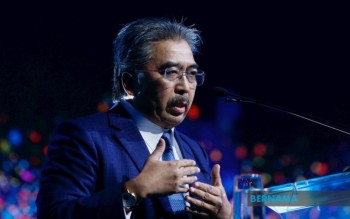
The Malaysian government is carefully calibrating its approach to funding a nationwide electric vehicle charging network, with the Ministry of Investment, Trade and Industry signalling that multiple financing mechanisms remain under consideration rather than a final decision. Speaking during a Dewan Negara session, MITI Minister Datuk Seri Johari Abdul Ghani clarified that while a potential EV levy has been discussed, authorities have not committed to implementation and are still evaluating which approach best serves both infrastructure development and consumer interests.
The underlying challenge facing policymakers is fundamentally economic. Malaysia currently operates under a fiscal deficit, constraining the government's capacity to finance large-scale public charging infrastructure comparable to what China has deployed. This fiscal reality forces difficult choices: the government can either continue absorbing costs through existing subsidy programmes, redirect substantial budget allocations toward charging networks, or distribute some financial burden across stakeholders in the automotive sector. Each option carries political and economic trade-offs that officials must carefully weigh.
Johari acknowledged this tension explicitly, noting that any costs imposed on vehicle manufacturers would ultimately be reflected in consumer prices. This pass-through effect means that the levy question is not merely a technical matter of revenue collection but rather a decision about who ultimately bears the expense of transitioning Malaysia's transportation ecosystem toward electrification. A manufacturer-focused levy would effectively increase the purchase price of electric vehicles, potentially dampening adoption rates among price-sensitive buyers who the government hopes to attract toward cleaner technology.
The minister's emphasis on understanding the "broader picture" reflects frustration with public discourse that treats EV development in isolation. Malaysia's electricity generation relies heavily on gas and coal-fired power plants, meaning that the environmental benefits of vehicle electrification depend simultaneously on transitioning the energy sector itself. Without corresponding investments in renewable electricity generation capacity, an expanded EV fleet would simply shift emissions from transport to the power generation sector. This reality complicates the case for rapid EV adoption and underscores why comprehensive infrastructure planning must precede aggressive policy commitments.
Under one proposal being considered, the government would impose a levy on each electric vehicle sold and direct revenues into a dedicated fund specifically for expanding the public charging network. This approach has conceptual appeal because it creates a direct link between EV adoption and charging infrastructure development—more vehicles would generate more revenue for more stations. However, Johari noted that such a mechanism alone cannot replicate China's charging ecosystem, suggesting that even with a dedicated fund, Malaysia would face years of infrastructure gaps that could frustrate early EV adopters.
The government's stated rationale for considering a levy reflects recognition that relying solely on vehicle manufacturers and distributors to build public charging networks is unrealistic. Private companies have little incentive to invest heavily in publicly accessible infrastructure that does not directly generate revenue, particularly if competing manufacturers' customers also benefit from the network. This classic public goods problem necessitates some form of government intervention, whether through direct budget allocation or industry-wide cost-sharing mechanisms.
Johari's comments reveal genuine policy ambivalence rather than bureaucratic evasion. Officials appear genuinely uncertain whether the priority should be maximising EV adoption rates by keeping purchase prices competitive, or establishing charging infrastructure sufficiently robust that early adopters face minimal range anxiety. These objectives can conflict: a steep EV levy funds better infrastructure but slows adoption, while keeping prices low encourages purchases but risks creating a fleet of vehicles without adequate charging networks to support them.
The minister's reference to Malaysia maintaining subsidy programmes alongside infrastructure investment signals ongoing government commitment to making EVs affordable for consumers. Yet this dual support—subsidies plus infrastructure investment—places competing demands on a constrained budget. Policymakers must decide whether to fund charging networks through new taxation (on EVs or manufacturers), reallocation of existing subsidy spending, or sustained deficit financing. None of these options is politically or economically costless.
For Malaysian consumers and the automotive industry, this deliberation period creates uncertainty. Vehicle manufacturers cannot confidently plan production volumes or pricing strategies without knowing whether a levy will be imposed and at what rate. Consumers considering EV purchases face ambiguous cost calculations, unsure whether future price increases are likely. This uncertainty can actually depress adoption rates, as both manufacturers and buyers adopt a wait-and-see posture rather than committing to the technology.
Regionally, Malaysia's EV policy choices carry implications beyond its borders. As a middle-income country with developing but improving automotive manufacturing capacity, Malaysia's decisions about EV taxation and infrastructure investment could influence policy thinking elsewhere in Southeast Asia. Countries like Thailand and Indonesia are similarly grappling with how to balance EV promotion against fiscal constraints and energy infrastructure realities, and Malaysia's eventual choices may serve as a model or cautionary tale.
The coming weeks will likely see more detailed policy proposals emerge as MITI attempts to build stakeholder consensus. Industry consultations with vehicle manufacturers, electricity suppliers, consumer groups, and budget agencies will inform the government's final decision. What appears clear is that Malaysia will not attempt to impose a comprehensive charging network relying entirely on public funds—some cost-sharing mechanism seems inevitable. The precise design and implementation timeline remain open questions that will significantly affect Malaysia's EV transition trajectory.

