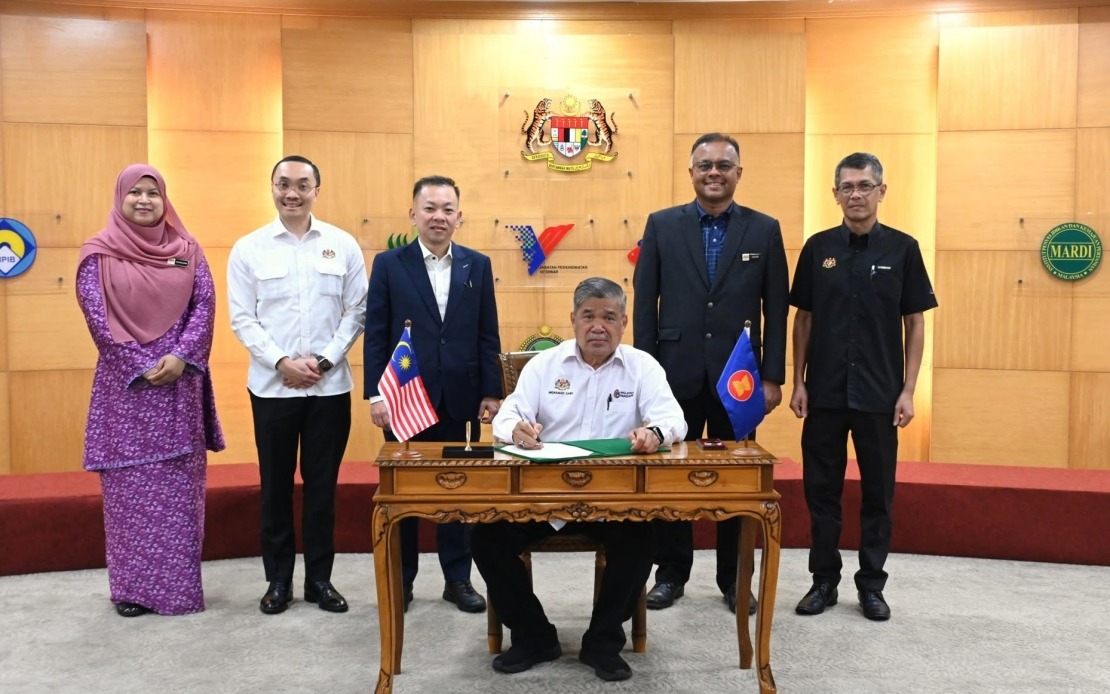
Malaysia has positioned itself to substantially broaden its agricultural export opportunities and modernise its farming practices through two freshly inked Memoranda of Understanding negotiated at ASEAN level. The agreements, finalised during the ASEAN Ministers on Agriculture and Forestry Meeting, represent a strategic pivot towards securing regional supply chain resilience whilst simultaneously tapping into emerging climate-resilient agricultural technologies. Minister Datuk Seri Mohamad Sabu, leading the Ministry of Agriculture and Food Security, formally executed both accords on Malaysia's behalf, signalling the government's commitment to reshaping the nation's agricultural sector.
The inaugural agreement, styled the ASEAN Cooperation in Agriculture and Forest Products Scheme, encompasses collaboration spanning five interconnected dimensions that collectively address both commercial and environmental imperatives. Malaysia will leverage its regional standing to champion agri-food initiatives whilst the Ministry of Plantation and Commodities assumes leadership responsibilities for palm oil and cocoa commodities across ASEAN. This dual-leadership architecture reflects Malaysia's dual strength in producing both commodity crops and processed agricultural goods, positioning the nation as a bridge between commodity-producing states and value-added agricultural economies within the bloc.
Under this framework, participating nations will mount coordinated international campaigns defending palm oil's reputation in global markets, a dimension particularly significant given sustained criticism from Western markets and emerging alternatives. Beyond commodity defence, the scheme opens pathways for broader market penetration encompassing industrial crops, livestock products, botanical extracts, medicinal formulations and forest-derived goods ranging from cultivated mushrooms to wild honey harvests. For Malaysian producers, especially small and medium enterprises seeking international outlets, this represents meaningful de-risking of market entry across ASEAN borders.
The foundational objective of strengthening regional food security through this cooperative framework addresses a persistent vulnerability across Southeast Asia. By coordinating agricultural production, implementing joint pest management protocols and synchronising responses to natural disasters affecting harvests, member states can construct more redundant supply networks. For Malaysia specifically, which imports substantial volumes of rice, fish and processed foods, assured access to ASEAN-sourced commodities during disruptions—whether from flooding in the Mekong Delta or disease outbreaks affecting livestock—provides tangible strategic benefit.
The second bilateral accord, negotiated between ASEAN collectively and China, constitutes an ambitious five-year agenda spanning eighteen distinct cooperation domains. This represents a significant expansion of the established ASEAN-China partnership, recognising China's technological prowess in agricultural innovation and its enormous consumer market hungry for quality tropical products. The agreement particularly emphasises low-carbon climate-smart agriculture, a domain where Chinese research institutions have developed substantial expertise that can be transferred to Malaysian farmers seeking to reduce emissions whilst maintaining productivity.
Climate-smart agricultural technologies—ranging from precision irrigation systems and drought-resistant crop varieties to soil conservation techniques and renewable energy applications in farming—address dual pressures confronting Malaysian agriculture. The sector faces mounting pressure to reduce its carbon footprint amid international climate commitments whilst simultaneously confronting genuine environmental constraints: soil degradation from intensive monoculture, water scarcity affecting irrigation-dependent regions, and increasing weather volatility. Technology transfer mechanisms embedded in the ASEAN-China MoU could accelerate adoption of solutions already validated in comparable agro-climatic zones, compressing the timeline for domestic innovation cycles.
Sustainable forest management provisions within the China accord resonate particularly for Malaysia, where timber and palm oil production intersect with biodiversity conservation objectives. Chinese investment in developing sustainable harvesting techniques and forest restoration methodologies could strengthen Malaysia's capacity to demonstrate responsible resource stewardship, addressing persistent international criticism regarding deforestation. This dimension carries implications beyond environmental concerns; international buyers increasingly differentiate products on sustainability credentials, and enhanced capabilities here translate directly to market premiums.
Disaster risk management and agricultural insurance components acknowledge the escalating frequency of extreme weather events impacting agricultural production across the region. Malaysia's experience with seasonal flooding in granary regions like Kedah and Perlis, combined with emerging drought pressures in other zones, creates urgent demand for sophisticated risk-management infrastructure. The MoU facilitates knowledge sharing regarding index-based insurance products, early warning systems and crop diversification strategies proven effective elsewhere, enabling Malaysian policymakers to design tailored interventions.
Cross-border pest and disease control mechanisms represent perhaps the most immediately tangible benefit, particularly following recent agricultural disease incursions. Coordinated surveillance systems, harmonised quarantine protocols and rapid-response capabilities embedded in ASEAN frameworks can prevent localised outbreaks from cascading into regional calamities. For Malaysia's livestock and horticultural sectors, such coordination substantially reduces exposure to devastating diseases like African swine fever or devastating plant pathogens that can rapidly decimate production.
The research cooperation and development expertise pathways facilitate Malaysian institutions—from the Malaysian Agricultural Research and Development Institute to university programmes—to participate in collaborative projects addressing regionally specific challenges. This creates reciprocal benefit: Chinese researchers gain access to tropical test environments and Malaysian expertise regarding equatorial agriculture, whilst Malaysian scientists access advanced methodologies and funding unavailable domestically. Such arrangements strengthen the nation's research ecosystem without requiring proportional domestic investment.
Trade information-sharing mechanisms represent an often-overlooked dimension addressing information asymmetries that persistently disadvantage smaller producers. Real-time market intelligence regarding commodity prices, emerging demand patterns, regulatory changes and competitor activities historically flowed predominantly from established trading hubs to peripheral producers. Enhanced information systems can democratise such access, enabling Malaysian smallholders and processors to make more informed production decisions and identify niche market opportunities.
For Malaysian policymakers, these agreements signal recognition that agricultural competitiveness increasingly depends on technological adoption, regional coordination and climate adaptation rather than resource endowment alone. The nation's labour constraints, rising production costs and environmental pressures all necessitate transition towards higher-value, lower-carbon production models. These MOUs provide institutional scaffolding facilitating such transformation whilst simultaneously protecting existing market positions for palm oil and commodity crops during the transition period.
The timing of these agreements reflects broader geopolitical calculations within ASEAN-China relations and signals how agricultural cooperation functions as both practical development tool and soft-power mechanism. For Malaysia specifically, securing influential roles within the ASEAN agricultural cooperation scheme whilst accessing Chinese expertise and market opportunities positions the nation as a pivotal player bridging traditional commodity production with climate-smart modernisation, a positioning increasingly valuable as global markets differentiate sharply between sustainable and conventional products.

