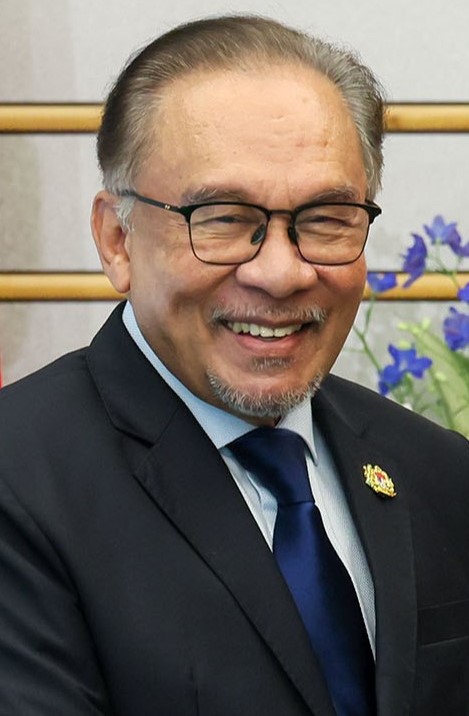
Prime Minister Datuk Seri Anwar Ibrahim's forthcoming visit to Ashgabat from June 18 to 19 marks a significant diplomatic engagement aimed at broadening the economic and political foundation between Malaysia and Turkmenistan, two nations that have historically maintained cordial but relatively modest bilateral connections.
The timing of this high-level visit underscores Malaysia's deliberate effort to expand its international footprint beyond traditional Southeast Asian partners, particularly into Central Asia where energy resources and untapped market opportunities present compelling strategic value. Turkmenistan, situated as a critical hub on the ancient Silk Road and modern energy corridors, holds considerable relevance for Malaysian energy security and trade diversification objectives in an increasingly multipolar global landscape.
At the forefront of discussions during the visit will be cooperation in the oil and gas sector, an area where Turkmenistan's vast hydrocarbon reserves align strategically with Malaysia's energy requirements and its growing interests in liquefied natural gas supplies. The Central Asian nation ranks among the world's largest natural gas producers and possesses significant untapped petroleum resources, making energy partnerships a logical foundation for deeper bilateral engagement. For Malaysia, diversifying energy sources and establishing long-term supply relationships through direct government-to-government channels reduces vulnerability to market price volatility and geopolitical disruptions in traditional supply regions.
Beyond energy cooperation, transportation and logistics represent emerging areas of mutual interest where Malaysia's advanced port infrastructure and expertise in maritime trade can complement Turkmenistan's geographic position as a bridge between Asia and Europe. The development of connectivity frameworks, whether through regional initiatives or bilateral arrangements, could position Malaysian companies for advantageous roles in facilitating Central Asian trade flows and accessing European markets through alternative routes. This aligns with Malaysia's broader vision of becoming a regional logistics hub and deepens its involvement in transcontinental economic corridors.
The agricultural dimension of the bilateral engagement reflects Turkmenistan's substantial agricultural potential and Malaysia's technological capabilities in farming innovation, food processing, and agribusiness development. With global food security concerns mounting and regional demand for diverse agricultural products increasing, collaborative ventures in this sector could yield mutual benefits. Malaysian agricultural expertise and investment in Turkmenistan's farming sector could enhance productivity, while Turkmenistan's exports of cotton, cereals, and other products could find ready markets within Southeast Asia through Malaysian intermediaries and trading networks.
This visit also carries broader geopolitical significance within Malaysia's larger foreign policy strategy of balancing relationships across diverse regions and avoiding excessive dependence on any single power bloc. By cultivating partnerships with Central Asian nations, Malaysia reinforces its positioning as a genuine Asian power with legitimate interests spanning from the Indian Ocean to the heart of the continent. Such diversification strengthens Malaysia's diplomatic weight in international forums and creates alternative channels for influence and cooperation beyond the traditionally crowded Southeast Asian context.
The engagement with Turkmenistan further demonstrates Malaysia's commitment to the broader notion of Islamic solidarity and cooperation, given that both nations share cultural and religious linkages. This soft power dimension, while less tangible than economic metrics, facilitates people-to-people connections, educational exchanges, and cultural initiatives that deepen mutual understanding and create constituencies within both societies supportive of sustained bilateral cooperation.
From Turkmenistan's perspective, this visit represents an opportunity to strengthen ties with one of Southeast Asia's most economically dynamic and influential nations. Malaysia's substantial sovereign wealth, sophisticated financial services sector, and established trade networks make it an attractive partner for diversifying Turkmenistan's international economic relationships beyond its traditional Russian and Chinese connections. Enhanced cooperation with Malaysia could unlock new investment opportunities and market access for Turkmenistan's resources.
The visit also signals Malaysia's confidence in navigating complex international relationships despite domestic political dynamics and regional tensions. The ability to successfully conduct high-profile diplomatic missions while managing multiple policy priorities abroad reinforces Malaysia's credibility as a stable and reliable partner for nations seeking diversified international engagement.
Future collaboration between Malaysia and Turkmenistan, if successfully negotiated during this visit, could establish frameworks for regular high-level exchanges, sectoral working groups, and potentially joint ventures in energy, manufacturing, and services. Such institutional arrangements typically evolve gradually but accumulate significant dividends over time through increased trade volumes, investment flows, and technological transfer.
For Malaysian investors and businesses, this diplomatic opening creates pathways into Central Asian markets previously distant or difficult to access. The reduction of political friction and establishment of government-endorsed cooperation frameworks lower transaction costs and risks associated with international business expansion. Companies in engineering, petrochemicals, manufacturing, and services sectors may find new opportunities emerging from formal bilateral arrangements.
The success of Anwar's Ashgabat visit will likely be measured not merely by symbolic agreements but by the subsequent implementation of concrete projects and the establishment of durable institutional mechanisms for ongoing cooperation. Whether the energy partnerships translate into actual commercial deals, whether transportation and logistics frameworks facilitate measurable trade increases, and whether agricultural initiatives generate tangible economic benefits will ultimately determine whether this visit represents a genuine turning point in Malaysia-Turkmenistan relations or remains primarily a diplomatic gesture.