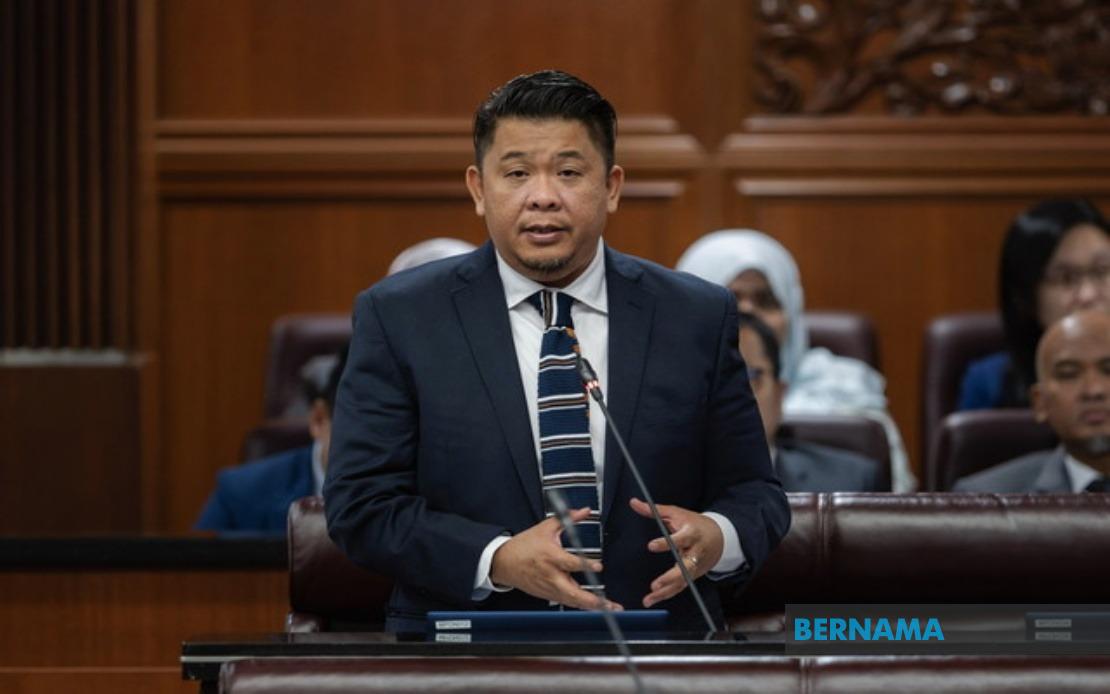
The Malaysian government maintains continuous oversight of more than 21,000 nationals residing or travelling in 14 countries affected by armed conflict, with contingency measures in place to execute rapid evacuations if security conditions deteriorate. Deputy Foreign Minister Datuk Lukanisman Awang Sauni revealed this extensive monitoring operation during parliamentary questioning, emphasising that lessons from managing previous crises have substantially improved the nation's preparedness for such scenarios. This disclosure underscores the scale of Malaysia's diaspora exposure to geopolitical instability and the administrative machinery required to safeguard their interests abroad.
The Foreign Ministry's operational framework reflects a sophisticated, multi-agency approach that extends well beyond traditional diplomatic channels. Lukanisman outlined how coordination flows through relevant government departments, civil protection bodies, and humanitarian organisations, while simultaneously leveraging partnerships with the Royal Malaysian Air Force for potential airlift capacity and commercial carriers capable of deploying charter aircraft. This integration of defence capabilities with civilian aviation resources suggests that Malaysian planners envision scenarios requiring rapid, large-scale population movements rather than merely assisting isolated individuals. The involvement of major corporations such as Petroliam Nasional Bhd, which maintains its own employee evacuation protocols, demonstrates how private sector operators embedded in conflict zones contribute to the broader safety architecture.
Most Malaysian diplomatic missions across affected regions maintain current contingency blueprints that address several critical operational dimensions. These plans include systematic mapping of citizen locations, established communication protocols to maintain contact during emergencies, coordination mechanisms for pooling resources and personnel, and clearly delineated evacuation procedures calibrated to different threat levels. Rather than implementing a single uniform response, the Foreign Ministry has designed its protocols to activate proportionally based on the evolving security landscape and the number of nationals directly at risk. This graduated approach acknowledges that overreaction can prove counterproductive, while inadequate responsiveness could endanger lives, requiring officials to continuously reassess conditions and adjust deployment accordingly.
Citizens seeking to enhance their safety profile are encouraged to register their whereabouts through multiple channels available at Malaysian embassies and consulates. The availability of digital registration via the e-Consular system, coupled with the MyWorldAlert mobile application, represents a modernised attempt to maintain real-time awareness of the Malaysian population abroad. This technological infrastructure enables officials to rapidly locate and contact nationals during emergencies, while simultaneously allowing citizens to receive official advisories and coordinate assistance requests. The registration process itself serves as an important safety mechanism, as unregistered individuals become significantly harder to locate and assist when crises materialise.
The Middle East has proven a particular focal point for Malaysian evacuation readiness, given the concentration of citizens engaged in employment, studies, and religious pilgrimage throughout the region. Umrah operators and student populations represent distinct constituencies with specific vulnerability profiles, requiring tailored communication strategies and evacuation logistics. The government's explicit mention of preparedness for assisting students reflects awareness that younger Malaysians abroad may lack the institutional support networks available to corporate employees or established migrant communities, potentially facing greater information gaps and emotional distress during crises.
Since the escalation of West Asian conflict earlier in 2024, Malaysia's Foreign Ministry issued three consecutive travel advisories reflecting the evolving threat assessment. These warnings guided Malaysians in planning travel decisions and alerted those already in the region to potential risks. The subsequent reopening of regional airspace, facilitated by the ceasefire announcement on April 8, has substantially improved the operational environment for potential evacuations, reducing the timeframe and logistical complications that would attend airspace closures. However, the existence of detailed evacuation plans acknowledges that ceasefires remain fragile and can reverse without warning, necessitating sustained vigilance rather than complacency.
The deputy minister's emphasis on experience-derived preparedness reflects Malaysia's engagement with multiple international crises spanning decades. The nation has evacuated citizens from conflict zones including Lebanon, Syria, and the Philippines at various junctures, generating institutional knowledge about the practical challenges of moving populations across borders under duress. This experiential foundation distinguishes Malaysia's approach from theoretical planning, as officials draw upon lessons learned from actual implementation rather than hypothetical modelling alone.
The coordination mechanism encompasses travel agencies and umrah operators, recognising that these commercial intermediaries often maintain more current information about client whereabouts than government registries. By integrating private sector actors into the emergency response architecture, the Foreign Ministry extends its information-gathering reach while distributing the practical burden of evacuation across multiple capable actors. This approach also leverages existing commercial transportation infrastructure that already connects Malaysia to conflict-affected regions, potentially accelerating evacuation timelines compared to exclusive reliance on government resources.
For Malaysian nationals considering travel to or residence in conflict-affected countries, the government's public acknowledgment of monitoring and evacuation preparedness provides reassurance that their wellbeing remains a policy priority. Simultaneously, the emphasis on pre-registration and alert system utilisation conveys that citizens bear responsibility for maintaining contact with official channels. This implicit burden-sharing acknowledges that government capacity, however comprehensive, cannot effectively assist those who remain entirely disconnected from official awareness systems.
The revelation of 21,427 tracked nationals across 14 countries suggests Malaysia hosts a substantial expatriate population engaging in economic, educational, and religious activities throughout geopolitically unstable regions. This distribution reflects both the globalised nature of Malaysian economic interests and the deep cultural ties linking Malaysian Muslims to the Middle East and broader Islamic world. Managing the intersection of these legitimate transnational engagements with national security responsibility represents an ongoing policy challenge requiring sustained institutional commitment and resource allocation.

