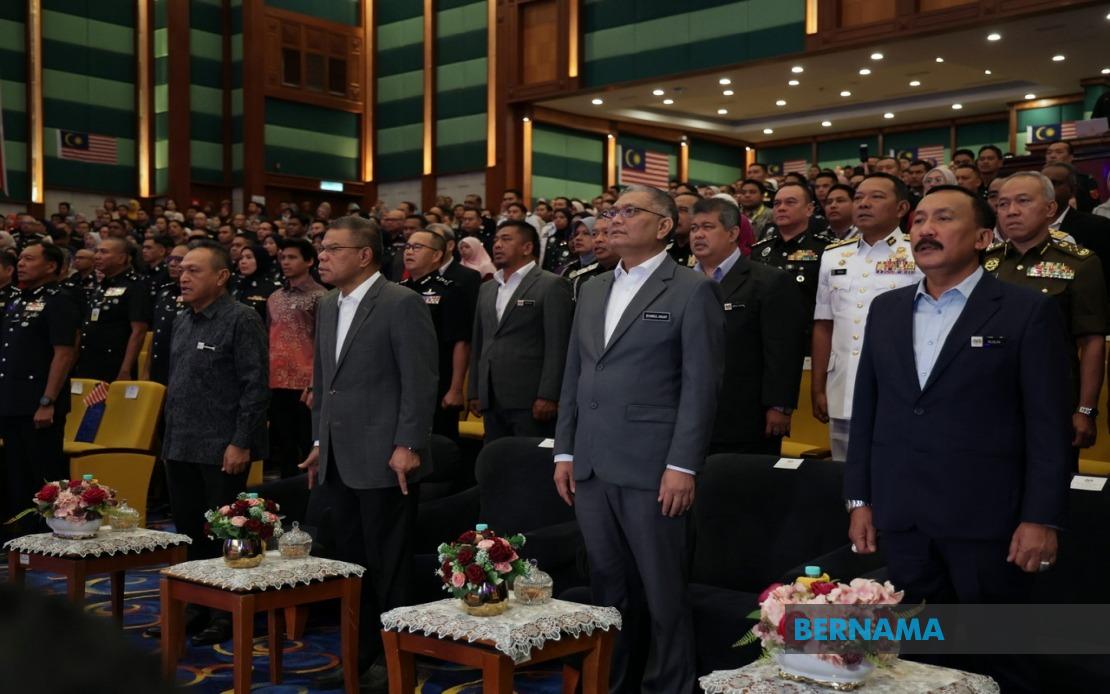
Malaysia's Home Minister Datuk Seri Saifuddin Nasution Ismail will present a sweeping security enhancement programme to the Cabinet addressing vulnerabilities at the country's international entry points. The initiative, developed in collaboration with Transport Minister Anthony Loke, represents a coordinated government response to multiple drug smuggling incidents that have raised questions about enforcement effectiveness at key gateways including Kuala Lumpur International Airport (KLIA).
The accelerated two-week timeline for drafting the comprehensive plan reflects Cabinet pressure to address public confidence in border controls. Officials have acknowledged that recent cases, particularly the seizure of approximately 25 kilogrammes of MDMA at Soekarno-Hatta International Airport in Indonesia involving a Malaysian pilot, have exposed systemic weaknesses that demand immediate attention. The government views these incidents as potential threats to Malaysia's international reputation and credibility as a secure transport hub in Southeast Asia.
A fundamental premise underpinning the initiative centres on dismantling what officials describe as "silo" approaches to security. Historically, different agencies operating at entry points have functioned with limited cross-institutional coordination, creating gaps that criminal networks may exploit. The new framework aims to establish integrated protocols where customs, immigration, aviation authorities, and police units share real-time intelligence and operational procedures, ensuring consistent enforcement standards across all checkpoints.
The technical dimensions of the enhancement programme are expansive. Officials are examining infrastructure upgrades, staff training protocols, and technological investments spanning closed-circuit television systems and advanced scanning equipment. Beyond hardware improvements, the plan prioritises human resource development, recognising that equipment effectiveness depends fundamentally on operator competency and situational awareness. The government intends to assess current staffing levels, training curricula, and performance metrics against international standards observed in comparable regional airports.
Saifuddin Nasution has emphasised that the review encompasses a holistic evaluation of operational requirements across multiple jurisdictions. Transport Ministry involvement reflects acknowledgment that airport operations extend beyond traditional security functions into aviation regulation and commercial movement protocols. This interagency approach signals recognition that effective border control demands coordination beyond Home Ministry purview, requiring alignment with civil aviation authorities and port management entities.
The pilot smuggling case provides immediate context driving the policy agenda. Malaysian authorities have coordinated with Indonesian counterparts to investigate whether the incident represents isolated criminal conduct or exposure of broader syndicate networks operating through Southeast Asian transportation corridors. Intelligence gathered from the suspect's interrogation will help determine whether operational vulnerabilities at Malaysian entry points have been systematically probed by organised trafficking groups. Such findings would substantially reshape enforcement priorities and resource allocation decisions.
For Malaysia's position within regional security frameworks, the initiative carries significance beyond domestic law enforcement. The country's status as a major aviation hub and significant port authority means security lapses generate international scrutiny affecting bilateral relationships and commercial partnerships. Enhanced controls at KLIA and other entry points demonstrate commitment to international standards, crucial for maintaining trade relationships and tourism competitiveness in Southeast Asia's competitive regional economy.
The Cabinet presentation timing reflects political sensitivity surrounding border security effectiveness. Public perception of porous defences undermines government authority and invites criticism from opposition parties questioning administrative competence. The expedited planning process signals determination to demonstrate responsive governance, although successful implementation will require sustained resource commitments beyond initial announcements. Officials face pressure delivering visible improvements within measurable timeframes to convince stakeholders that systemic reforms are genuine rather than cosmetic responses to isolated incidents.
International smuggling networks exploit entry point vulnerabilities systematically, adapting methodologies when detection risks increase. Malaysia's geographic position along major drug trafficking routes from Golden Triangle production zones to Australian markets means criminal organisations maintain persistent interest in identifying operational gaps. Enhanced domestic controls could redirect contraband flows toward neighbouring countries offering weaker enforcement, creating regional displacement effects requiring coordinated Southeast Asian policy responses through ASEAN frameworks.
The comprehensive plan's ultimate effectiveness depends on sustained implementation commitment beyond initial excitement surrounding announcement. Agencies must maintain coordination protocols amid competing operational pressures and resource constraints. Training programmes require regular updates as trafficking methodologies evolve. Technology requires ongoing maintenance and operator certification. The Home Ministry and Transport Ministry will face challenges ensuring sustained political will and budgetary support for border security enhancements as initial crisis pressures diminish and competing policy priorities emerge.
For Malaysian businesses reliant on efficient port and airport operations, enhanced security measures present mixed implications. Improved border efficiency through streamlined coordinated procedures could accelerate legitimate cargo movement, potentially offsetting costs associated with new scanning equipment and extended staff screening protocols. However, temporary operational disruptions during implementation phases may create short-term logistical challenges requiring advance planning by shipping companies and freight forwarders operating through Malaysian gateways.
The government's acknowledgment that entry point weaknesses require comprehensive, coordinated institutional reform represents significant policy evolution from previous incremental approaches emphasising isolated agency improvements. Success requires transcending traditional bureaucratic boundaries where agencies prioritised operational autonomy over integrated security architecture. The Cabinet's directive establishing two-week planning deadlines, while compressed, demonstrates political commitment to prioritising border security as governmental priority alongside economic development and social policy objectives.

