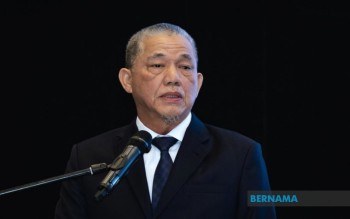
Deputy Prime Minister Datuk Seri Fadillah Yusof has unveiled an ambitious strategy to breathe new economic life into Malaysia's retiring coal infrastructure by converting power station sites into renewable energy and battery storage hubs. Speaking at the World Economic Forum's energy decarbonisation conference in Kuala Lumpur, Fadillah outlined the proposed National Coal Site Repurposing Framework, which aims to prevent valuable industrial assets from becoming economically stranded as the country transitions away from coal generation. The announcement reflects a pragmatic approach to managing the country's energy transition while maintaining productive industrial capacity and employment opportunities in coal-dependent regions.
The existing coal power plant network represents far more than ageing electricity infrastructure. These facilities sit on strategically located land parcels, benefit from established transmission connections, and are often surrounded by supporting industrial ecosystems that have developed over decades. Rather than allowing these sites to languish after coal operations cease, the government now views them as valuable platforms for deploying next-generation clean energy technologies. This reframing transforms what might otherwise be perceived as costly closures into entrepreneurial opportunities for renewable energy deployment and emerging industries. The framework is grounded in a World Economic Forum insight paper titled "Beyond Coal: Building a Flexible, Resilient and Clean Power System for Malaysia," which serves as the policy blueprint for this transition strategy.
Fadillah, who also holds the Energy Transition and Water Transformation portfolio, emphasised that each retiring power station represents a gateway to economic regeneration. Beyond merely shutting down operations, the government envisages these locations becoming centres of renewable energy manufacturing, battery technology development, and advanced energy storage deployment. This approach addresses a critical challenge facing developing economies undergoing energy transitions: ensuring that the workforce and communities dependent on coal industries are not abandoned but instead repositioned for tomorrow's clean energy economy. The framework is designed to foster ongoing dialogue between government agencies, energy regulators, utility companies, private investors, and local stakeholders, ensuring that repurposing efforts benefit all parties and enjoy broad support.
Malaysia has committed to three pivotal decarbonisation milestones that will reshape the national energy landscape. The government will not approve any new coal-fired power plants, plans to phase out coal-fired electricity generation entirely by 2044, and aims to achieve 70 percent renewable energy installed capacity by 2050. These targets require a carefully orchestrated transition that does not sacrifice energy security or economic stability. The Deputy Prime Minister stressed an often-overlooked risk in energy transitions: the possibility of merely substituting one form of import dependence for another. If Malaysia accelerates coal retirement without matching growth in domestic renewable capacity, the country risks becoming disproportionately reliant on imported liquefied natural gas, exposing the economy to international price volatility and geopolitical leverage.
This strategic concern has profound implications for Malaysia's energy independence and regional standing. Unlike renewable resources such as solar and wind, which are domestically available and immune to international supply disruptions, LNG must be purchased on global markets where pricing is influenced by geopolitical tensions, weather patterns affecting production regions, and competing demand from other Asian economies. A transition that replaces coal dependence with substantial LNG import reliance would leave Malaysia vulnerable to fuel cost spikes and supply uncertainties that could undermine industrial competitiveness and household energy affordability. The government's articulated position—that successful energy transition means reducing external dependence rather than merely shifting its source—signals sophisticated understanding of the economic security dimensions of decarbonisation.
To support this balanced transition, the Ministry of Energy Transition and Water Transformation is prioritising several complementary initiatives. Large-scale solar deployment remains the cornerstone strategy, leveraging Malaysia's equatorial geography and abundant sunshine. The Corporate Renewable Energy Supply Scheme is being promoted to enable businesses to directly procure clean electricity, creating market demand for renewable development. Battery energy storage systems are being advanced to address renewable intermittency challenges and stabilise grid frequency. Smart grid modernisation projects are being accelerated to enable flexible distribution of variable renewable generation across the transmission network. These initiatives represent an integrated approach rather than isolated policy interventions, acknowledging that successful energy transitions require simultaneous development of generation capacity, storage infrastructure, and distribution intelligence.
Regional cooperation features prominently in Malaysia's decarbonisation strategy. The Deputy Prime Minister reaffirmed commitment to developing the ASEAN Power Grid, which would allow Southeast Asian countries to trade electricity across borders based on real-time generation patterns and demand variations. Such cross-border electricity markets would increase overall system flexibility, allowing countries with abundant solar generation to export surplus capacity to neighbours experiencing peak demand periods. This regional approach multiplies the efficiency gains achievable through domestic renewables alone and strengthens energy security across the bloc by diversifying supply sources. For Malaysia, participating in an integrated ASEAN electricity market positions the country as both a potential generator of clean energy exports and a beneficiary of renewable generation from neighbouring nations, particularly those with hydroelectric resources.
Malaysia is simultaneously exploring long-term low-carbon energy options that extend beyond conventional renewables. Advanced nuclear technologies and small modular reactors are being examined as potential contributors to the nation's future energy mix. However, the government's approach to these technologies is carefully calibrated, emphasising that deployment would only proceed alongside rigorous safety protocols, strong governance frameworks, regulatory preparedness, and genuine public confidence. This cautious stance reflects recognition that nuclear power requires institutional capacity and social acceptance that must be deliberately built over time. The consideration of advanced nuclear options represents strategic hedging against the possibility that renewable deployment alone may prove insufficient to meet future demand growth whilst simultaneously retiring coal and avoiding excessive LNG dependence.
The broader implications of Malaysia's coal site repurposing strategy extend beyond domestic energy policy into questions of regional industrial competitiveness and economic transformation. Regions currently dependent on coal mining and power generation face genuine challenges as the energy transition accelerates globally. Countries and regions that proactively develop coherent strategies for transitioning coal-dependent workforces and communities tend to experience smoother economic adjustments with less social dislocation than those allowing transitions to occur chaotically. Malaysia's framework, by explicitly treating coal site repurposing as an economic development opportunity rather than merely a regulatory closure, may serve as a model for other coal-dependent Southeast Asian economies contemplating similar transitions.
The announcement also signals Malaysia's positioning within evolving global climate commitments and international investment flows. Multinational clean energy companies and green technology investors increasingly prioritise markets that demonstrate credible, long-term commitment to decarbonisation combined with realistic transition strategies that maintain economic viability. By articulating a detailed framework for coal site conversion and emphasising regulatory stability, Malaysia enhances its attractiveness as a destination for renewable energy manufacturing, battery technology development, and clean energy infrastructure investment. This commercial dimension of the transition strategy recognises that attracting private capital is essential for financing the massive infrastructure buildout required to replace retiring coal generation with renewable alternatives.
Implementing the National Coal Site Repurposing Framework will require substantial coordination between government ministries, energy regulators, and private sector stakeholders over the coming decades. Success depends on timely regulatory decisions, appropriate incentive structures for renewable developers, workforce retraining programmes for coal industry employees, and sustained public communication about transition benefits. The framework's emphasis on stakeholder engagement acknowledges that energy transitions succeed or fail based partly on technical feasibility but equally on social acceptance and economic distributional outcomes. Ensuring that coal plant communities benefit from repurposing opportunities rather than bearing transition costs disproportionately will be essential for maintaining political support for the broader decarbonisation agenda.

