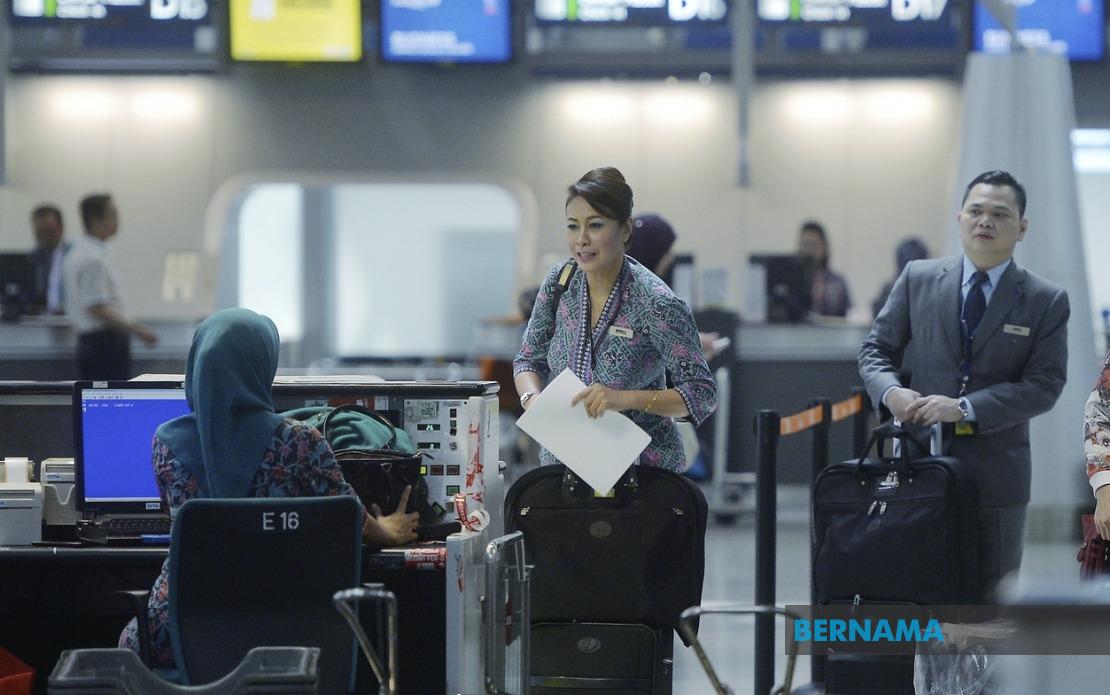
Malaysia's Border Control and Protection Agency (AKPS) will implement comprehensive enhancements to security screening procedures affecting pilots and flight crew across the nation's airports, according to director-general Datuk Seri Mohd Shuhaily Mohd Zain. The decision follows a high-level coordination meeting convened by the Transport Ministry that brought together representatives from AKPS, the Royal Malaysia Police (PDRM), and Malaysia Aviation Group (MAG) to review and strengthen existing security protocols at Malaysian aviation facilities.
The announcement comes in the wake of an incident that has raised serious concerns about security vulnerabilities in Malaysia's aviation system. On July 29, Indonesian customs authorities arrested a 39-year-old Malaysian pilot shortly after he arrived at Soekarno-Hatta International Airport in Jakarta, having just completed an international passenger flight departing from Kuala Lumpur. The suspect was carrying approximately 25 kilogrammes of ecstasy valued at roughly Rp60 billion in his luggage, concealed in a manner that initially evaded detection.
What makes this case particularly troubling for aviation authorities is that the pilot had successfully cleared all standard security screening procedures at Kuala Lumpur International Airport (KLIA) before his departure on July 28. Scanner-based baggage inspection, the primary technological safeguard at Malaysia's main international hub, failed to flag the contraband or produce suspicious imagery that would have warranted further investigation. The successful passage through KLIA's security checkpoint without incident suggests potential gaps in current detection methodologies or their application.
Mohd Shuhaily acknowledged the gravity of the situation by emphasizing that AKPS and all relevant government agencies are taking the matter with utmost seriousness. The involvement of Malaysia Aviation Group in the coordinating meeting reflects the aviation industry's direct concern, as any compromise in crew security protocols potentially affects not only the reputation of Malaysian carriers but also passenger safety and airline operations. MAG's attendance and stated commitment to enhanced measures indicates industry recognition that internal protocols may require supplementation.
The planned screening enhancements will cast a wider net than current procedures. All pilots, crew members, and associated airport staff will undergo more comprehensive and presumably more rigorous screening going forward. This expanded scope acknowledges that security vulnerabilities are not limited to a single checkpoint but rather exist across multiple touch points where aviation personnel interact with airport systems and security infrastructure.
The timing of this initiative reflects broader vulnerabilities within Southeast Asia's aviation security landscape. The region remains an attractive transit route for drug trafficking networks seeking to move contraband between production centers in Southeast Asia and consumption markets in Australia, East Asia, and beyond. The utilization of commercial flight crew to smuggle narcotics represents a significant operational challenge because it exploits the inherent trust placed in aviation professionals and their elevated access privileges at airports and aircraft.
Mohd Shuhaily's candid acknowledgment that police feedback is still being awaited to understand how the suspect evaded detection suggests a systematic review process underway. This investigation-driven approach to policy refinement is appropriate but also indicates that current preventive measures were insufficient. The gap between theoretical security procedures and their practical effectiveness in this instance warrants thorough examination to prevent recurrence.
The enhancement of screening procedures for aviation personnel specifically recognizes a critical security distinction: pilots and crew members occupy a privileged position within airport environments with access to sterile areas, aircraft cabins, and cargo holds that general passengers do not enjoy. Any compromise in the vetting of these individuals represents a potential breach affecting not merely customs enforcement but broader aviation security.
For Malaysian readers and regional observers, this development underscores the ongoing tension between facilitating efficient international aviation operations and maintaining robust security standards. The incident demonstrates that conventional baggage scanning, however technologically sophisticated, can be circumvented, particularly when individuals possess detailed knowledge of screening methodologies and checkpoint procedures through their professional experience. Enhanced screening frameworks will likely incorporate behavioral assessment, additional verification layers, and perhaps intelligence-sharing mechanisms with regional counterparts.
The interagency coordination evident in the Transport Ministry-led meeting reflects recognition that aviation security requires institutional collaboration. AKPS's border control mandate, PDRM's law enforcement capabilities, and MAG's operational expertise each contribute essential perspectives to developing layered defenses against misuse of aviation infrastructure for illicit purposes.
The broader implications for Southeast Asia are significant. Malaysia hosts one of the region's major aviation hubs and serves as a connecting point for numerous international routes. Security vulnerabilities at KLIA or other Malaysian airports affect not only Malaysian carriers but also partner airlines and regional aviation integrity. Enhanced screening standards may establish benchmarks influencing protocols across the region's aviation community.
Government and industry commitment to procedural enhancement, while reactive to this specific incident, represents a constructive response demonstrating responsiveness to security challenges. However, the effectiveness of new measures will ultimately depend on consistent implementation, adequate resourcing of screening personnel, and regular assessment of their actual impact on security outcomes. The coming months will reveal whether the announced enhancements represent substantive operational changes or primarily symbolic gestures of commitment to strengthened protocols.

