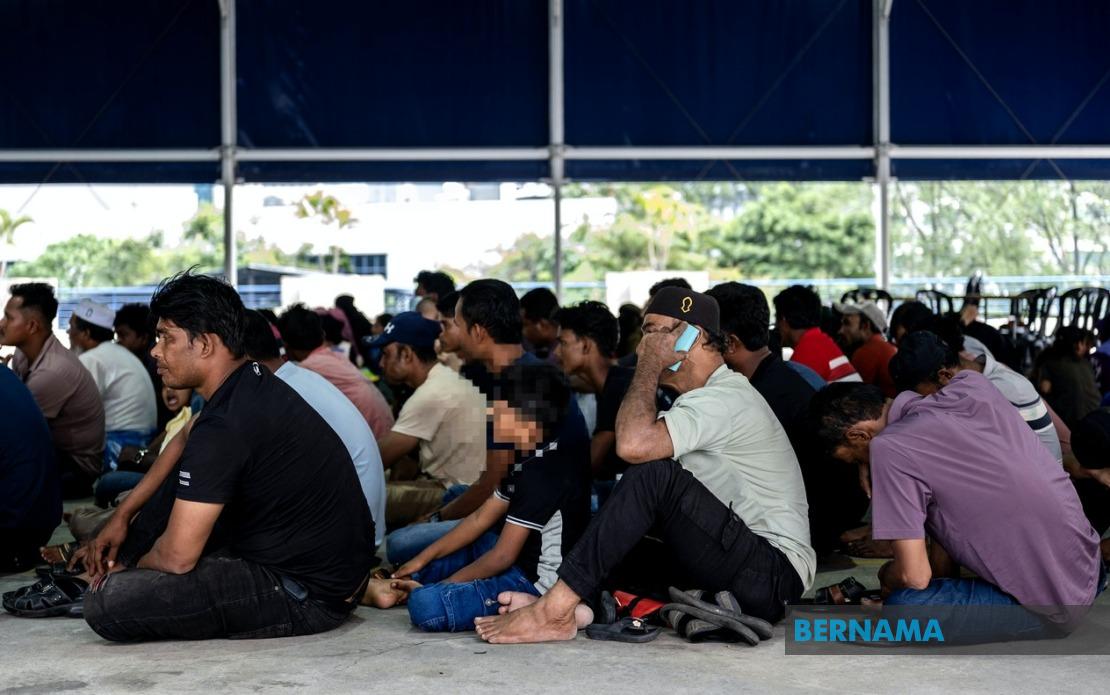
Malaysia is on track to produce its first substantial dataset on Myanmar refugees by the final three months of 2024, according to Home Minister Datuk Seri Saifuddin Nasution Ismail, marking a significant step in the government's effort to systematically catalogue and manage the displaced population within its borders. The announcement, made during a public engagement event in Putrajaya, underscores the administration's commitment to establishing verified records of individuals claiming refugee status, a longstanding challenge for Southeast Asia's second-largest economy as it grapples with regional displacement crises.
The preliminary figures will emerge from the Refugee Registration Document programme, a structured initiative administered by the Immigration Department that represents Malaysia's most comprehensive attempt to gather reliable biometric and identity information from those seeking recognition as refugees. This programme aligns with the National Security Council Directive No. 23 (Revision 2023), reflecting how refugee management has become intertwined with broader national security considerations in Malaysia's policy framework. The government's decision to formalise data collection through biometric registration represents a departure from previous ad hoc approaches and signals recognition that the refugee situation requires institutional solutions rather than case-by-case responses.
For Malaysian policymakers, the timing of this data collection carries particular importance. The country hosts one of Southeast Asia's largest refugee populations, with Myanmar nationals comprising a substantial portion following years of political instability and military conflict in their homeland. Yet reliable figures on their numbers have remained elusive, hampering both humanitarian planning and policy development. By establishing a verified database through the DPP programme, Malaysia aims to create the foundation for more targeted and efficient management of refugee affairs, moving beyond estimates that have varied considerably depending on the source.
The Home Minister's comments reveal that the initiative extends beyond Myanmar nationals, encompassing all individuals identified as refugees within Malaysian territory. This broader scope suggests the government recognises that irregular migration and displacement affect multiple nationalities and regions, requiring a unified registration framework rather than country-specific protocols. Such an approach could provide valuable intelligence on the full scope of Malaysia's refugee and asylum-seeker population, information currently fragmented across various government agencies and humanitarian organisations.
Once registered individuals are verified as legitimate refugees, they become eligible for priority repatriation efforts coordinated through Wisma Putra, Malaysia's foreign ministry. This two-stage process—registration followed by repatriation—reflects the government's stated preference for managed returns over indefinite settlement. However, repatriation depends heavily on conditions in countries of origin and the willingness of those governments to receive returnees, factors largely beyond Malaysia's control. The Myanmar situation particularly complicates this approach, given ongoing political turmoil and security concerns that may prevent safe returns for many registered refugees.
A critical challenge facing the programme's implementation involves persuading eligible refugees to come forward and participate in registration. Many in this population harbour legitimate fears about government intentions, having experienced persecution or conflict in their home countries. Trust-building and transparent communication about the programme's purposes and safeguards will be essential to achieving meaningful participation rates. The government's commitment to public outreach and explanation of the registration process suggests awareness of these sensitivities, though previous experience with similar initiatives across Southeast Asia indicates that reaching and convincing dispersed, vulnerable populations remains difficult.
From Malaysia's regional perspective, implementing a credible refugee registration system carries implications for its standing within ASEAN and among international humanitarian organisations. While Malaysia is not a signatory to the 1951 Refugee Convention, it has assumed significant de facto responsibilities for displaced persons. A transparent, biometric-based registration programme could enhance Malaysia's credibility with international partners while demonstrating commitment to humane, organised management practices. Conversely, if registration becomes perceived as a mechanism for deportation or restrictions on movement and livelihoods, participation could collapse and underground populations could expand, creating greater challenges.
The anticipated release of preliminary data in the fourth quarter will mark an important juncture for Malaysian refugee policy. These figures will provide the first systematic snapshot of refugee demographics, geographic distribution, vulnerability profiles, and other factors essential for effective programme design. Such data could inform decisions about resource allocation, service provision, and coordination between government agencies and humanitarian partners. It may also guide the government's approach to international advocacy regarding burden-sharing, as concrete numbers strengthen Malaysia's case for regional and global support in managing displacement.
Economically and socially, clarifying the refugee population's size and characteristics carries weight beyond administrative efficiency. Refugees' interactions with Malaysia's labour market, housing, education, and health systems currently occur within a data vacuum, making it difficult to assess impacts or design inclusive policies. Better information could enable more evidence-based decisions about refugee access to services and employment, balancing humanitarian obligations with domestic economic concerns. For Malaysian employers and communities, transparent registration and documented status could reduce exploitation and irregular employment arrangements that characterise much refugee work currently.
The programme's success will ultimately depend on sustained institutional commitment and sufficient resourcing beyond the fourth quarter announcement. Data collection represents only the initial phase; maintaining records, updating information, coordinating with other agencies, and linking registration to actual repatriation and support services require ongoing investment. Experience elsewhere in Southeast Asia suggests that registration systems often stall without continuous high-level political backing and adequate funding. Malaysia's willingness to maintain momentum will test whether this initiative represents genuine policy transformation or another data collection exercise that produces figures without corresponding action.
As Myanmar's political crisis persists and displacement pressures continue, Malaysia's refugee registration programme arrives at a critical juncture. The preliminary data expected in the fourth quarter will serve as a benchmark against which future progress can be measured. For the hundreds of thousands of displaced persons within Malaysia's borders, this systematisation of registration processes offers potential pathways toward clearer legal status and access to services, though it also introduces new uncertainties about government intentions and future repatriation. The months ahead will determine whether this initiative becomes a genuine turning point in how Malaysia addresses one of its most pressing humanitarian challenges.

