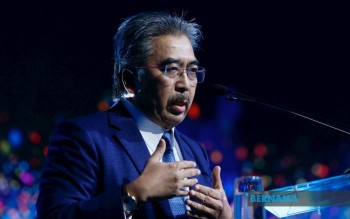
The Malaysian government has committed to conducting a thorough assessment of the country's import requirements and developing targeted policies designed to lower reliance on foreign sources, as it pursues a strategy to enhance domestic industrial capabilities and maximise value extraction from international commerce. Speaking at RHB Bank's RHB Progress Series 2026 conference in Kuala Lumpur on August 5, Minister of Investment, Trade and Industry Datuk Seri Johari Abdul Ghani outlined the administration's vision for transforming Malaysia's economic trajectory through homegrown innovation and strategic decision-making that prioritises national interests.
The government's decision to scrutinise import patterns reflects deeper concerns about Malaysia's ability to compete at higher income levels without sustained improvements to its productive capacity and technological sophistication. Johari emphasised that merely maintaining existing business practices would prove insufficient for Malaysia to achieve its aspirational goal of attaining high-income nation status. The World Bank currently sets the threshold for high-income economies at a gross national income per capita of US$14,375, a benchmark Malaysia currently falls short of by approximately 16 per cent, with the nation's GNI per capita standing at US$12,380. As this threshold continuously shifts upward over time, closing the income gap will demand consistent enhancements across multiple economic dimensions, particularly productivity levels, innovation capacity, and the overall complexity of Malaysia's industrial base.
Malaysia's trade performance offers encouraging signs of economic dynamism, yet also underscores the need for strategic evolution. Last year represented a historic milestone for the nation, as total trade surpassed RM3 trillion for the first time in Malaysian history. Exports increased by 6.5 per cent to reach RM1.61 trillion, whilst imports rose by 6.2 per cent to RM1.45 trillion, generating a trade surplus of RM151.8 billion. Despite these strong headline figures, the minister cautioned that without deliberate policy interventions and structural shifts, Malaysia risks becoming overly dependent on external supply chains and imported manufactured goods that could undermine long-term industrial self-sufficiency.
The government's proposed approach hinges on distinguishing between essential imports that genuinely serve Malaysia's development needs and those that could be sustainably produced domestically. Johari identified capital goods as a particular focus area for this review, signalling that the government recognises the difference between importing machinery and technology essential to industrial advancement and importing finished consumer products that displace local manufacturing. The minister warned that an uncritical reliance on cheaper foreign imports could gradually erode Malaysia's domestic industrial ecosystem, rendering the nation vulnerable to supply disruptions and limiting opportunities for local enterprises to develop manufacturing expertise and technological prowess.
To illustrate the real-world consequences of this challenge, Johari pointed to Malaysia's iron and steel industry as a cautionary example. Once capable of self-sufficiency, this sector has experienced substantial decline following the entry of larger international competitors producing comparable products at lower costs. This trajectory demonstrates how inadequate protection or support for emerging domestic capabilities can result in permanent loss of industrial capacity, constraining future economic options. The minister's implicit argument suggests that strategic intervention—whether through selective import restrictions, incentives for local production, or technology transfer agreements—becomes necessary to preserve and develop critical industries.
Johari articulated a nuanced position on foreign direct investment, indicating that Malaysia remains welcoming to international capital and expertise, but with important caveats. Rather than welcoming any foreign investment indiscriminately, the government should prioritise attracting foreign enterprises that introduce novel products, advanced technologies, and expertise that do not currently exist within Malaysia's industrial ecosystem. This approach would enable both foreign and domestic companies to flourish whilst simultaneously reducing unnecessary imports and expanding the technological frontier available to Malaysian manufacturers. Such a calibrated strategy recognises that not all foreign investment contributes equally to domestic capability development; factories performing low-value assembly operations contribute less to national advancement than enterprises engaged in research, development, and production of sophisticated goods.
The minister stressed that Malaysia must develop strategic agility and adaptability in response to evolving global circumstances. The conventional playbook of cost-based competition and supply-chain integration, which served Malaysia well during earlier phases of industrialisation, requires supplementation with more sophisticated approaches centred on innovation, product differentiation, and technological advancement. This transformation demands conscious policy choices that prioritise long-term national interests over short-term cost minimisation, acknowledging that the cheapest import option today may prove economically damaging tomorrow.
Complementing the government's strategic shift, RHB Bank unveiled RHB Pay, positioned as Malaysia's first bank-owned unified online payment gateway designed to serve businesses seeking integrated digital transaction capabilities. The platform enables merchants to accept card payments, FPX transfers, and DuitNow Pay through a single integration point, with funds flowing directly into RHB customer accounts. Built, owned, and operated entirely by RHB, the system emphasises bank-grade security, automated reconciliation features, and improved cash flow visibility. Whilst appearing tangential to trade policy discussions, the payment gateway represents the kind of domestic technological infrastructure that supports Malaysia's broader goal of creating value-added services and reducing reliance on foreign fintech solutions.
The platform's design targets mid-sized enterprises, commercial businesses, corporates, and government institutions seeking scalable payment solutions without complex integrations or external dependencies. Phase Two implementation, scheduled for the fourth quarter of 2026, will introduce additional payment methods including e-wallets, QR payments, direct debit options, and automated debit capabilities. This incremental approach to capability expansion mirrors the government's broader philosophy regarding industrial development: building on existing strengths and progressively expanding technical sophistication to serve increasingly complex customer requirements.
Johari's remarks signal a potential inflection point in Malaysian economic policy, suggesting movement toward more interventionist industrial strategies than Malaysia has pursued in recent decades. The emphasis on evaluating import patterns, supporting domestic champions, and attracting only investment that genuinely enhances local capabilities represents a departure from the relatively open trade stance that characterised Malaysia's previous development phases. Whether such policies can be implemented effectively without creating inefficiencies or provoking trade disputes remains uncertain, but the government appears determined to pursue structural economic transformation necessary for attaining high-income status.

