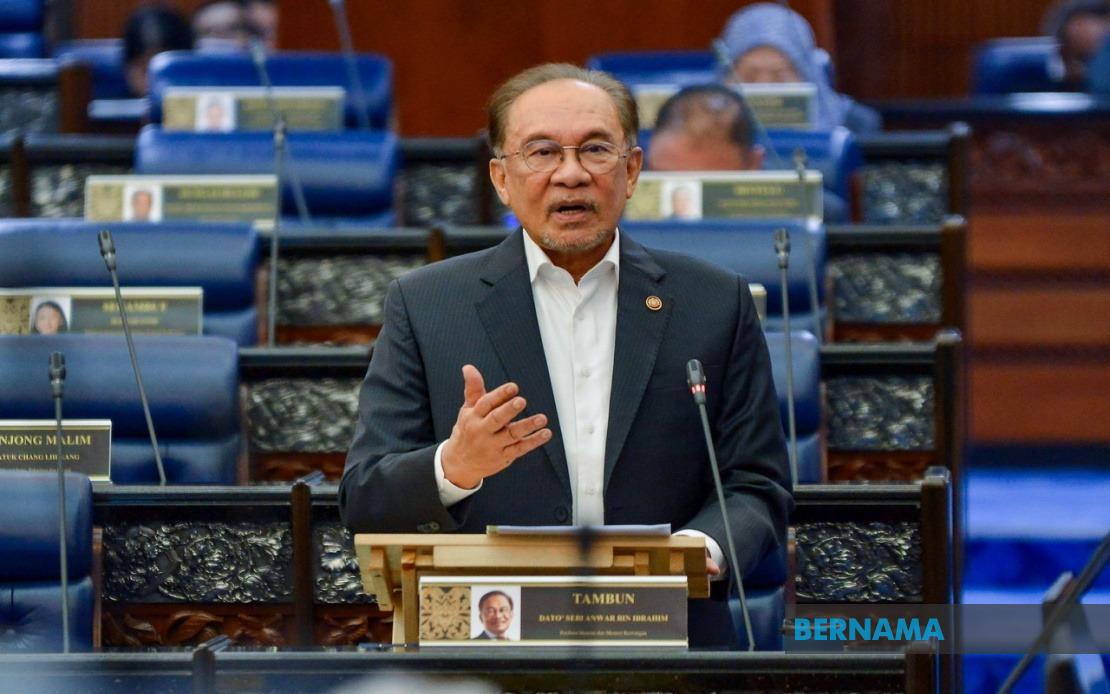
Prime Minister Datuk Seri Anwar Ibrahim has reiterated the government's determination to give Malaysian workers priority access to employment opportunities while simultaneously conducting a thorough assessment of which economic sectors genuinely require migrant labour. Speaking in Parliament on July 14, Anwar acknowledged the complexities surrounding foreign worker policy, recognising that despite the preference for local hiring, Malaysia's economy in certain industries cannot function without international personnel. His statement reflects an attempt to balance competing pressures facing the administration: the demands of employers seeking accessible talent pools, the aspirations of young Malaysians seeking career opportunities, and broader concerns about national security and labour market integrity.
The Prime Minister's comments came in response to parliamentary questions concerning both the acute shortage of foreign workers affecting small and medium enterprises and the parallel issue of insufficient employment prospects for youth domestically. This dual challenge has created tension within Malaysia's policy circles, with businesses arguing that strict foreign worker restrictions harm competitiveness whilst labour advocates insist that prioritising Malaysians must be non-negotiable. Anwar's response suggests the government is attempting to chart a middle course, neither capitulating entirely to business pressure nor implementing blanket restrictions that could damage economic sectors dependent on migrant talent.
Crucially, Anwar emphasised that any expansion of foreign worker recruitment would proceed through established legal channels and require rigorous justification. He highlighted a systemic issue that has plagued Malaysia's labour market for decades: the proliferation of foreign worker syndicates that have enriched middlemen while creating exploitative conditions. By framing this problem as a matter requiring immediate attention, the Prime Minister signalled that his government views labour trafficking networks and irregular employment as impediments to developing a genuinely functional, transparent migrant worker system. This perspective represents a departure from previous administrations that often treated foreign worker syndicates as an inevitable cost of doing business.
When addressing the question of which sectors warrant increased foreign worker access, Anwar indicated that no sector would receive blanket approval. Instead, he proposed a coordinated inter-ministerial approach involving the Ministry of Human Resources and Ministry of Home Affairs, suggesting that security considerations would factor prominently in decision-making. This institutional arrangement underscores government concerns extending beyond simple labour market economics to encompass immigration control, public safety, and social integration—matters that affect Malaysian society broadly rather than merely business efficiency. The involvement of the Home Affairs Ministry particularly indicates that foreign worker policy will be evaluated through a security lens as well as an economic one.
The Prime Minister drew specific attention to the problem of foreign professional workers whose actual duties diverge substantially from their approved expertise. He cited instances of companies bringing in workers purportedly skilled in artificial intelligence or digital technology only to deploy them in unrelated roles, thereby circumventing regulations designed to protect Malaysian professionals and ensure that foreign expertise genuinely addresses genuine skills gaps. This practice amounts to regulatory arbitrage—exploiting the approval system for professionals to import cheaper general labour. By identifying and pledging to restrict such abuses, Anwar signalled that the government would tighten scrutiny of professional worker applications, making it considerably more difficult for employers to exploit loopholes.
Enforcement capabilities will be expanded to address violations by both local and foreign workers equally, Anwar stated, emphasising that legal compliance would determine whether workers received government protection or faced sanctions. His explicit mention of the Rohingya population indicated that enforcement would extend to all irregular or undocumented workers, a politically sensitive area given the size of the Rohingya community in Malaysia and the humanitarian dimensions of their presence. By treating Rohingya enforcement the same as other foreign nationals, Anwar sought to depoliticise the issue, yet the specific mention suggests awareness that this population constitutes a particular focus of public concern.
For Malaysian youth seeking employment, the government's tightening of foreign professional worker admissions represents a protective measure, theoretically creating space for local candidates to access roles previously filled by imports. However, the effectiveness of this policy depends entirely on whether Malaysian workers possess the requisite skills and whether they accept the compensation levels offered. If local talent remains inadequately trained or unwilling to accept prevailing wages, employers will continue pressing for foreign worker access regardless of restrictions. This structural challenge underlines why parallel investment in skills development and education for young Malaysians remains essential to making labour prioritisation policies effective.
The broader context for these policy announcements involves Malaysia's position within a competitive Southeast Asian region where countries from Thailand to Vietnam to the Philippines vie for foreign investment and talent. If Malaysia implements overly restrictive foreign worker policies, multinational companies may relocate operations to more accommodating jurisdictions, taking employment opportunities away from Malaysians. Conversely, an immigration system perceived as chaotic or uncontrolled creates political backlash and social tensions. Anwar's articulation of a middle path reflects recognition that neither extreme serves national interests, though implementing such balance remains institutionally challenging.
The government's commitment to studying sector-specific foreign worker needs through proper channels suggests that decisions will be made on evidence rather than pure political pressure from either business lobbies or labour protectionists. This technocratic approach, if genuinely implemented, could yield a more rational foreign worker policy calibrated to genuine economic requirements rather than reflecting ad-hoc compromises. Whether the Ministry of Human Resources and Ministry of Home Affairs can coordinate effectively to produce such analysis remains uncertain, particularly given the historical tendency of Malaysian bureaucracies to operate in silos. The success of this initiative will depend heavily on institutional capacity and political will to resist lobbying pressures from both sides.
Moving forward, the Malaysian employment landscape will be shaped by how assiduously the government enforces these principles. Business associations will likely continue advocating for expanded foreign worker access, arguing that restrictions harm competitiveness and growth. Labour unions and youth advocates will equally press for stricter local employment preferences. The government's ability to withstand these competing pressures whilst remaining focused on the genuine needs of both the economy and Malaysian workers will determine whether this policy framework delivers meaningful results or simply represents rhetorical positioning.

