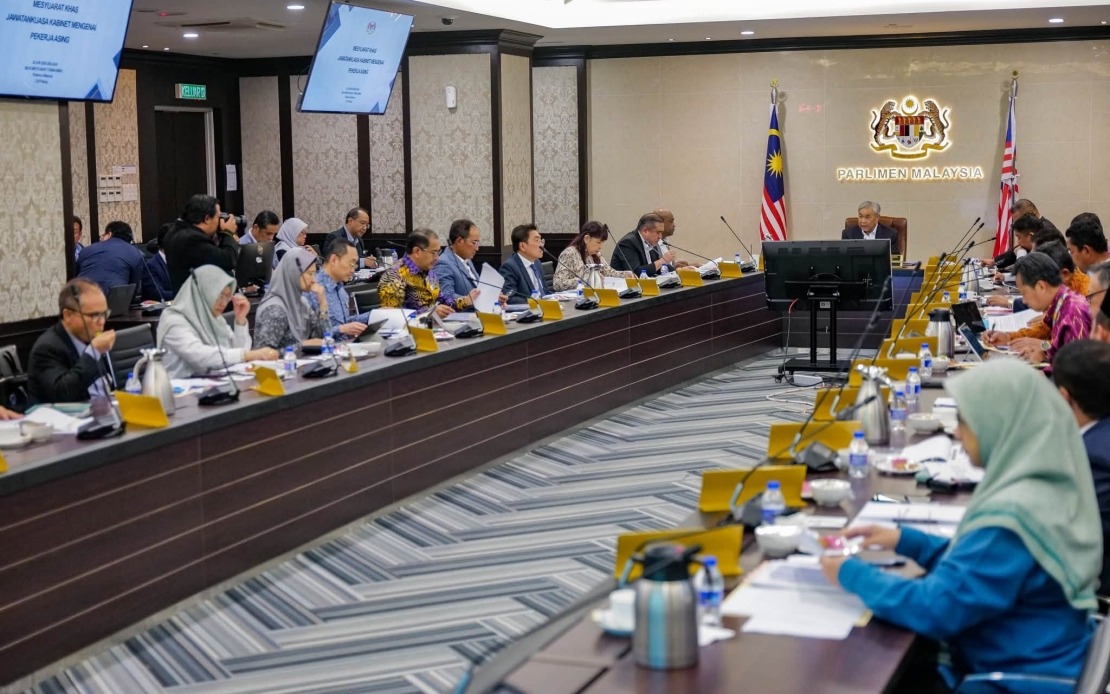
Malaysia's government is embarking on a significant overhaul of how it manages foreign workers, with Deputy Prime Minister Datuk Seri Dr Ahmad Zahid Hamidi outlining sweeping reforms designed to create a more streamlined and responsive framework. The announcement came after a special Cabinet Committee meeting on foreign workers convened at Parliament, signalling the administration's commitment to addressing longstanding coordination challenges in managing the country's substantial migrant workforce.
The restructuring initiative aims to eliminate inefficiencies that have long plagued Malaysia's foreign worker systems, where multiple agencies and departments have operated with overlapping mandates and inconsistent policies. By consolidating management approaches and clarifying institutional responsibilities, the government hopes to create clearer pathways for both employers seeking foreign labour and workers navigating Malaysia's regulatory environment. This coordination problem has been particularly acute in Malaysia, where sectors ranging from construction and manufacturing to domestic work and agriculture rely heavily on migrant workers, yet face considerable bureaucratic fragmentation.
A key component of the reform involves establishing the One Stop Centre for Foreign Worker Management under the Ministry of Human Resources' supervision. This centralisation represents a deliberate shift away from the dispersed administrative model that previously saw foreign worker matters handled across various ministries and agencies. By concentrating oversight in a single ministry, the government seeks to streamline application processes, reduce administrative delays, and establish consistent standards across all sectors employing foreign labour.
Ahmad Zahid emphasised that the restructuring will balance three competing priorities: meeting genuine industry demand for foreign workers, maintaining national security and social cohesion, and protecting employment opportunities for Malaysian citizens. This balancing act reflects growing tension in Malaysian society between economic sectors' appetite for migrant labour and public concerns about wages, working conditions, and social integration. The framework explicitly acknowledges that foreign worker management cannot be purely demand-driven but must serve broader national interests.
The government intends to conduct more rigorous assessments of which sectors genuinely require foreign labour and in what numbers. Rather than responding reactively to employer requests, the new approach will involve strategic industry-by-industry analysis to determine where Malaysian workers cannot fill gaps and where foreign labour additions make economic sense. This represents a methodological shift from previous ad-hoc approvals toward evidence-based labour planning more typical of developed economies.
Simultaneously, Malaysia is intensifying efforts to reduce structural dependence on foreign workers through multiple channels. Increasing local workforce participation remains a priority, requiring investments in vocational training, improving workplace conditions to attract Malaysian workers, and addressing skills mismatches between labour supply and employer demands. The government also plans to accelerate automation in industries where foreign labour substitution is feasible, particularly in manufacturing and selected service sectors where technology adoption could reduce reliance on migrant workers.
Strengthening Malaysia's skilled workforce is integral to this long-term strategy. By developing higher-value technical and professional capabilities domestically, the country aims to transition away from industries dependent on low-skill foreign labour while positioning itself competitively in technology-intensive sectors. This skills development agenda requires coordination between educational institutions, industry bodies, and workforce development agencies, representing a multi-year commitment rather than short-term policy adjustment.
The Cabinet Committee's decisions on membership and terms of reference suggest a more formalised governance structure than previously existed. Enhanced clarity about which agencies participate in foreign worker decisions, with defined roles and responsibilities, should improve consistency in policy implementation. This institutional rationalisation responds to longstanding criticism that conflicting directives from different government bodies have created confusion for employers and migrant workers alike.
For Malaysia's business community, these reforms carry mixed implications. While improved administrative efficiency and clearer procedures could reduce compliance costs and processing delays, more strategic restrictions on foreign worker numbers may constrain expansion in labour-intensive sectors. Employers will need to adjust recruitment strategies, potentially investing more in automation, improving wages and conditions to attract local workers, or restructuring business models around reduced migrant labour availability. This transition period will test how genuinely the government balances industry flexibility against its workforce localisation goals.
The emphasis on integrity in foreign worker management hints at broader concerns about exploitation, trafficking, and irregular employment that have dogged Malaysia's migrant workforce system. Enhanced coordination may enable better monitoring and enforcement of labour standards, potentially improving conditions for vulnerable workers while reducing unfair competitive advantages for employers cutting corners through wage suppression or unsafe practices.
Regionally, Malaysia's restructuring reflects broader Southeast Asian trends toward more managed migration systems. Countries across the region grapple with similar tensions between labour shortages and concerns about migrant worker protections, irregular migration, and social cohesion. Malaysia's approach may offer lessons or models for neighbouring economies facing comparable challenges, particularly given its scale of migrant worker employment and its position as a regional migration hub.
The success of these reforms ultimately depends on implementation quality. Creating institutional structures is simpler than changing embedded practices, managing political pressures from competing interests, or sustaining commitment through inevitable implementation difficulties. The coming months will reveal whether the restructured system delivers genuine improvements in efficiency and coordination, or whether it becomes another layer of bureaucracy atop existing frameworks.

