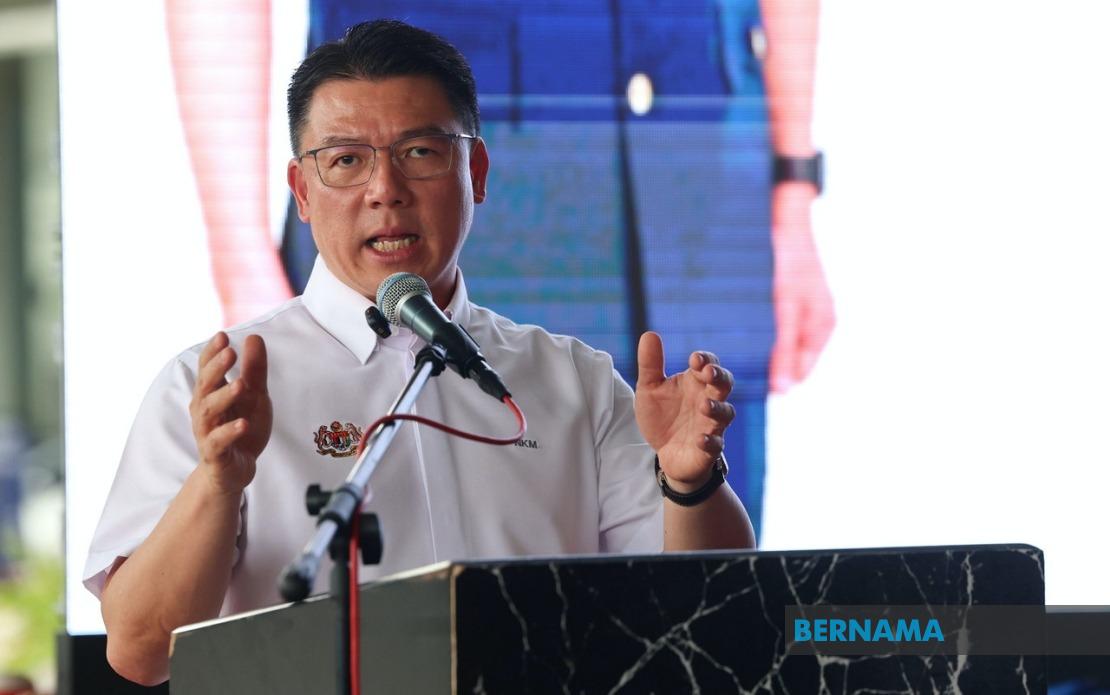
Malaysia is positioning itself to transform its approach to waste management by drawing on Japan's decades of experience in source separation and community-led recycling initiatives. Housing and Local Government Minister Nga Kor Ming outlined the strategy during discussions with Japanese Ambassador to Malaysia Noriyuki Shikata this month, signalling a significant shift in how the country aims to embed environmental responsibility into daily routines. The partnership reflects growing recognition among Malaysian policymakers that sustainable waste practices require cultural change alongside infrastructure investment, and that neighbouring Japan offers proven methodologies that could be adapted to Malaysia's context.
Japan's waste management system is internationally recognised as one of the world's most rigorous and effective. The country has cultivated a societal approach where citizens routinely segregate waste into multiple categories at the point of generation, reducing contamination and improving recycling yields substantially. This disciplined system extends beyond individual households to shopping districts, offices, and public spaces, creating an ecosystem where waste prevention and proper disposal become ingrained social norms rather than compliance requirements. For Malaysia, which continues to grapple with rising landfill pressures and inconsistent recycling participation rates, this model represents both an aspirational target and a practical roadmap that avoids some of the trial-and-error approach other nations have adopted.
Minister Nga emphasised that the foundation for sustainable waste practices must be established early, particularly through educational initiatives targeting young people. He stressed that environmental consciousness cannot rely indefinitely on regulatory enforcement alone; instead, societies must cultivate intrinsic motivation to separate waste, recycle responsibly, and maintain clean surroundings. This perspective aligns with Japan's approach, where schools integrate waste management education into their curricula, creating generational cohorts for whom proper sorting and recycling feel natural rather than burdensome. Malaysia's education system, similarly positioned to shape long-term behavioural patterns, could leverage such frameworks to gradually normalise these practices across demographics.
The Malaysian government has already undertaken several foundational steps toward circular economy transition, having developed a National Circular Economy Blueprint and established the National Circular Economy Council to coordinate implementation across agencies. Additionally, regulatory measures now require shopping malls and major commercial centres to incorporate recycling facilities as a licensing condition, embedding waste management infrastructure into retail planning. Simultaneously, ongoing efforts to phase out single-use plastic bags represent incremental but meaningful pressure on consumer behaviour. These initiatives demonstrate that Malaysia is not entering partnerships with Japan from a standing start; rather, the country possesses an emerging policy framework and institutional scaffolding upon which Japanese expertise and technology can build more effectively.
A cabinet-approved Memorandum of Understanding between Malaysia and Japan, formalised last month, will serve as the institutional vehicle for deepening cooperation on circular economy advancement and waste management modernisation. This MoU is designed to facilitate systematic exchange of technical expertise, proven technologies, and best practices spanning the entire waste value chain. Rather than representing a generic commitment, the framework allows both nations to identify specific sectors and municipalities where pilot projects can demonstrate feasibility and generate evidence for broader scaling. For Malaysia, this targeted approach reduces the risk of attempting wholesale adoption of practices that may require contextual adaptation to account for differences in urbanisation patterns, population density, industrial composition, and existing infrastructure.
Technology transfer constitutes a critical component of the bilateral arrangement. Japan has developed sophisticated waste sorting equipment, recycling processing systems, and environmental monitoring technologies that could enhance Malaysia's current capabilities. Beyond hardware, the transfer of operational know-how—how to manage logistics, coordinate among multiple stakeholders, and maintain quality standards in recycling streams—often proves equally valuable. Malaysian municipalities and waste management companies stand to benefit from exposure to Japanese innovations in areas ranging from composting systems for organic waste to advanced materials recovery from mixed waste streams. This technological dimension distinguishes the partnership from purely advisory relationships and provides concrete tools for implementation.
International exposure and participation in flagship environmental events will amplify the impact of the partnership. Ambassador Shikata extended an invitation for Malaysian delegations to attend GREEN×EXPO 2027 in Yokohama, a major international platform showcasing innovations in sustainable urban development and circular economy solutions. Such participation offers Malaysian officials, engineers, and business leaders opportunities to observe cutting-edge practices in real-world applications, network with international experts, and explore commercial partnerships around environmental technologies. For a nation aiming to position itself as a regional leader in sustainability, visibility at premier international forums reinforces credibility and attracts investment in the green economy sector.
The bilateral focus on smart and sustainable cities acknowledges that waste management does not exist in isolation; rather, it forms one component of broader urban sustainability challenges including energy efficiency, water management, and emission reduction. Japanese experience in creating integrated smart city ecosystems—where digital technologies optimise resource flows and environmental monitoring occurs in real-time—could inform how Malaysia develops its own urban centres. Cities like Kuala Lumpur, Penang, and Johor Bahru, which face mounting pressures from urbanisation and consumption growth, could serve as testbeds for integrated approaches drawing on Japanese models and adapted to Southeast Asian conditions.
Cultural adaptation will prove essential to the partnership's success. While Japan's waste separation practices reflect deeply rooted social values and institutional maturity developed over decades, Malaysia's multicultural society, diverse income levels, and different urbanisation trajectories require thoughtful localisation. High-income residential districts may adopt Japanese-style source separation relatively easily, but lower-income communities and informal settlements face different constraints around storage space, collection frequency, and market demand for recycled materials. The most effective cooperation will likely identify flexible implementation pathways that maintain the core principle of source separation while accommodating Malaysia's specific socioeconomic and geographic realities.
For Southeast Asia more broadly, Malaysia's embrace of Japanese waste management practices carries regional implications. As other nations in the region grapple with mounting waste volumes and environmental pressures, Malaysia's experience in adapting and implementing these practices could generate transferable lessons. A successful partnership demonstrates that technological and institutional solutions from developed nations can be meaningfully translated to middle-income Southeast Asian contexts, potentially inspiring similar arrangements. Furthermore, competitive dynamics may prompt other nations to pursue their own partnerships with Japan or to accelerate domestic reforms to avoid falling behind regional peers in environmental performance.
The economic dimension of circular economy transition often receives less emphasis than environmental benefits, yet it drives sustainable adoption. Malaysia's growing awareness that waste represents misallocated resources—materials that could become inputs for new production rather than landfill burdens—aligns with Japan's commercial success in waste valorisation industries. By learning Japanese approaches to converting waste streams into profitable secondary materials, Malaysian entrepreneurs and businesses can develop new economic opportunities while reducing environmental externalities. This alignment of economic and environmental incentives provides a more durable foundation for systemic change than reliance on regulatory mandates or moral appeals alone.
The partnership represents a pragmatic acknowledgement that Malaysia's transition to a circular economy will require sustained engagement with international partners who have successfully navigated similar transitions. Japan's willingness to share expertise reflects both economic complementarities and broader regional stability interests. For Malaysia, the investment in learning from Japan signals to both domestic stakeholders and international observers a serious commitment to sustainability that extends beyond rhetorical positioning. As implementation proceeds over the coming years, the effectiveness of this partnership will depend significantly on political consistency, adequate resource allocation, and willingness to make difficult decisions about trade-offs between short-term convenience and long-term environmental responsibility.

