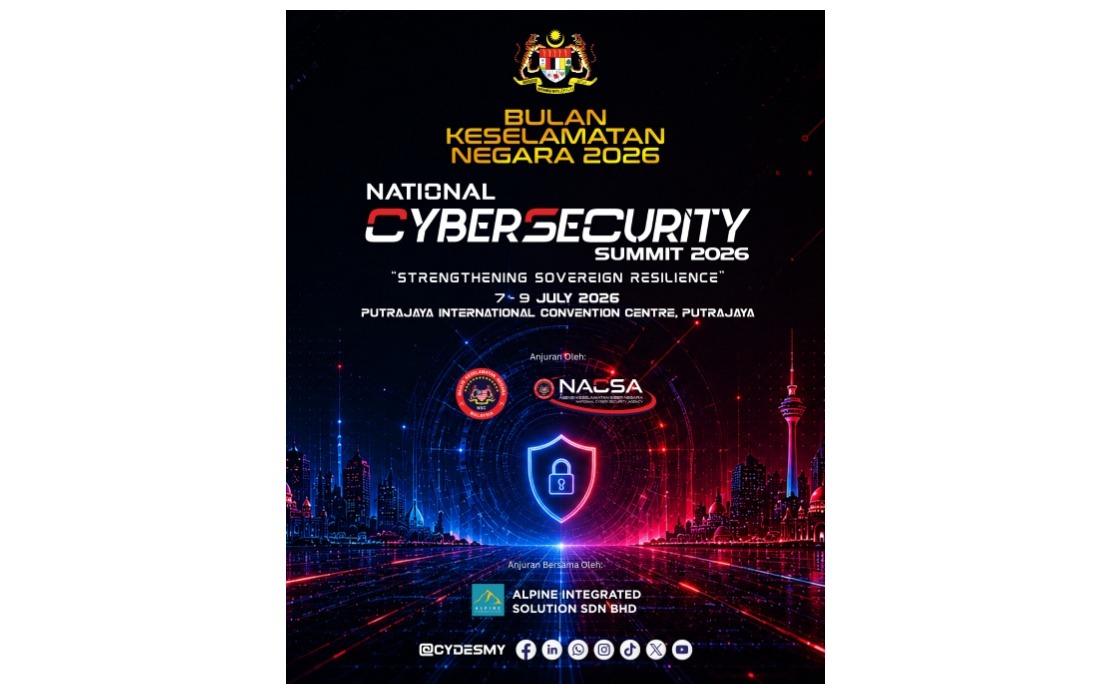
Malaysia will convene the National Cyber Security Summit 2026 at the Putrajaya International Convention Centre from July 7 to 9, marking a significant platform for advancing the country's cyber resilience in an increasingly complex digital landscape. The National Cyber Security Agency, operating under the Prime Minister's Department, will orchestrate the three-day gathering that aims to unite policymakers, business executives, technical professionals and security specialists to strengthen Malaysia's collective approach to cyber threats.
The timing of the summit proves particularly strategic, arriving just days after the Dewan Rakyat passed the Cybercrimes Bill 2026 on July 1. This legislative milestone reflects the government's escalating recognition that legal frameworks must evolve in tandem with technological advancement and emerging digital vulnerabilities. The bill represents a critical component of Malaysia's broader cyber security architecture, designed to equip law enforcement agencies with contemporary tools needed to combat sophisticated cybercriminal networks that often operate across international borders.
Underpinning the summit's agenda is the Malaysian Cyber Security Strategy 2025-2030, a comprehensive national framework that provides strategic direction for the country's cyber defence initiatives over the next five years. This foundational document serves as the roadmap for coordinated action across government departments, private enterprises, and critical infrastructure operators. By aligning NCSS 2026 with the implementation of this strategy, Malaysia demonstrates its commitment to translating policy into concrete operational improvements and institutional capabilities.
The summit operates under the overarching theme of Strengthening Sovereign Resilience, emphasising the need to construct a national cyber security ecosystem that remains secure, trustworthy and capable of withstanding sophisticated attacks. This sovereignty-focused messaging resonates particularly in the Southeast Asian context, where nations increasingly view digital security as integral to national independence and economic stability. The framing acknowledges that cyber threats do not respect borders and that resilience requires both domestic coordination and cross-border cooperation.
Celebrating NCSS 2026 in conjunction with National Security Month underscores the interconnected nature of modern security challenges. No longer can physical and cyber threats be viewed as separate domains; rather, they form complementary aspects of a nation's comprehensive security posture. This integrated approach signals to Malaysian citizens, businesses and regional partners that cyber security ranks as a core national priority equivalent to traditional security concerns.
The summit will comprise 41 substantive sessions addressing diverse aspects of cyber security, from strategic policy forums to technical workshops. These sessions span multiple specialisations, including discussions centred on the Malaysian Cyber Security Strategy, dedicated forums on cybercriminal activity, conventions for information and communications technology security officers, initiatives promoting women's participation in cyber roles, and advanced cryptographic sessions. This breadth ensures that participants ranging from executive policymakers to technical specialists will encounter content directly relevant to their responsibilities.
The speaker roster reflects Malaysia's commitment to drawing expertise from multiple sectors and international sources. Ninety-six speakers and panellists—representing government agencies, private industry, law enforcement, technology companies, universities and the broader cyber security community—will present insights and lead discussions. Simultaneously, 122 companies will showcase their products and services, with representation split between 78 Malaysian firms and 44 international companies from seven nations. This vendor participation signals Malaysia's growing role within global cyber security markets and its integration into international supply chains for digital protection solutions.
The anticipated attendance of 3,000 participants, comprising conference delegates, trade visitors and industry professionals, alongside 250 distinguished domestic guests, indicates the considerable scale and significance attributed to this summit within Malaysia's national agenda. Such numbers exceed typical gatherings and suggest that participating organisations view cyber security development as strategically vital for their operational futures and competitive positioning. For international attendees, the summit provides crucial insight into Malaysia's regulatory environment and technological priorities.
The summit will serve as the formal launch venue for three major initiatives, all overseen by the Prime Minister's Department and the National Cyber Security Agency. These include the National Security Policy 2026-2030, which will reshape how Malaysia approaches comprehensive security across all domains; the National Cryptography Policy, branded as MyKriptografi, alongside its accompanying action plan for 2026-2030; and the Artificial Intelligence Systems Cybersecurity Framework, addressing the distinctive security challenges posed by artificial intelligence deployment. Prime Minister Datuk Seri Anwar Ibrahim's scheduled presence at these launches underscores the government's highest-level commitment to these initiatives.
The introduction of a dedicated Artificial Intelligence Systems Cybersecurity Framework proves particularly noteworthy for Southeast Asian observers. As regional economies accelerate AI adoption across financial services, healthcare, manufacturing and governance, the frameworks governing AI security become increasingly consequential. Malaysia's proactive development of such a framework positions the nation as a regional leader in addressing AI-specific vulnerabilities, potentially influencing cyber security approaches across the broader Southeast Asian community.
MyKriptografi, the national cryptography framework, addresses a fundamental pillar of cyber defence that frequently receives insufficient public attention. Cryptographic standards and practices directly determine whether sensitive government communications, financial transactions and personal data remain secure from interception and unauthorised access. By establishing a cohesive national approach to cryptography, Malaysia strengthens the security baseline across all sectors that depend on digital communications.
The summit's emphasis on strategic partnerships and information sharing between public and private sectors acknowledges a critical reality of modern cyber security: threats originate from many directions, and comprehensive defence requires coordinated action across organisational boundaries. Malaysian businesses operating in regulated sectors—finance, telecommunications, energy—must align their security practices with government standards and contribute intelligence about emerging threats. Similarly, government agencies benefit from private sector expertise and early warnings about novel attack methods.
By hosting NCSS 2026, Malaysia demonstrates its commitment to regional cyber security leadership and its determination to build a digital environment capable of supporting economic growth, government services delivery and critical infrastructure protection. The summit and its associated policy launches establish frameworks that will shape Malaysia's cyber security trajectory for the remainder of this decade, influencing not only national capabilities but also Malaysia's influence within regional and international cyber security governance discussions.

