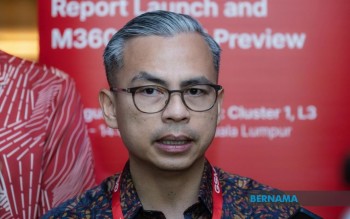
Kuala Lumpur has been chosen to host M360 ASEAN 2026 on September 9 and 10, a development that Communications Minister Datuk Seri Fahmi Fadzil believes will elevate Malaysia's standing in telecommunications, artificial intelligence, and digital connectivity across Southeast Asia. The selection represents a significant endorsement of Malaysia's technological capabilities and positions the country as a convening hub for critical regional conversations on digital transformation.
The event, organised by the GSM Association (GSMA), will assemble a diverse ecosystem of stakeholders including telecommunications operators, technology vendors, industry experts, investment firms, academic institutions, and government delegations from throughout the ASEAN bloc. This convergence of influential decision-makers creates unprecedented opportunities for Malaysia to influence the trajectory of digital development across the region and showcase its own technological infrastructure and innovation capabilities.
Minister Fahmi emphasised the historical significance of this assignment during remarks at a roundtable discussion following the official announcement. He noted that this marks the first occasion M360 ASEAN has been held anywhere within the ASEAN community, underscoring Malaysia's elevated profile as a regional leader in digital affairs. The honour reflects broader recognition of Malaysia's contribution to Southeast Asian telecommunications infrastructure and its emerging prominence in artificial intelligence deployment and research.
Beyond ceremonial significance, the summit will furnish ASEAN nations with a critical platform to collectively examine the strategic direction of the regional digital economy. Participants will engage in structured dialogue regarding expansion of telecommunications networks, responsible artificial intelligence implementation, and the harmonisation of digital policies across borders. These discussions hold particular relevance for Malaysia, which can leverage its host nation status to shape consensus on frameworks that align with national development priorities.
According to GSMA intelligence underpinning the conference agenda, mobile technologies and services will inject approximately US$1.4 trillion into the Asia-Pacific economy by 2030, representing a substantial 40 percent acceleration from the current US$1 trillion contribution. This projection underscores the magnitude of economic opportunity that hinges on effective digital infrastructure and policy coordination. For Malaysia, which aspires to become a high-income nation, these figures highlight the criticality of telecommunications investment and digital sector maturation to national prosperity.
The GSMA analysis identifies four converging forces that will fundamentally reshape digital development in the coming years, and these will dominate M360 ASEAN discussions. The first concerns the accelerating integration of artificial intelligence throughout economic sectors and society, creating both opportunities and governance challenges that require coordinated regulatory responses. Malaysia has begun establishing AI governance frameworks, and this summit offers opportunity to benchmark approaches against regional peers and international best practice.
The second priority centres on declining digital trust, a concerning trend reflecting cybersecurity vulnerabilities, data privacy concerns, and erosion of confidence in digital platforms and institutions. Across ASEAN, citizens and businesses increasingly question the security of digital transactions and the protection of personal information. Malaysia, grappling with similar trust deficits in its digital banking and e-commerce sectors, can benefit from peer insights on rebuilding confidence through enhanced security standards and transparent governance.
Third, ASEAN nations confront intensifying demand for more resilient digital infrastructure capable of withstanding natural disasters, cyberattacks, and capacity surges during emergencies or crises. Recent regional experiences with natural disasters and pandemic disruptions have exposed vulnerabilities in telecommunications networks and digital service continuity. Malaysia's hosting of M360 ASEAN provides occasion to advocate for regional standards on infrastructure redundancy and disaster recovery that protect critical digital services.
Fourth, growing interest in digital sovereignty—the capacity of nations to maintain control over data, digital infrastructure, and technological development within their borders—reflects geopolitical anxieties about technological dependency and foreign surveillance. ASEAN countries increasingly seek alternatives to dominant foreign platforms and infrastructure providers. Malaysia can position itself as a partner in enabling digital sovereignty for the region whilst balancing economic realities of global technology integration.
The summit's timing proves fortuitous as Southeast Asia navigates a pivotal inflection point in digital maturation. Investment in telecommunications networks continues accelerating, 5G deployment progresses unevenly across the region, and artificial intelligence adoption enters mainstream commercial deployment. Policy decisions made or influenced during M360 ASEAN discussions will establish frameworks affecting technology investment, regulatory compliance, and competitive dynamics across ASEAN for years ahead.
For Malaysia specifically, hosting this inaugural regional gathering reinforces its aspirations to serve as Southeast Asia's digital and technology nexus. The nation has invested substantially in telecommunications infrastructure, digital financial services, and artificial intelligence research capability. M360 ASEAN 2026 provides a high-visibility platform to demonstrate these capabilities to regional and international audiences whilst attracting technology investment and talent to Malaysian innovation hubs.
The event also creates commercial opportunities for Malaysian telecommunications operators, technology companies, and service providers to establish partnerships, secure contracts, and expand market presence throughout ASEAN. Industry representatives will engage directly with counterparts, regulators, and customers across the region during dedicated networking sessions and business forums.
Looking ahead, Malaysia faces responsibility to deliver a summit that generates meaningful regional consensus on digital sector direction whilst showcasing the nation's technological sophistication and organisational capability. Success will require coordination among government agencies, industry partners, and international stakeholders to ensure the event addresses genuine regional concerns and produces actionable outcomes that participants can implement within their respective countries.

