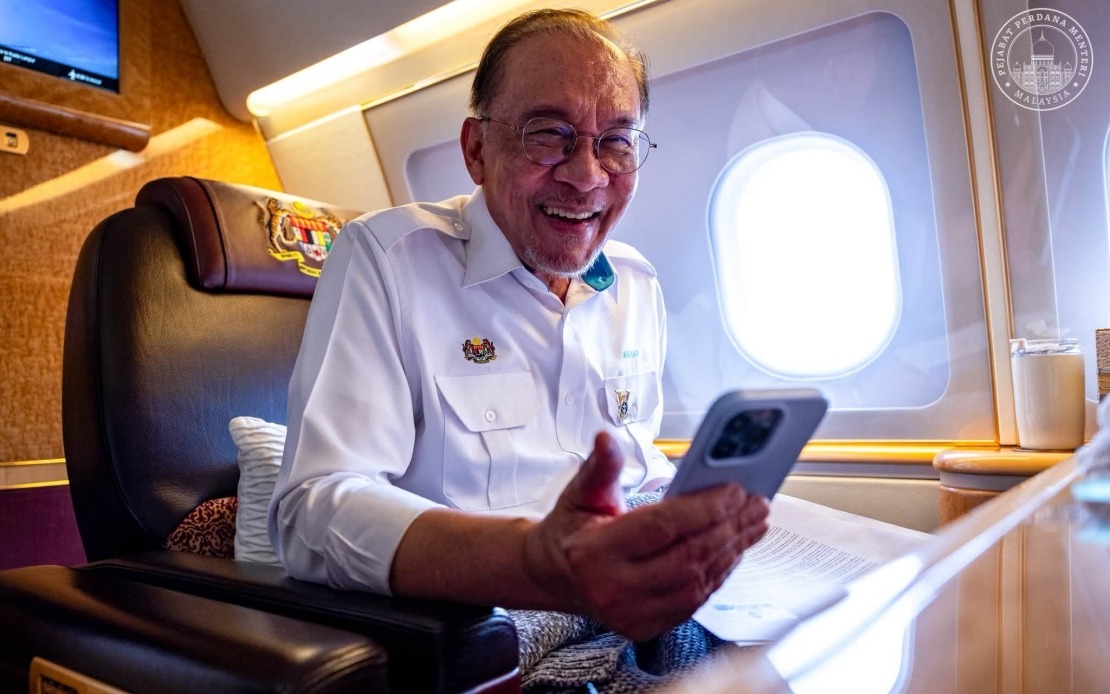
Malaysia is prepared to welcome Formula 1 racing back to the Sepang International Circuit for the first time in nearly a decade, with the Kingdom of Bahrain's Grand Prix scheduled for early October. Prime Minister Datuk Seri Anwar Ibrahim revealed the arrangement, framing the three-day event as both a sporting milestone and a diplomatic achievement that underscores the bilateral relationship between Kuala Lumpur and Manama.
The announcement carries particular significance for Malaysia's international standing. The decision to stage the Gulf Air Bahrain Grand Prix from October 2 to 4 demonstrates confidence from Formula 1's governing bodies in the nation's capacity to deliver world-standard motorsport infrastructure and event management. For a country whose motorsport venue has remained dormant from the F1 calendar since 2017, hosting duties on behalf of another nation signals restored faith in Malaysia's operational capabilities and diplomatic credibility on the global stage.
Anwar emphasised the collaborative nature of the arrangement during recent conversations with key stakeholders. His discussions with Crown Prince and Prime Minister of Bahrain Prince Salman Hamad Al Khalifa, alongside F1 president and chief executive officer Stefano Domenicali, shaped the understanding that underpins this partnership. These high-level dialogues reflect Malaysia's renewed engagement with international motorsport governance and its willingness to facilitate global sporting partnerships.
The Prime Minister's public statements positioned the event beyond mere sporting logistics, casting it as a manifestation of deeper institutional trust between Malaysia and Bahrain. His characterisation of the arrangement as testimony to "enduring friendship, mutual trust and close partnership" elevates the Grand Prix beyond its commercial and competitive dimensions. This rhetorical framing aligns with Malaysia's broader regional diplomacy strategy, particularly its positioning within the Gulf Cooperation Council sphere and strengthening ties with Arab partners.
For Malaysian stakeholders, the hosting arrangement offers tangible benefits across multiple sectors. The Sepang International Circuit, though absent from the F1 calendar, maintains world-class facilities constructed to international standards. Welcoming the Bahraini Grand Prix provides an opportunity to reactivate this infrastructure at scale, generating economic activity across hospitality, transportation, security, and entertainment sectors. The three-day event traditionally attracts tens of thousands of international visitors, translating to hotel bookings, restaurant revenues, and ancillary spending throughout the Klang Valley.
The diplomatic dimension carries weight for Malaysia's regional positioning. Bahrain, a key player in Gulf Arab affairs and a strong ally on various international forums, represents an important bilateral relationship. By facilitating the Grand Prix, Malaysia demonstrates reliability as a partner capable of delivering on commitments at the highest level. This reciprocal goodwill could translate into future cooperation across trade, investment, and cultural exchanges.
From a motorsport perspective, the event addresses Malaysia's aspiration to remain relevant in global racing circuits despite the Sepang International Circuit's absence from the main F1 calendar. While the circuit has hosted non-championship races and other motorsport events in recent years, a Formula 1 Grand Prix—even one technically sanctioned to Bahrain—restores Sepang's profile as a venue capable of orchestrating elite international competition. This positioning may prove strategically valuable should Malaysia negotiate its return as a permanent F1 host in future seasons.
The arrangement also reflects pragmatic adaptation within F1's operational model. As the sport increasingly seeks flexibility in venue arrangements due to geopolitical, logistical, or infrastructural considerations, Malaysia's availability and willingness to accommodate hosting arrangements on behalf of other nations positions it favourably within the circuit's long-term planning. Demonstrating operational excellence during the October event could strengthen Sepang's candidacy for future hosting opportunities, whether as the primary sanctioning nation or as an alternative venue.
International Automobile Federation involvement lends institutional legitimacy to the undertaking. The FIA's endorsement of Sepang as the appropriate venue for the Gulf Air Bahrain Grand Prix reflects confidence in Malaysia's regulatory framework, safety protocols, and sporting governance standards. This validation extends beyond the October event, strengthening Malaysia's credentials should it pursue hosting of other international motorsport championships or major automotive events.
Anwar's emphasis on Malaysia's "world-class infrastructure, operational excellence and warm hospitality" positions the hosting commitment within a broader national narrative around Malaysia's capability as a destination for major international events. This messaging connects the F1 Grand Prix to Malaysia's simultaneous pursuit of hosting opportunities across sports, conferences, exhibitions, and cultural programming, reinforcing the country's positioning as a credible regional hub for significant gatherings.
The timing of the announcement, with the event scheduled for October, allows Malaysia adequate preparation time while maintaining the urgency necessary to mobilise stakeholders and secure necessary resources. The relatively compressed timeframe, compared to traditional F1 host preparations spanning a year or more, nonetheless represents a manageable operational challenge for a venue with established infrastructure and experienced event management teams.
Looking ahead, the success of the October Grand Prix carries implications beyond the immediate event. Effective hosting could catalyse discussions regarding Malaysia's return to the main F1 calendar, potentially as early as 2025 or subsequent seasons, depending on the sport's scheduling dynamics and Bahrain's ongoing participation. For Malaysian motorsport enthusiasts and the broader sporting community, the event represents a symbolic reconnection with elite global competition and a vindication of the nation's investment in maintaining world-standard facilities despite years of absence from the championship calendar.

