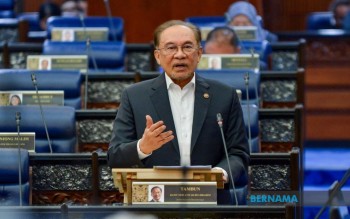
Malaysia's government has committed to investigating the establishment of a strategic petroleum reserve, a move designed to insulate the nation from volatile global energy markets and unpredictable supply disruptions. Prime Minister Datuk Seri Anwar Ibrahim disclosed this intention following the National Energy Council Meeting No. 1 2026, which he presided over in Kuala Lumpur on July 15, signalling a deliberate shift towards building institutional resilience in an era marked by mounting geopolitical tensions and fragmented supply chains.
The decision to study both the necessity and implementation frameworks for such a reserve reflects growing recognition among Malaysian policymakers that energy independence extends beyond diversifying power sources. By examining how to create buffer stocks of crude petroleum, the government aims to protect the domestic economy from sudden price shocks or external supply interruptions that could undermine economic stability. This approach echoes strategies adopted by regional peers and advanced economies, positioning Malaysia within a broader global conversation about energy sovereignty and strategic preparedness.
The timing of this announcement carries particular significance given Malaysia's ongoing energy transition journey. The country has demonstrated tangible progress in expanding its renewable energy footprint, with installed renewable capacity reaching 31 per cent as of December 2025. This achievement represents a meaningful advancement in the government's objective to diminish reliance on coal-fired generation, which has historically dominated Malaysia's power mix. The transition, however, remains a multi-decade undertaking requiring sustained investment and policy consistency, and the petroleum reserve initiative should be understood as a complementary measure rather than a reversal of this clean energy commitment.
Corporate renewable energy procurement has emerged as a significant growth driver in Malaysia's renewables ecosystem. The Corporate Renewable Energy Supply Scheme, now equipped with Battery Energy Storage System capabilities, demonstrates how policy innovation can unlock private sector participation in the energy transition. Battery storage technology proves particularly critical in a tropical climate where solar generation patterns remain subject to monsoon seasonality and weather variability. By enabling corporations to secure renewable power contracts backed by storage solutions, the government has created a market mechanism that simultaneously reduces emissions and enhances grid stability.
Transportation decarbonisation occupies a central position in Malaysia's broader climate strategy, with biodiesel adoption serving as a transitional pathway for the incumbent fuel distribution network. The nationwide rollout of B15 biodiesel, which blends 15 per cent biofuel with conventional diesel, allows existing vehicles and infrastructure to operate with lower environmental impact without requiring complete technological replacement. Petronas' planned biofuel hub in Pengerang, Johor, will anchor this initiative by providing domestic production capacity and reducing reliance on imported biofuel feedstocks, thereby strengthening supply chain resilience while generating rural economic opportunities.
Electric bus deployment and railway electrification represent the more transformative dimension of transport sector reform. The operational commitment of 250 electric buses and the electrification of 800 kilometres of rail network constitute tangible infrastructure investments that reshape commuter behaviour and urban mobility patterns. These projects carry immediate air quality benefits for Malaysian cities, particularly in the Klang Valley and Georgetown conurbations where transport emissions constitute a substantial pollution source. Beyond environmental gains, electrified public transport reduces long-term operational costs, thereby creating fiscal space for further expansion and service improvements.
The hydrogen hub initiative in Sarawak marks Malaysia's entry into hydrogen economy development, positioning the state as a potential regional hub for this emerging energy vector. The Autonomous Rapid Transit system scheduled for Phase 1 completion by year-end 2026 serves as both a proof-of-concept and a demonstration platform for hydrogen technology adoption. Sarawak's abundant hydroelectric resources and existing industrial infrastructure create natural advantages for hydrogen production, storage, and distribution, potentially allowing the state to export hydrogen expertise and technology throughout Southeast Asia as the region awakens to hydrogen's potential.
Energy security within the Southeast Asian context extends beyond Malaysia's borders, given the region's integrated supply chains and shared vulnerability to international disruptions. A Malaysian petroleum reserve would strengthen not only national resilience but potentially provide stabilising influence across the region during supply crises. This consideration acquires additional weight given the Strait of Malacca's critical importance to global energy trade, through which substantial crude oil flows and liquefied natural gas shipments transit daily. Malaysia's geographic position creates both exposure to global energy volatility and opportunity to shape regional energy stability.
The government's multifaceted energy strategy reflects sophisticated understanding that security cannot derive from any single source or technology. Renewable expansion, storage deployment, biofuel integration, transport electrification, hydrogen exploration, and strategic reserves represent complementary rather than competing initiatives. This integrated approach acknowledges that Malaysia's energy future will necessarily remain mixed, combining conventional resources with emerging technologies whilst building institutional capacity to respond to unforeseen disruptions.
For Malaysian businesses and investors, this policy direction signals government commitment to stable, diversified energy supply as a foundation for economic competitiveness. Companies operating in energy-intensive sectors gain assurance that supply interruptions carry reduced probability, whilst renewable energy investors receive confirmation of sustained policy support. International energy companies seeking to operate in Malaysia can point to these announcements as evidence of a government actively managing its energy future rather than passively accepting market outcomes.
The National Energy Council's ongoing coordination role will determine implementation success. Regular meetings such as the one chaired by PM Anwar provide forums for aligning multiple agencies, state governments, and private sector participants around common energy objectives. As Malaysia navigates the complex transition from hydrocarbon dependence to diversified, renewable-weighted energy systems, such institutional mechanisms prove indispensable for translating policy ambitions into operational reality.

