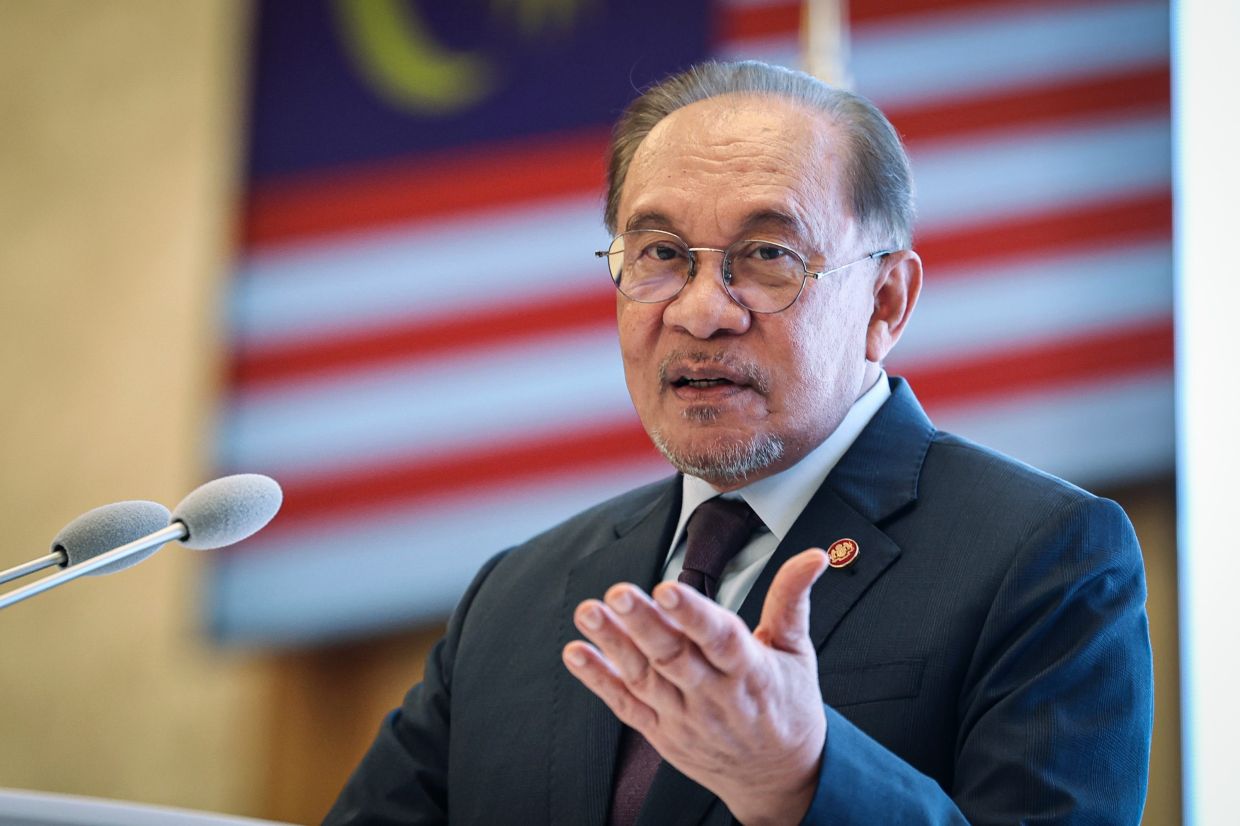
The Malaysian government has signalled openness to exploring a hybrid taxation approach that would selectively integrate elements of the Goods and Services Tax into the existing Sales and Service Tax framework, Prime Minister Datuk Seri Anwar Ibrahim announced during the closing session of Budget 2027 engagement discussions in Putrajaya. The proposal represents a nuanced middle ground in Malaysia's long-running tax policy debate, acknowledging that certain GST design features merit consideration whilst maintaining the SST as the foundational taxation mechanism.
Anwar, who holds both the prime ministerial and finance portfolios, emphasised that any reforms must preserve the fundamental principle underlying the current SST regime: the tax burden should fall primarily on those with greater capacity to pay, rather than spreading uniformly across all income levels and economic circumstances. This positioning reflects a deliberate philosophical stance that taxation policy should be calibrated to support economic fairness, particularly given Malaysia's ongoing challenges with cost-of-living pressures affecting millions of households across the income spectrum.
The Prime Minister articulated a core objection to the GST system that centred on its universal application across the entire population. He characterised GST as inherently inequitable in its design, describing it as a blanket taxation mechanism that does not discriminate between affluent citizens and those experiencing economic vulnerability. This critique has long animated the political resistance to GST implementation in Malaysia, with critics arguing that such broad-based consumption taxes disproportionately impact lower-income households that allocate larger portions of their earnings to taxable goods and services.
Anwar's repeated emphasis on protecting economically disadvantaged Malaysians from expanded tax burdens reflected awareness that implementation of a comprehensive GST would fundamentally alter the tax incidence structure. Unlike the current SST, which operates with built-in exemptions and differentiated rates across goods categories, a universal GST would require individuals previously outside the tax system to participate in direct taxation. The Prime Minister characterised this potential outcome as incompatible with current economic realities, where households already struggle with inflation, rising accommodation costs, and elevated transportation and utility expenses.
The proposal to study selective GST-SST integration suggests technocrats within the Finance Ministry have identified specific administrative or efficiency mechanisms within the GST framework that could enhance revenue collection or broaden the tax base without triggering the regressive consequences Anwar opposes. Such mechanisms might include improved compliance infrastructure, more sophisticated goods classification systems, or enhanced input tax credit mechanisms that GST systems typically employ. However, the Prime Minister's stated commitment to retaining SST as the primary system indicates that any borrowed features would represent marginal improvements rather than fundamental restructuring.
The timing of this tax policy exploration coincides with the government's preparation of Budget 2027, which will be tabled in Parliament on October 9. The budget engagement sessions that recently concluded provided platforms for consultation with diverse stakeholders spanning industry groups, civil society organisations, economic scholars, and service sector representatives. This inclusive consultation approach suggests the government recognises that taxation reforms require broad social consensus, particularly given the political sensitivity surrounding tax system changes in Malaysia's recent history.
The composition of attendees at the engagement session—including Finance Minister II Datuk Seri Amir Hamzah Azizan, Deputy Finance Minister Liew Chin Tong, Bank Negara Malaysia Governor Datuk Seri Abdul Rasheed Ghaffour, and Treasury leadership—underscored the seriousness with which government institutions are approaching tax system modernisation. The presence of Bank Negara's top official particularly signals attention to how taxation policy interacts with broader monetary policy objectives and financial system stability. This multi-institutional coordination reflects recognition that comprehensive tax reform requires alignment across monetary authorities, fiscal administrators, and revenue collectors.
The concept of progressive taxation that Anwar repeatedly invoked carries particular resonance within Malaysia's development context, where income inequality measures have shown persistent disparities across regions and communities. A progressive tax system, by design, extracts proportionally higher contributions from those with greater wealth while sparing lower-income households from disproportionate burdens. This contrasts sharply with consumption-based taxation like GST, which operates regressively when applied uniformly across population segments with vastly different spending patterns and savings capacities.
For Southeast Asian observers monitoring Malaysian fiscal policy, this development carries implications beyond Malaysia's borders. Regional governments considering taxation reforms often observe Malaysia's policy experiments, particularly regarding consumption tax implementation. Malaysia's decision to reject comprehensive GST in favour of SST—and now to explore selective hybrid mechanisms—provides a counter-narrative to the conventional orthodoxy favouring broad-based consumption taxation. This positions Malaysia as testing ground for alternative approaches to tax modernisation that prioritise distributional equity alongside administrative efficiency.
The exploration of hybrid mechanisms also reflects pragmatic recognition that perfect tax systems do not exist and that institutional learning from different frameworks can yield improvements within existing structures. Rather than adopting wholesale GST implementation or maintaining SST unchanged, the government appears willing to undertake detailed technical analysis of which GST design elements could enhance SST operations without compromising the system's progressive characteristics. This measured approach acknowledges both the legitimate efficiency concerns critics of SST raise and the political impossibility of implementing GST as structured in other jurisdictions.
Moving forward, the results of this government study will likely shape not only Budget 2027 implementation but also medium-term tax policy trajectory. If technical analysis identifies GST features that can be integrated without expanding the tax's incidence across lower-income groups, such modifications could enhance revenue collection capacity whilst supporting the government's stated commitment to progressive fiscal policy. Conversely, if analysis concludes that borrowing GST mechanisms would inevitably require expanding taxation coverage across the population, the government would likely maintain SST-based taxation with incremental refinements rather than attempting fundamental restructuring.

