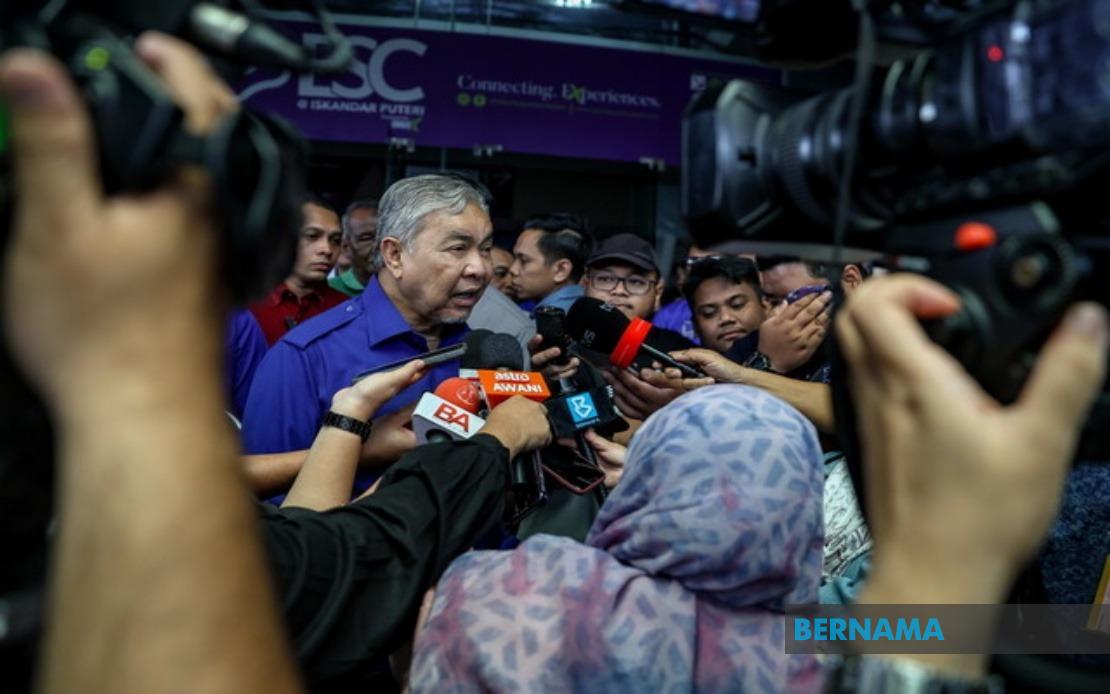
Deputy Prime Minister Datuk Seri Dr Ahmad Zahid Hamidi has set the end of this year as the target for completing the establishment of the Technical and Vocational Education and Training Commission, signalling the government's commitment to overhauling its vocational education framework. The announcement, made at a TVET roadshow in Iskandar Puteri, reflects accelerating efforts to modernise Malaysia's skills development infrastructure at a critical time when employers increasingly demand practical qualifications alongside traditional academic credentials.
The new commission will supersede the existing National TVET Council, marking a structural evolution in how the government approaches technical and vocational training. According to Ahmad Zahid, who chairs the outgoing National TVET Council, this transition represents a strategic shift toward a more robust institutional model. The change aligns Malaysia with governance practices adopted by developed economies that have similarly elevated vocational education bodies to independent commission status, lending greater institutional weight and operational autonomy to their mandates.
The pathway to establishing the commission involves several procedural stages that are currently underway. Extensive consultation sessions with various stakeholders—including educational institutions, industry bodies, employer associations, and student representatives—are being conducted to ensure the commission's structure and mandate reflect diverse needs across Malaysia's economy. Ahmad Zahid explained that only after these engagement exercises conclude will the government proceed to submit a comprehensive Cabinet paper for ministerial approval, despite policy approval already being in place.
Legislative approval presents another critical hurdle. While Cabinet endorsement is expected relatively soon, securing parliamentary sanction requires tabling the enabling legislation in both the Dewan Rakyat and Dewan Negara. The government is proceeding cautiously through this phase, recognising the legal complexities inherent in establishing a new statutory body. Ahmad Zahid acknowledged that careful legal vetting is essential before the bills can be introduced for debate and voting, which explains the extended timeline extending to December.
The expanded mandate of the proposed commission extends well beyond traditional policy formulation roles. Unlike bodies that primarily advise government on TVET strategy, this commission will assume direct responsibility for implementing and enforcing the policies it develops. This integrated approach—combining policy design with execution and compliance monitoring—represents a significant operational change that should improve policy coherence and reduce delays between setting standards and translating them into practice across Malaysia's technical colleges, polytechnics, and private training providers.
The timing of this institutional reorganisation coincides with broader skills shortages affecting Malaysia's manufacturing, construction, hospitality, and technology sectors. Employers consistently report difficulty recruiting workers with specific technical competencies, while youth unemployment remains elevated despite overall employment growth. A more empowered TVET commission with direct implementation authority could theoretically accelerate the alignment between training provision and labour market demands, though success will ultimately depend on funding allocation and institutional capacity.
Ahmad Zahid used the Johor roadshow to emphasise the government's broader commitment to vocational pathways as essential alternatives to university education. The TVET MARA initiative, overseen by Majlis Amanah Rakyat, represents one pillar of this strategy, providing training and placement support to disadvantaged youth. By conducting roadshows across states, the government aims to reshape perceptions of TVET among Malaysian families, particularly in rural areas, where university aspiration traditionally dominates regardless of student aptitude or labour market realities.
The deputy prime minister's remarks also reflected broader political considerations, particularly regarding youth engagement in Johor. With voters aged 40 and below now comprising approximately 52 per cent of the state's electorate—a demographic shift driven by the implementation of Undi18—political parties are investing heavily in youth-focused messaging. Ahmad Zahid's emphasis on young voters' importance in shaping state direction was framed explicitly as support for Menteri Besar Onn Hafiz Ghazi, signalling Barisan Nasional's intention to retain state-level leadership continuity.
The connection between vocational training policy and electoral positioning underscores how TVET has become embedded in Malaysia's political economy. Skills development directly affects youth employment prospects and earning potential, making it a sensitive electoral issue in states where manufacturing and construction provide substantial employment. Young voters who gain practical skills through TVET pathways are more likely to perceive government effectiveness if those qualifications yield stable employment, creating potential political dividends for administrations that successfully market and deliver quality vocational programmes.
For Southeast Asian observers, Malaysia's TVET commission initiative represents part of a regional trend toward institutional professionalisation of skills training. Vietnam, Thailand, and Indonesia have similarly undertaken structural reforms to strengthen vocational education governance, responding to labour mobility pressures within Association of Southeast Asian Nations frameworks. As cross-border worker migration increases, establishing recognised, standardised TVET certifications becomes increasingly valuable, allowing graduates to seek employment across regional labour markets.
The government's confidence in meeting the year-end deadline will be tested by the complexity of drafting legislation that balances institutional independence with political oversight and budget allocation mechanisms. Parliament will scrutinise whether the commission's governance structure ensures meritocratic decision-making or inadvertently centralises control. These technical legislative details, though procedurally unglamorous, will substantially determine whether the new commission effectively improves TVET outcomes or merely reshuffles administrative structures without deepening Malaysia's skills capacity.
Implementation success ultimately hinges on three factors: adequate recurrent and capital funding, recruitment of skilled leadership and technical staff, and institutional coordination with education institutions and private sector employers. The government's roadshow approach suggests awareness that public buy-in and stakeholder cooperation remain critical. If the commission reaches full operation by early 2025, it will face immediate pressure to demonstrate that reorganisation translates into improved graduate employment outcomes and employer satisfaction with training quality across Malaysia's regions.

