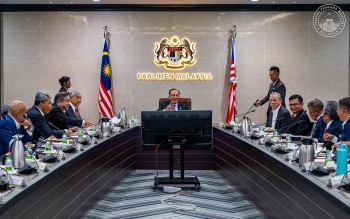
Prime Minister Datuk Seri Anwar Ibrahim has instructed two key government agencies to intensify dialogue with the nation's manufacturing sector as companies grapple with escalating expenses triggered by international supply chain instability. The directive came following a session of the National Economic Action Council chaired by Anwar on Monday, where policymakers reviewed contemporary measures aimed at reinforcing the strength of Malaysia's industrial base. In his capacity as both premier and finance minister, Anwar outlined the government's commitment to understanding and resolving the financial strain affecting factory operators across multiple industries.
The focus of these engagement efforts will centre on the plastics manufacturing industry, a sector that functions as a critical input supplier to numerous high-value Malaysian industries. Beyond mere production of plastic goods, the sector underpins the supply chains of food and beverage packaging manufacturers, electronics producers, vehicle makers, and companies producing medical and pharmaceutical devices. The interdependencies within these networks mean that disruptions to plastic production can cascade rapidly through the broader economy, making the health of this foundational sector a matter of strategic national importance. By targeting this industry specifically, the government acknowledges that stabilising one pillar of manufacturing can have beneficial ripple effects across the entire industrial ecosystem.
Economy Minister Akmal Nasrullah Mohd Nasir provided detailed context about the plastics sector's economic contribution and market composition. The industry generated sales revenue of RM62.69 billion during 2025, representing a decline from the RM64.78 billion recorded in 2024. This contraction underscores the real pressures manufacturers are experiencing. The market breakdown reveals concentrated dependencies: packaging applications represent the largest segment at forty-five per cent of total sales, while the electrical and electronics sector accounts for twenty-nine per cent of demand. These two categories alone constitute three-quarters of the market, indicating significant risk concentration.
The vulnerability of Malaysia's industrial structure becomes apparent when one considers what occurs when the plastics industry faces strain. The ripple effects extend far beyond plastic producers themselves. Food packaging manufacturers find themselves unable to source raw materials at stable prices, potentially disrupting the export-oriented food processing sector that represents a valuable component of Malaysia's manufactured exports. Electronics companies dependent on plastic housings, connectors, and components for their products face either production delays or compressed margins. The automotive industry, which contributes substantially to Malaysia's export revenue, relies on plastic components for interior trim, sealing systems, and electronic housings. Medical device manufacturers face particular urgency given regulatory requirements and quality standards that cannot be compromised.
The government's recognition of these interconnections marks a shift toward more sophisticated economic management that appreciates complex supply chain relationships. Rather than treating the plastics industry as a standalone sector, policymakers are viewing it through the lens of its downstream effects on sectors with greater international competitiveness and export significance. This systems-thinking approach suggests that the directed engagements between MITI, the Economy Ministry, and manufacturers will likely focus on identifying bottlenecks and exploring whether government support mechanisms can improve conditions without creating market distortions.
The timing of this initiative reflects growing concern about the sustained nature of global supply disruptions. Unlike temporary shocks that might resolve themselves, ongoing pressure on international shipping routes, raw material availability, and logistics costs suggests that Malaysian manufacturers face a prolonged period of elevated expenses. Companies cannot simply wait for conditions to normalise; they need immediate solutions or risk losing competitiveness. The government's willingness to engage directly signals recognition that market forces alone may be insufficient to maintain Malaysia's manufacturing competitiveness during this difficult period.
For Malaysian manufacturers, the prospect of intensive engagement with government agencies offers potential avenues for relief. These conversations could explore options ranging from temporary tariff relief on imported raw materials, to financing schemes that help companies weather periods of margin compression, to regulatory adjustments that reduce operating costs without compromising standards. The specificity with which the government has identified the plastics sector suggests these discussions will move beyond general statements toward concrete proposals tailored to the actual circumstances manufacturers face.
The involvement of both MITI and the Economy Ministry indicates a coordinated approach combining trade policy expertise with broader economic strategy. MITI can leverage its relationships with industry bodies and exporters, while the Economy Ministry can ensure that responses align with fiscal priorities and broader macroeconomic management. This institutional coordination should produce more coherent and effective policy responses than siloed government action.
For Southeast Asia more broadly, Malaysia's approach to managing supply chain pressures carries implications. The region competes intensely for manufacturing investment and export market share. Countries that demonstrate capacity to support their industries during challenging periods while maintaining sound economic management may attract manufacturing operations relocating from China or other higher-cost locations. Conversely, sectors facing unresolved cost pressures risk losing competitive position or seeing investment diverted elsewhere. Malaysia's decision to engage proactively positions the country as responsive to industry needs.
The sustainability of Malaysia's manufacturing base depends fundamentally on whether companies can maintain profitability despite current headwinds. The government's engagement initiative represents an acknowledgment that manufacturing employment, export revenues, and economic diversification require more than passive reliance on global market clearing. By directing specific ministries to conduct focused dialogues and develop tailored solutions, the administration has signalled that manufacturing sector health matters to national economic strategy. The results of these engagements will indicate whether the government possesses both the willingness and capacity to implement meaningful support.

