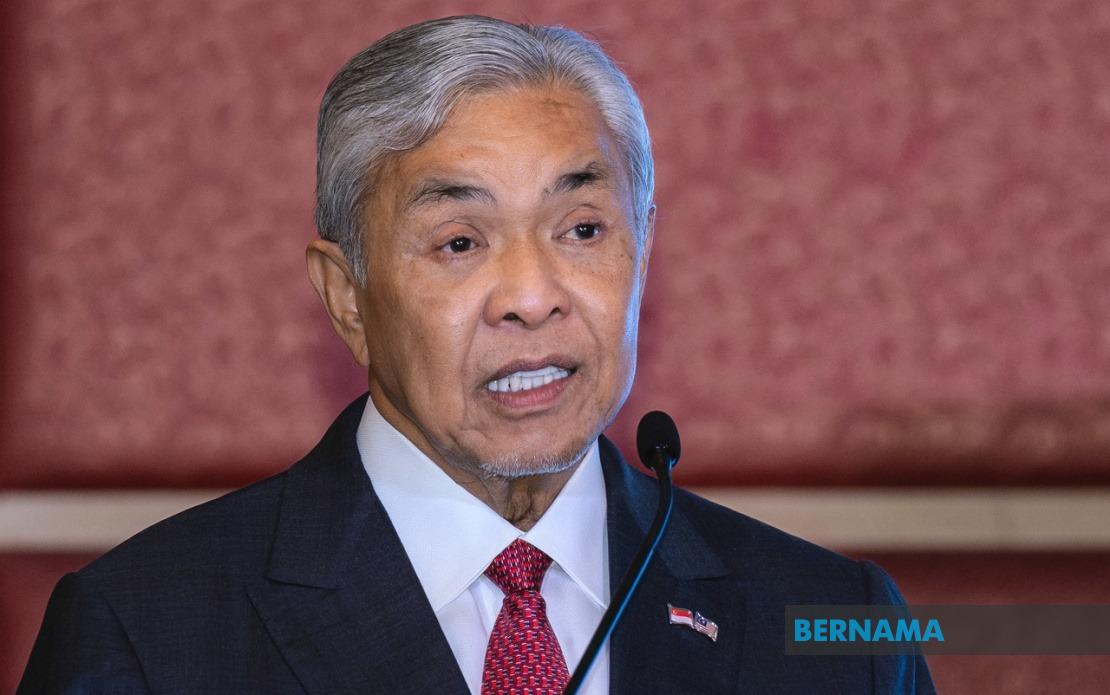
Malaysia is charting an independent course in managing its refugee and asylum seeker populations through a domestically developed framework that sidesteps reliance on international entities. Deputy Prime Minister Datuk Seri Dr Ahmad Zahid Hamidi disclosed this strategic shift, underscoring the government's commitment to addressing the complex humanitarian and security dimensions of refugee management within Malaysia's territorial and institutional boundaries. The approach is grounded in National Security Council Directive No. 23, a comprehensive policy instrument that Prime Minister Datuk Seri Anwar Ibrahim formally endorsed on June 14, 2023, establishing the legal and operational foundation for this new management paradigm.
The proposed mechanism represents a deliberate recalibration of how Malaysia approaches the presence of refugees and asylum seekers on its soil. Rather than delegating responsibility to international organizations or external entities, the government envisions a framework that integrates enforcement, policy coordination, and welfare provision under unified national oversight. This domestically controlled approach allows policymakers to align refugee management directly with broader national security objectives and socioeconomic priorities, rather than conforming to external frameworks that may not reflect Malaysia's unique circumstances or interests. The directive, which underwent revision in 2023, now serves as the operational blueprint guiding multiple government agencies and ministries in their coordinated response to refugee-related issues.
A critical component of the new framework involves balancing stringent law enforcement with social responsibility toward vulnerable populations. Ahmad Zahid acknowledged in parliamentary remarks that effective refugee management cannot rely solely on coercive measures; instead, it demands a calibrated approach that recognizes both Malaysia's legitimate sovereign interests and its humanitarian obligations toward those fleeing persecution. This equilibrium represents a philosophical shift from purely security-centric policies, recognizing that sustainable refugee management requires integrating welfare considerations into the enforcement landscape. The government has committed to providing qualified refugees access to essential services encompassing healthcare, educational opportunities, and employment pathways—measures designed to reduce marginalization and facilitate integration where appropriate.
The regulatory framework also addresses a persistent challenge that has historically complicated refugee management in Malaysia: the role of enablers within local communities who profit from irregular arrangements or exploit vulnerable populations for economic gain. Ahmad Zahid specifically identified this problem, noting that enforcement effectiveness is frequently undermined by residents who prioritize personal financial interests—whether through rental income from overcrowded housing or access to inexpensive labor—over compliance with national regulations. By establishing clearer institutional roles and responsibilities under NSC Directive No. 23, the government intends to reduce opportunities for such exploitation while creating stronger accountability mechanisms for both officials and community members involved in refugee management.
The directive itself represents a comprehensive institutional reorganization, explicitly delineating the functions and responsibilities of each ministry and government agency participating in refugee and asylum seeker management. This clarification of institutional roles addresses a longstanding coordination gap that has frequently resulted in inconsistent policies, duplicated efforts, or regulatory vacuums. By formally assigning specific responsibilities to relevant departments—from the Immigration Department to health and education ministries—the framework creates a more coherent, integrated response architecture. Such institutional clarity is particularly important in a context where refugee populations are distributed across multiple urban and peri-urban centers, requiring coordinated action across local and federal authorities.
Malaysia's refugee situation carries particular regional significance given the substantial Rohingya population present in the country. The government currently hosts more than 126,000 registered Rohingya refugees, making Malaysia one of Southeast Asia's primary destinations for members of this persecuted ethnic group. The introduction of the Refugee Registration Document (DPP) represents a parallel administrative mechanism designed to systematize the identification and tracking of refugee populations, complementing the broader management framework outlined in NSC Directive No. 23. This registration apparatus enables more precise statistical tracking of refugee demographics and locations, facilitating better-targeted service delivery and more effective enforcement operations.
The policy shift also reflects growing recognition that Malaysia's geographic location, economic development, and existing refugee populations position the country as a de facto regional refuge destination, whether or not it has formally acceded to the 1951 Refugee Convention. Rather than passively managing an undocumented or semi-documented population, the new framework attempts to exercise proactive governance over refugee presence through registration, documented access to services, and clear policy parameters. This approach acknowledges demographic and humanitarian realities while reasserting Malaysian state authority over movements and presence within national territory.
Implementing this domestically derived framework carries significant implications for Malaysia's diplomatic posture within ASEAN and the broader international community. By developing autonomous capacity to manage refugee populations, Malaysia reduces operational dependence on organizations like the United Nations High Commissioner for Refugees (UNHCR), potentially allowing greater policy flexibility and sovereignty assertion. However, this independence must be balanced against international humanitarian standards and obligations, including customary international law principles governing treatment of vulnerable populations. The success of Malaysia's framework will likely influence other Southeast Asian nations facing similar refugee pressures, potentially establishing a regional precedent for state-led rather than internationally mediated refugee management.
The articulation of this policy framework also carries domestic political dimensions. Ahmad Zahid's parliamentary response addressed concerns from Datuk Shamshulkahar Mohd Deli regarding comprehensive refugee policy formulation, suggesting that the government recognizes refugee management as a politically salient issue requiring transparent accountability and parliamentary oversight. By anchoring the framework in a formal NSC directive rather than administrative guidelines, the government signals institutional seriousness and creates a more durable policy structure less vulnerable to shifts in administrative priorities or ministerial attention.
Moving forward, the effectiveness of this mechanism will depend on several implementation factors. Adequate resource allocation across participating agencies, sustained coordination between ministries with sometimes divergent mandates, training of personnel responsible for refugee assessment and service provision, and community engagement efforts to reduce exploitation by local enablers will all prove critical. The framework's success in balancing security imperatives with welfare provision may also influence public perceptions of refugee populations, particularly if improved service access reduces marginalization-driven social problems in areas with high refugee concentrations. Malaysia's experience with this autonomous management framework will generate important lessons for other developing countries navigating similar governance challenges involving vulnerable migrant populations.

