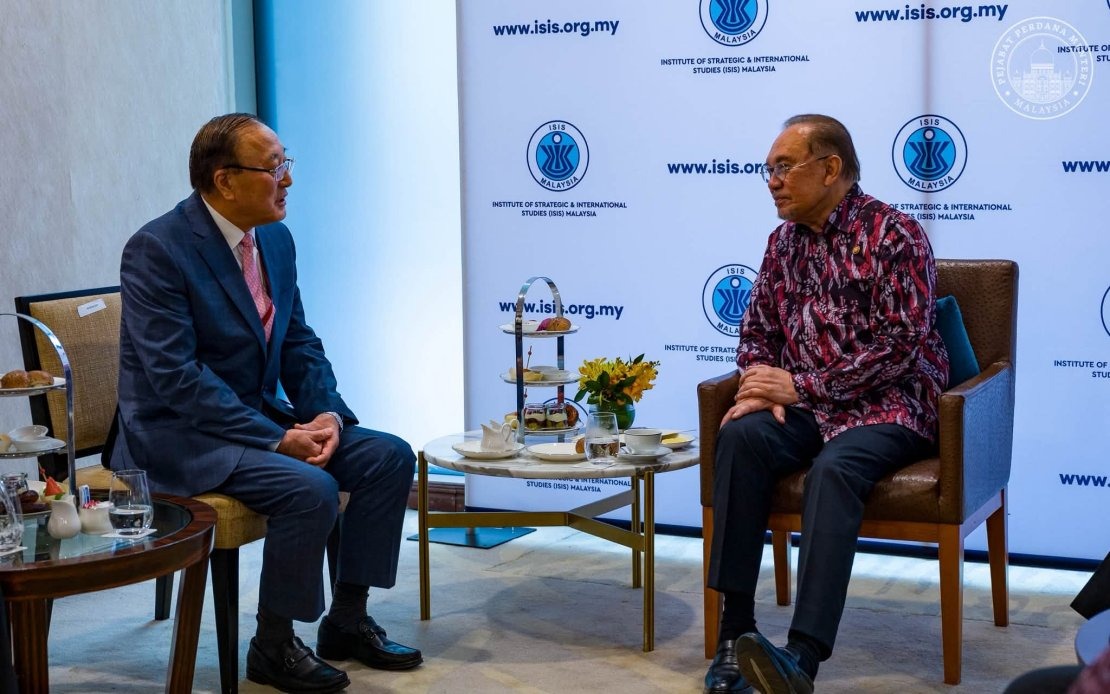
Prime Minister Datuk Seri Anwar Ibrahim has signalled Malaysia's intent to deepen its engagement with the Boao Forum for Asia (BFA), outlining a comprehensive framework for collaboration that extends across critical economic and technological domains. The announcement came during discussions with BFA Secretary-General Zhang Jun, who visited Kuala Lumpur to explore avenues for enhanced partnership between Malaysia and the influential regional think tank. Anwar's statement reflects the government's recognition that coordinated regional action has become essential in navigating an increasingly fragile global environment.
The breadth of proposed cooperation underscores the multifaceted nature of contemporary development challenges facing Southeast Asia and the wider Asian region. Malaysia has identified trade and investment as foundational pillars of the relationship, areas where the BFA's convening power and membership network can facilitate market access and capital flows for Malaysian businesses seeking to expand beyond domestic markets. By institutionalising these economic ties through the BFA platform, Malaysia positions itself as an active participant in shaping regional commerce and investment patterns that have grown more complex and multipolar in recent years.
Digital transformation emerges as a particularly significant dimension of the proposed partnership. Malaysia's economy, like those across Southeast Asia, faces mounting pressure to transition away from commodity-dependent models toward knowledge-intensive industries. The BFA's capacity to facilitate knowledge exchange and best practice sharing on digital infrastructure, e-commerce integration, and cybersecurity governance can accelerate this shift. For a nation seeking to enhance its competitive positioning amid technological disruption, such collaboration represents a pragmatic avenue for accessing global expertise and building indigenous capabilities.
Artificial intelligence development constitutes another critical frontier. As AI reshapes labour markets, productivity patterns, and business models globally, Malaysia's engagement with the BFA on this issue serves both defensive and opportunistic purposes. Defensive because Malaysia must prepare its workforce and regulatory frameworks for an AI-driven economy; opportunistic because early-stage involvement in regional AI governance discussions can help shape frameworks that accommodate Malaysian interests and capabilities. The BFA provides a platform for participating in this conversation alongside advanced economies and peers facing similar transitions.
Energy transition cooperation holds particular resonance for Malaysia and the broader Southeast Asian region. The sector remains central to Malaysia's economic structure and fiscal health, yet global decarbonisation imperatives are reshaping investment flows and technological priorities. BFA engagement offers Malaysia access to experiences from nations at varying stages of renewable energy adoption, hydrogen development, and fossil fuel phase-out planning. This knowledge becomes invaluable as Malaysia charts its own pathway toward carbon neutrality while managing economic and social disruption inherent in such transitions.
Food security coordination reflects growing anxieties across Asia about supply chain vulnerabilities and climate-induced agricultural disruption. Malaysia, as a net importer of several staple commodities, has direct interests in regional food systems stability. Collaboration through the BFA on agricultural technology innovation, supply chain resilience, and trade facilitation in agricultural products addresses both immediate food availability concerns and longer-term adaptation to climate variability. For a nation with significant agricultural hinterland, such partnerships help unlock productivity gains while contributing to regional food self-sufficiency.
Education and talent development initiatives acknowledge the reality that regional competitiveness ultimately rests on human capital quality. BFA platforms can facilitate student exchanges, researcher networks, and capacity-building programmes that strengthen Malaysia's education ecosystem while positioning the nation as a regional hub for knowledge creation and skill development. This dimension also serves Malaysia's interests in attracting high-value talent and retaining expertise that might otherwise migrate to more established regional centres.
Anwar's emphasis on regional cooperation as an antidote to geopolitical uncertainty reflects a strategic calculation that Malaysia's prosperity depends on stable, rules-based regional order. In an environment characterised by great power competition, technological disruption, and climate stress, he argues that isolation is untenable. Instead, deepened regional integration through multilateral forums like the BFA provides mechanisms for managing tensions and identifying shared interests. This positioning allows Malaysia to benefit from connectivity while maintaining its non-aligned foreign policy orientation.
The timing of this announcement carries significance amid broader shifts in regional geopolitics. As tensions between major powers intensify, forums like the BFA that emphasise inclusive dialogue and economic interdependence gain relevance. Malaysia's active participation signals that it intends to remain engaged in shaping regional norms and institutions rather than drifting toward alignment with any particular bloc. This approach aligns with ASEAN principles while recognising that regional prosperity requires extraregional partnerships grounded in mutual benefit.
The invocation of inclusiveness and dialogue-based cooperation in Anwar's statement suggests awareness that purely transactional frameworks are insufficient in addressing challenges that transcend borders. Climate change, pandemics, supply chain disruption, and technological displacement require sustained coordination grounded in shared commitment to collective welfare. By framing Malaysia's BFA engagement in these terms, the Prime Minister seeks to position the nation as both a beneficiary of and contributor to regional stability architecture.
Implementing this expanded partnership will require sustained effort across multiple government agencies and private sector actors. The breadth of proposed cooperation—spanning economic, technological, environmental, and social domains—demands coordination mechanisms and resource allocation beyond typical diplomatic channels. Malaysia's success in translating these commitments into tangible outcomes for citizens will determine whether BFA cooperation becomes a genuine driver of prosperity or remains largely symbolic engagement.

