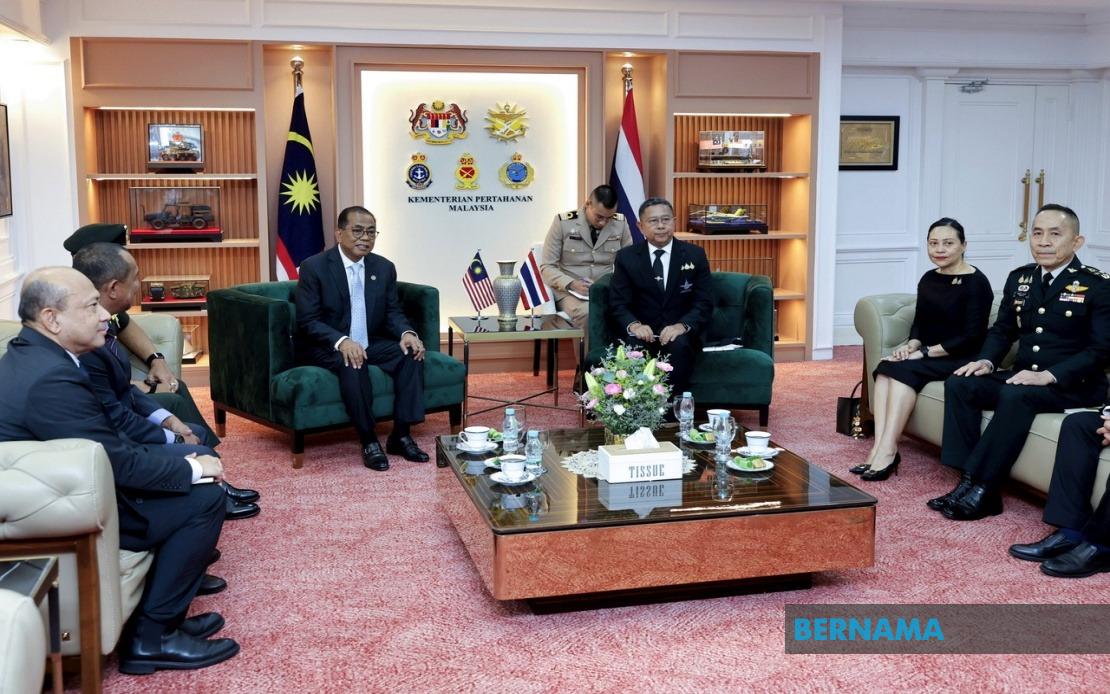
Malaysia has signalled its commitment to strengthening partnership with Thailand's freshly appointed Peace Dialogue Panel chief, Thanut Suvarnananda, as both nations seek to consolidate progress toward lasting peace in southern Thailand. Defence Minister Datuk Seri Mohamed Khaled Nordin underscored the significance of the appointment during a bilateral meeting with Thai Defence Minister Lieutenant General Adul Boonthumjaroen, emphasising that closer coordination between Kuala Lumpur and Bangkok would prove instrumental in advancing the protracted peace process in the troubled border region.
Malaysia's endorsement of Thanut's elevation reflects Kuala Lumpur's ongoing diplomatic investment in Thailand's internal stability. The appointment was announced earlier in the year, and Malaysian authorities have now formalised their support for the structural change. Mohamed Khaled expressed optimism that the leadership transition would energise efforts to consolidate peace gains, particularly given Malaysia's established role as a neutral facilitator in these negotiations. Such endorsements carry weight in ASEAN's consensus-driven diplomatic culture, where official backing from a respected neighbour can signal international legitimacy and operational coherence.
Underscoring the carefully delineated nature of Malaysian involvement, the Defence Minister clarified that his country's contribution remains circumscribed within its facilitating mandate. While Malaysia actively participates in dialogue mechanisms and provides institutional support through Datuk Rabin Basir, the official facilitator for the Southern Thailand Peace Dialogue, the actual responsibility for military operations and domestic security governance rests exclusively with Thailand. This distinction is crucial for understanding ASEAN's approach to sensitive internal conflicts, where member states maintain sovereignty over counterinsurgency operations whilst accepting third-party mediation on political and diplomatic dimensions.
The bilateral engagement also extended to practical security cooperation along the Malaysia-Thailand frontier, where law enforcement agencies face persistent challenges from smuggling networks and cross-border criminal activity. Both defence ministers agreed to intensify anti-smuggling operations and tighten controls over illicit movement of weapons, contraband, and potentially subversive actors. These operational improvements will be coordinated through the Malaysia-Thailand General Border Committee, an institutional mechanism that has functioned for decades as the primary forum for managing transboundary security matters.
The 57th General Border Committee Meeting, scheduled to take place in Malaysia during the coming year, will serve as the primary platform for advancing this expanded security agenda. The meeting docket encompasses a notably broad range of issues extending well beyond traditional law enforcement concerns. Border security infrastructure, joint military training exercises, socio-economic initiatives targeting impoverished frontier communities, and disaster response frameworks will all feature prominently. This comprehensive approach reflects recognition that sustainable peace requires addressing root causes of instability, including economic marginalisation in border regions, rather than relying solely on security operations.
Malaysia has additionally thrown its weight behind Thailand's bilateral approach to its dispute with Cambodia, endorsing Bangkok's preference for direct negotiation over multilateral mediation mechanisms. By supporting what officials term the 'ASEAN Way'—a diplomatic philosophy emphasising non-interference, quiet diplomacy, and peaceful resolution—Kuala Lumpur has positioned itself alongside Thailand's negotiating stance. However, Malaysia has simultaneously ensured that the Philippines, which assumes ASEAN's rotating chairmanship in 2026, remains apprised of regional concerns and positioned to provide diplomatic assistance if bilateral talks encounter obstacles.
The timing of the bilateral defence ministerial coincides with crucial ASEAN institutional meetings scheduled for the Philippines, specifically the ASEAN Defence Ministers' Meeting and its expanded format incorporating dialogue partners. Both Malaysia and Thailand utilised this encounter to align their positions ahead of these multilateral gatherings, ensuring coherent messaging on regional security priorities. Such pre-conference coordination represents standard practice within ASEAN, where consensus-building occurs through quiet bilateral consultations rather than public debate in plenary sessions.
Looking beyond immediate security cooperation, the two nations have committed to formalising their relationship through a Memorandum of Understanding targeting both regional security architecture and bilateral defence industry collaboration. This agreement, expected to be finalised within the current calendar year, signals intent to deepen defence ties in areas ranging from intelligence sharing to joint weapons system development. For Malaysia, such industrial cooperation offers opportunities to expand defence manufacturing capacity and technology transfer, whilst Thailand gains access to Malaysian expertise and production facilities.
The broader context for Malaysian engagement underscores the country's strategic position as a bridge between the international community and Thailand's delicate internal negotiations. As a fellow ASEAN member with territorial interests in regional stability, Malaysia cannot remain indifferent to chronic insurgency in Thailand's southern provinces. Yet ASEAN protocols constrain Malaysia from assuming an active mediatory role beyond the specific facilitation mandate it has accepted. This balancing act—maintaining visibility as a concerned neighbour whilst respecting Thai sovereignty—requires considerable diplomatic finesse that Mohamed Khaled's statements demonstrate.
For Malaysian policymakers, the peace process in southern Thailand carries direct implications for cross-border stability. Spillover effects from insurgent activity, refugee flows, and armed smuggling networks create security challenges that Malaysia must address through cooperation. Simultaneously, Malaysia's own experience with managing communal harmony and religious diversity positions it as a respected voice in regional peace efforts. The appointment of Thanut Suvarnananda and Malaysia's formal welcoming of this development thus represent not merely diplomatic courtesy but recognition of shared strategic interests in ensuring that southern Thailand's conflict does not metastasise into a broader regional destabilisation.

