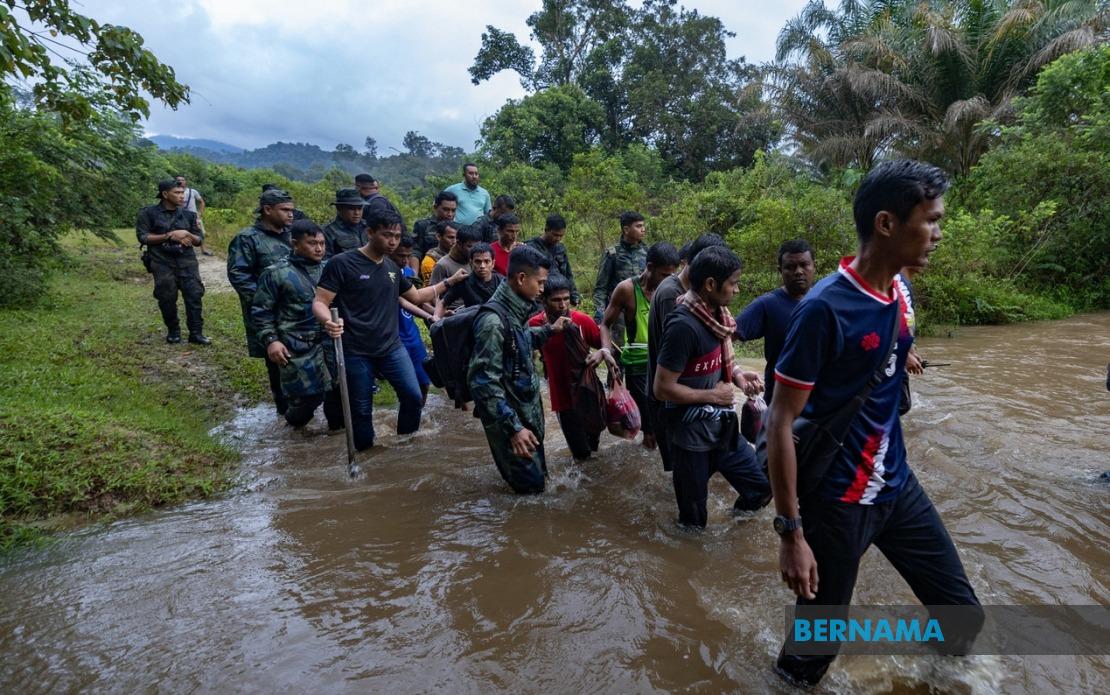
Malaysia has pledged to intensify its collaborative efforts with fellow ASEAN members and the United Nations High Commissioner for Refugees in confronting the enduring Rohingya refugee crisis, adopting what officials describe as a more deliberate and comprehensive strategy. Speaking during a parliamentary session in Kuala Lumpur, Deputy Foreign Minister Datuk Lukanisman Awang Sauni outlined the government's commitment to leveraging both multilateral platforms and international humanitarian frameworks to advance progress on this complex humanitarian challenge.
The crisis affecting the Rohingya people represents one of Southeast Asia's most pressing humanitarian emergencies, with profound implications extending far beyond Myanmar's borders. Malaysia, situated strategically in the region and bearing substantial responsibility for sheltering displaced populations, has positioned itself as a driving force within ASEAN in pushing for constructive dialogue aimed at achieving peaceful settlement. Simultaneously, the government works in tandem with the UNHCR to ensure that refugees already residing in Malaysia receive adequate protection, medical care, and other essential services necessary for basic human dignity.
At its core, Malaysia's dual-track approach reflects recognition that refugee and asylum seeker movements generate cascading regional problems that transcend individual countries. The displacement of populations creates vulnerabilities to irregular maritime migration, exposes vulnerable people to human trafficking networks, and generates security risks that destabilize neighbouring territories. These cross-border ramifications underscore why Malaysia views the Rohingya question not merely as a humanitarian matter of concern to distant parties, but as a regional security imperative demanding coordinated multilateral action.
However, Lukanisman candidly acknowledged substantial structural limitations constraining the effectiveness of current diplomatic and humanitarian initiatives. ASEAN's founding principle of non-interference in member states' internal affairs, while foundational to the bloc's cohesion, simultaneously restricts the organization's capacity to impose meaningful pressure on Myanmar to address the root causes generating refugee outflows. The consensus-based decision-making framework that characterizes ASEAN operations further constrains the bloc's ability to undertake decisive collective measures, as any single member can potentially block unified positions.
The UNHCR, meanwhile, operates within carefully defined institutional parameters. While the organization excels at delivering humanitarian relief and safeguarding refugee rights within host countries, its mandate does not extend to resolving the underlying political disputes and communal tensions within Myanmar that precipitate displacement. The organization's authority remains bounded to the domain of refugee protection rather than conflict resolution or political mediation. This delineation of responsibilities means that global humanitarian institutions, though vital, cannot independently engineer solutions to the political dynamics driving refugee production.
Consequently, existing collaborative mechanisms have necessarily concentrated their energies on damage mitigation rather than root-cause elimination. Current endeavours prioritize shielding human rights, delivering humanitarian assistance, and ensuring refugee survival and welfare. While these interventions are manifestly essential and morally imperative, they address symptoms rather than underlying pathologies, leaving the fundamental drivers of displacement unresolved and the prospect of durable solutions elusive.
Anticipating these constraints, Malaysian officials are exploring additional regional mechanisms that could enhance both burden-sharing and diplomatic leverage. One avenue involves formalizing enhanced responsibility-sharing arrangements among ASEAN states, recognizing that the refugee burden cannot sustainably rest disproportionately on frontline host countries such as Malaysia, Bangladesh, and Thailand. By institutionalizing equitable distribution mechanisms, ASEAN could theoretically strengthen collective commitment to managing regional displacement challenges.
Equally important is Malaysia's advocacy for political settlement frameworks that would create conditions enabling voluntary, dignified, and secure repatriation of the Rohingya to Myanmar. Rather than perpetual encampment in host countries, this approach seeks to facilitate return within timelines and conditions respecting refugee agency and safety. Achieving this objective requires Myanmar's political leadership to demonstrate concrete commitment to addressing communal grievances and reconstructing conditions of coexistence, a process requiring patient diplomatic engagement rather than coercive measures that ASEAN's constraints prohibit.
Malaysia's positioning on this issue reflects its broader international identity as a nation committed simultaneously to regional stability and humanitarian responsibility. The government seeks to demonstrate that these objectives need not prove contradictory—that advancing refugee protection and pursuing regional security represent mutually reinforcing rather than competing aims. By articulating this vision through parliamentary discourse, Malaysian leadership signals both domestic constituencies and international observers that the refugee challenge commands sustained governmental attention.
The pathway forward remains necessarily incremental. Malaysia acknowledges that breakthrough solutions cannot be imposed through external diktat, but must emerge through gradual confidence-building, sustained dialogue, and creative institutional innovation within ASEAN's existing frameworks. The emphasis on voluntary return, rather than forced repatriation, reflects sensitivity to refugee welfare while acknowledging that sustainable solutions require the consent and participation of all relevant communities within Myanmar itself.
For Malaysia and other Southeast Asian nations hosting Rohingya populations, the challenge involves maintaining humanitarian commitments while managing constrained resources and domestic political sensitivities. Malaysia's diplomatic approach—combining advocacy within ASEAN forums, operational partnership with international humanitarian bodies, and exploration of burden-sharing mechanisms—represents a pragmatic response to an inherently difficult situation. Success will ultimately depend not merely on the strategies Malaysia and its partners pursue, but on political developments within Myanmar itself and the international community's sustained investment in supporting regional solutions.

