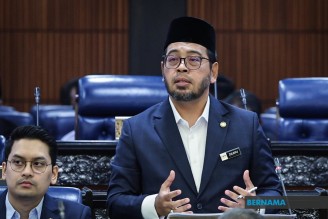
The Malaysian government has embarked on a comprehensive restructuring of Tabung Haji's governance framework, committing substantial resources to prevent the recurrence of the financial mismanagement that nearly crippled the Islamic pilgrimage savings institution. At a lengthy special sitting of Parliament on August 12 lasting over ten hours, ministers outlined an extensive package of legislative amendments and regulatory changes designed to fortify the institution's financial resilience and restore public confidence in one of Malaysia's most crucial savings vehicles for Muslim citizens planning the hajj pilgrimage.
The centrepiece of the reform initiative involves transferring supervisory authority over Tabung Haji's investment portfolio to the Securities Commission, while preserving the institution's operational integrity and maintaining the Ministry in the Prime Minister's Department (Religious Affairs) as custodian of hajj-related functions. A task force comprising Tabung Haji chairman Tan Sri Abdul Rashid Hussain, Bank Negara Governor Datuk Seri Abdul Rasheed Ghaffour, and Securities Commission chairman Datuk Mohammad Faiz Azmi has already examined the recommendations of the Royal Commission of Inquiry and developed detailed proposals awaiting Cabinet consideration. This regulatory separation represents a fundamental shift in institutional architecture, recognising that the institution's dual mandate—managing both pilgrim savings and sophisticated investment portfolios—had created conflicts that contributed to its earlier difficulties.
The scale of Tabung Haji's historical losses underscores the gravity of the governance failures that prompted the RCI investigation. Minister in the Prime Minister's Department (Religious Affairs) Dr Zulkifli Hasan disclosed that accumulated losses had approached RM13 billion, while the government faced potential exposure to approximately RM74.5 billion in liabilities had panic withdrawals escalated during the 2018 confidence crisis. These figures crystallise the systemic risk that Tabung Haji represented to Malaysia's financial ecosystem and justify the comprehensive overhaul now being implemented. Seven of fourteen deeply troubled investments recorded total losses of 100 per cent, whilst Tabung Haji's exposure to Putrajaya Perdana Bhd had inadvertently entangled the institution with the disgraced 1Malaysia Development Bhd network, a connection that damaged public trust irreparably.
Finance Minister II Datuk Seri Amir Hamzah Azizan emphasised that the government would pursue accountability rigorously without preferential treatment or concealment, despite the painful reality of these revelations. The commitment to transparency extends to the proposed amendments to the Tabung Haji Act 1955, which will explicitly prohibit sitting politicians from serving as board directors—a prophylactic measure designed to insulate investment decisions from political interference. Future profit distributions, known as hibah under Islamic financial principles, will be calculated exclusively from audited accounts rather than projections or discretionary determinations. Each decision regarding Tabung Haji's operations will henceforth be evaluated against a single criterion: the interests of the Muslim community, or ummah, whose savings the institution stewards.
The Parliamentary debate revealed broader systemic concerns about Malaysia's regulatory framework for non-bank financial institutions. Aminolhuda Hassan, representing Sri Gading, advocated for establishing a unified regulatory authority to oversee major non-bank institutions including the Employees Provident Fund (EPF), Permodalan Nasional Bhd (PNB), Retirement Fund Incorporated (KWAP), the Armed Forces Fund Board (LTAT), and Tabung Haji itself. Currently, Malaysia lacks a single supervisory body responsible for prudential oversight, systemic risk assessment, and governance standards across this critical sector. The fragmented regulatory landscape that allowed Tabung Haji's deterioration to progress unchecked for years represents a vulnerability affecting other major savings vehicles upon which Malaysian workers and service members depend, and the proposal to consolidate oversight deserves serious consideration as part of broader financial system strengthening.
Tabung Haji's structural vulnerability to income concentration emerged as another focal point of Parliamentary concern. Young Syefura Othman, the Bentong MP, highlighted the institution's dangerous reliance on sukuk income from UJSB, which according to the RCI report contributed nearly 26 per cent of annual revenue. This concentration created pressure to maintain returns through increasingly aggressive investment strategies and exposed the institution to liquidity shocks when sukuk income fluctuated. Diversifying revenue streams and reducing dependency on a single asset class will be essential to the institution's long-term stability and capacity to deliver reliable returns to depositors who have entrusted their hajj savings over decades.
The Royal Commission of Inquiry, whose 211-page report was released publicly on July 29 following its presentation to the Yang di-Pertuan Agong on August 30, 2022, identified critical weaknesses in management and operational practices spanning 2014 to 2020. The RCI advanced 25 specific recommendations for institutional improvement, and remarkably, Tabung Haji management had already implemented 75 per cent of these proposals by the end of July 2023, demonstrating responsiveness to the findings. However, legislative amendments and regulatory restructuring require Parliamentary approval and governmental coordination across multiple agencies, explaining why the full implementation programme extends beyond the current fiscal period.
The implications for Malaysian Muslim pilgrims and depositors are substantial. Tabung Haji serves as the primary savings mechanism for millions of Malaysians planning the hajj, and the institution's near-collapse would have devastated pilgrimage aspirations across the community. The regulatory reforms now being implemented provide structural safeguards that should prevent similar crises, though oversight mechanisms remain only as effective as their enforcement. The prohibition on active politicians from directing the institution addresses a critical governance vulnerability that enabled conflicts of interest and political pressure to distort investment decisions in previous years.
Regionally, Malaysia's Tabung Haji experience offers cautionary lessons for other Southeast Asian nations with substantial Muslim populations contemplating comparable savings institutions. Islamic financial governance requires robust regulatory frameworks that accommodate religious principles whilst maintaining prudential standards equivalent to conventional financial institutions. The intersection of religious mission and commercial investment management requires careful institutional design, transparent decision-making processes, and effective external oversight—precisely the elements that the current reforms aim to establish.
The government's commitment to these reforms reflects recognition that restoring confidence in Tabung Haji demands not merely administrative adjustments but structural transformation. The transfer of investment oversight to the Securities Commission, the constitutional bar on political board participation, the alignment of profit distributions with audited accounts, and the pursuit of accountability without exemptions represent a comprehensive recalibration of institutional incentives and safeguards. Success will ultimately depend on whether these legal and regulatory changes translate into sustained improvements in investment discipline, risk management, and governance culture—a transformation that will require consistent vigilance from regulators, transparent performance reporting, and continued Parliamentary oversight in coming years.

