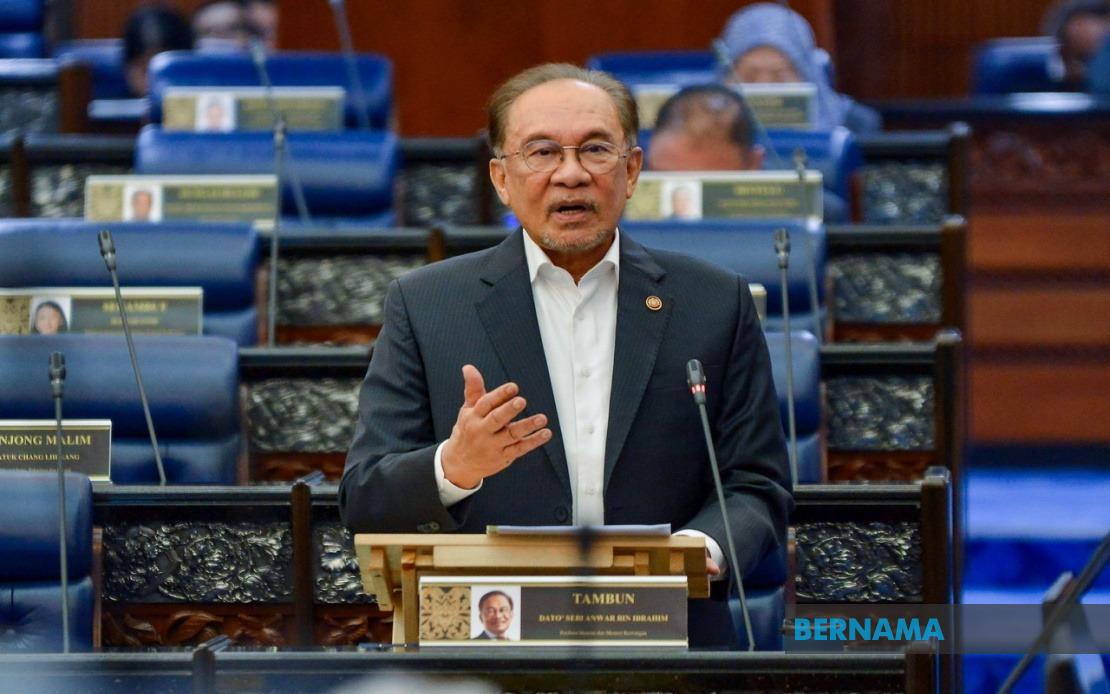
Prime Minister Datuk Seri Anwar Ibrahim has instructed the Transport Ministry to undertake discussions on utilising ports situated along Malaysia's frontier with Thailand and facilities in Penang, framing the initiative as part of broader efforts to reinforce infrastructure and logistics capabilities in the border zone. The directive emerges from high-level talks between Anwar and Thai Prime Minister Anutin Charnvirakul during the latter's recent visit to Malaysia, signalling renewed regional cooperation on transport connectivity at a time when Southeast Asian governments are prioritising cross-border economic corridors.
The Malaysian premier disclosed these developments while responding to parliamentary questions during Ministerial Question Time in the Dewan Rakyat, addressing concerns raised by Datuk Adnan Abu Hassan, the Member of Parliament for Kuala Pilah, regarding government initiatives to catalyse infrastructure and logistics expansion across the Malaysia-Thailand boundary. Anwar's response underscores the administration's commitment to translating bilateral discussions into concrete policy outcomes, particularly in transport and port management sectors that remain critical for regional trade flows.
Among the facilities set to feature in these port-utilisation discussions are emerging maritime hubs including the Sanglang port and the Perlis Inland Port, commonly known as PIP. These installations represent relatively recent additions to Malaysia's port infrastructure landscape and have been positioned as strategic assets for capturing economic benefits from border-region development initiatives. By incorporating these newer facilities into broader connectivity planning, the government appears intent on maximising their economic spillover potential rather than allowing them to remain underutilised assets.
The emphasis on port infrastructure reflects a wider transport agenda that extends beyond maritime considerations alone. During his parliamentary remarks, Anwar noted that discussions with the Thai delegation touched upon railway connectivity and tourism dimensions as well, suggesting a holistic approach to border-region development that recognises transport as a multi-modal challenge. The mention of a recently inaugurated new route hints at expanding terrestrial connections, though the Prime Minister refrained from elaborating on specific projects during his parliamentary address.
Thailand's interest in port transport infrastructure signals Bangkok's recognition that maritime gateways in Malaysia could serve broader Southeast Asian supply chains. Thai Prime Minister Anutin's specific mention of port-related matters during his Malaysia visit suggests that Thailand views these facilities as potential conduits for Thai exports and imports, particularly given that Perlis sits directly adjacent to Thailand's southern provinces. The bilateral focus on Penang ports, meanwhile, reflects that state's enduring significance as one of Southeast Asia's major maritime hubs and its strategic position relative to regional shipping lanes.
The Perlis Inland Port represents a particularly intriguing development trajectory. As an inland facility, PIP differs from traditional deepwater ports and is designed to serve hinterland regions, potentially offering Thai businesses more efficient access to Malaysian and broader regional markets without requiring navigation of congested coastal shipping routes. Such facilities are increasingly prevalent across Southeast Asia as governments seek to decongest major metropolitan ports while distributing economic benefits to secondary urban centres.
The border corridor development angle reveals how both nations are attempting to harness geographical proximity for mutual economic advantage. Rather than viewing borders primarily as barriers, the Malaysia-Thailand approach increasingly conceptualises them as zones of integration where coordinated infrastructure investment can generate growth on both sides. This reflects broader regional trends, including the ASEAN integration agenda and bilateral initiatives designed to transform peripheral areas into economic engines.
For Malaysian stakeholders, particularly those in Perlis and Penang, this policy direction carries significant implications. Enhanced port infrastructure could translate into improved shipping options, reduced logistics costs for local exporters, and potentially increased container volumes handling. The agricultural and manufacturing sectors in northern Malaysia, which have historically faced disadvantages relative to more developed southern regions, could benefit from improved export corridors, particularly those serving ASEAN markets.
The government's framing of port development as intertwined with tourism expansion indicates awareness that border regions can serve multiple economic functions simultaneously. Tourism infrastructure development alongside port modernisation suggests a deliberate strategy to position the Malaysia-Thailand border not merely as a commercial frontier but as a destination zone capable of attracting both trade and leisure visitors. This diversification approach may prove crucial for sustainable development in smaller states like Perlis.
However, realising these ambitions requires substantial capital investment and regulatory harmonisation between the two nations. Port operations involve complex arrangements regarding customs procedures, security protocols, and environmental standards that necessarily span borders. The Transport Ministry's forthcoming discussions will need to address such technical dimensions alongside broader strategic considerations, requiring expertise in maritime law, logistics management, and bilateral coordination.
The timing of these announcements also warrants consideration. Both Malaysia and Thailand are grappling with post-pandemic economic recovery and intensifying regional competition for trade flows, particularly as supply chains reconfigure following disruptions of recent years. Enhancing border port infrastructure positions both nations to capture shifting international commerce patterns and reinforces their roles within emerging Indo-Pacific supply chains.
Moving forward, the substantive outcomes of Transport Ministry deliberations will determine whether current rhetoric translates into functional improvements. The involvement of multiple jurisdictions—federal transport authorities, state governments in Perlis and Penang, and Thai counterparts—introduces coordination complexity. Success will require not merely administrative directives but sustained inter-governmental cooperation and potentially substantial financial commitment to modernising facilities and streamlining cross-border procedures that currently impede efficient port utilisation.

