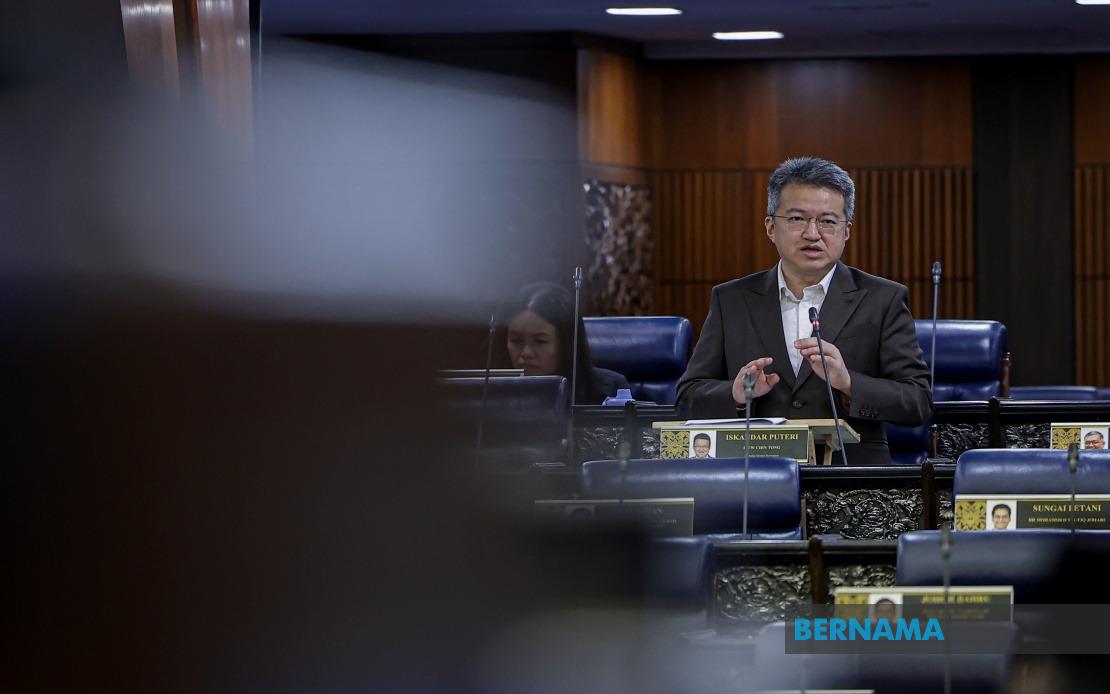
Malaysia's government is pursuing an ambitious overhaul of its governance structures and financial management systems to ensure that the 1Malaysia Development Berhad scandal cannot be repeated. Speaking in Parliament, Deputy Finance Minister Liew Chin Tong outlined how the MADANI administration under Prime Minister Datuk Seri Anwar Ibrahim has prioritised institutional strengthening as a cornerstone of its broader economic strategy, particularly given the lasting damage inflicted by the 1MDB affair on the nation's credibility and standing in global markets.
The 1MDB scandal, which unfolded over several years and attracted intense international scrutiny, left deep scars on Malaysia's reputation as a reliable and transparent investment destination. The affair triggered investigations by foreign enforcement agencies, sparked cross-border legal proceedings, and prompted widespread negative media coverage that fundamentally altered how the world perceived Malaysia's governance standards and public administration. This reputational damage created substantial headwinds for policymakers seeking to attract foreign direct investment and maintain confidence among international business communities and financial markets. The fallout extended beyond purely financial metrics, creating a persistent perception challenge that required systemic remedies rather than superficial corrective gestures.
Recognising the gravity of this legacy, the government has enacted the Public Finance and Fiscal Responsibility Act 2023, which represents a watershed moment in Malaysia's approach to managing public money. The legislation establishes clear guardrails around fiscal discipline and explicitly curtails the discretionary authority that enabled the mismanagement of public resources in previous administrations. By codifying principles of financial accountability at the statutory level, the government has created a framework that transcends any individual minister or administration, making it structurally more difficult for similar abuses of executive power to occur in future.
Beyond the Public Finance and Fiscal Responsibility Act, the government has fundamentally restructured the Auditor-General's mandate through amendments to the Audit Act. The reform introduces a "follow the public money" methodology that permits more rigorous and comprehensive tracking of how government funds flow through the system. This enhanced auditing capacity means that irregularities, diversions, and misappropriations become far more likely to be detected at earlier stages, creating stronger deterrent effects against would-be actors contemplating financial misconduct. The expanded audit framework also enables greater transparency and accountability in how state institutions deploy and account for public resources.
The administration is simultaneously drafting a Government Procurement Bill designed to introduce greater competition, transparency, and scrutiny into public purchasing decisions. Given that procurement processes were repeatedly exploited to channel funds to entities connected to 1MDB, tightening the rules governing how government contracts are awarded, evaluated, and monitored constitutes a logical second line of defence. A robust procurement framework raises the barriers to entry for those seeking to use government business as a vehicle for extracting public wealth through inflated bids, connected contracts, or opaque vendor relationships.
The broader reform programme also encompasses a comprehensive reworking of the legal and regulatory framework governing state-owned enterprises. This initiative acknowledges that SOEs can become vulnerable to the kind of mismanagement and asset-stripping that characterised 1MDB's operations. By modernising the rules under which these entities operate, the government aims to introduce clearer governance structures, more independent oversight, and stronger accountability mechanisms. Such reforms help insulate state-owned enterprises from political interference while simultaneously making it harder for connected parties to treat public entities as vehicles for private enrichment.
The financial toll of the 1MDB scandal continues to weigh heavily on Malaysia's fiscal position. Since 2017, the government has expended RM18.7 billion from its operating and development budgets simply to meet the financial obligations left behind by 1MDB's collapse. This figure reflects not merely the direct losses incurred, but the ongoing financing burden that distracts government resources from productive investments in education, infrastructure, healthcare, and other priority areas. The scale of this commitment underscores the fiscal drag that corporate mismanagement at the apex of state enterprises can impose for years after the initial crisis.
When the MADANI Government assumed office in March 2023, it faced an immediate and substantial refinancing challenge. The administration was forced to allocate RM13 billion from its development budget to redeem USD3 billion in government-guaranteed 1MDB bonds, representing approximately 13.1 per cent of that year's total development expenditure. This forced reallocation of development funds demonstrates how legacy liabilities continue to constrain the government's capacity to pursue its growth and development agenda. For policymakers seeking to invest in digital infrastructure, renewable energy transitions, or skills development, the 1MDB aftermath represents a tangible opportunity cost.
Despite this substantial fiscal inheritance and governance challenges, the government has recorded notable successes in restoring investor confidence and improving Malaysia's competitive position. The country has achieved its highest-ever approved investments and trade performance, while simultaneously climbing global competitiveness rankings. These outcomes suggest that the comprehensive governance reform programme is succeeding in its core objective of signalling to international investors that Malaysia has learned from past failures and put institutional safeguards in place to prevent recurrence. The message resonating with investors appears to be that serious efforts are underway to align Malaysian governance practices with international standards and expectations.
For the broader Southeast Asian region, Malaysia's experience with 1MDB and its subsequent reform efforts carry important lessons. Governance failures of this magnitude can impose generational costs on national development prospects and significantly undermine the capacity of governments to pursue ambitious economic transformation agendas. The Malaysian case illustrates both how institutional vulnerabilities can be exploited at the highest levels of state authority and how comprehensive, sustained reform efforts anchored in legislative change can gradually restore international confidence and market access.
The implications for Malaysian readers are substantial and multifaceted. Stronger governance frameworks and expanded audit powers ultimately create conditions for more efficient allocation of public resources, which benefits citizens through better-performing schools, hospitals, and public infrastructure. When foreign investors regain confidence in Malaysian institutions, that translates into job creation, technology transfer, and higher wages across the economy. Conversely, governance failures impose real costs on ordinary Malaysians through misallocated development budgets and reduced foreign investment. The reform agenda therefore represents not merely institutional housekeeping, but a foundational effort to create conditions under which the Malaysian economy can grow more dynamically and inclusive development goals can be pursued more effectively.

