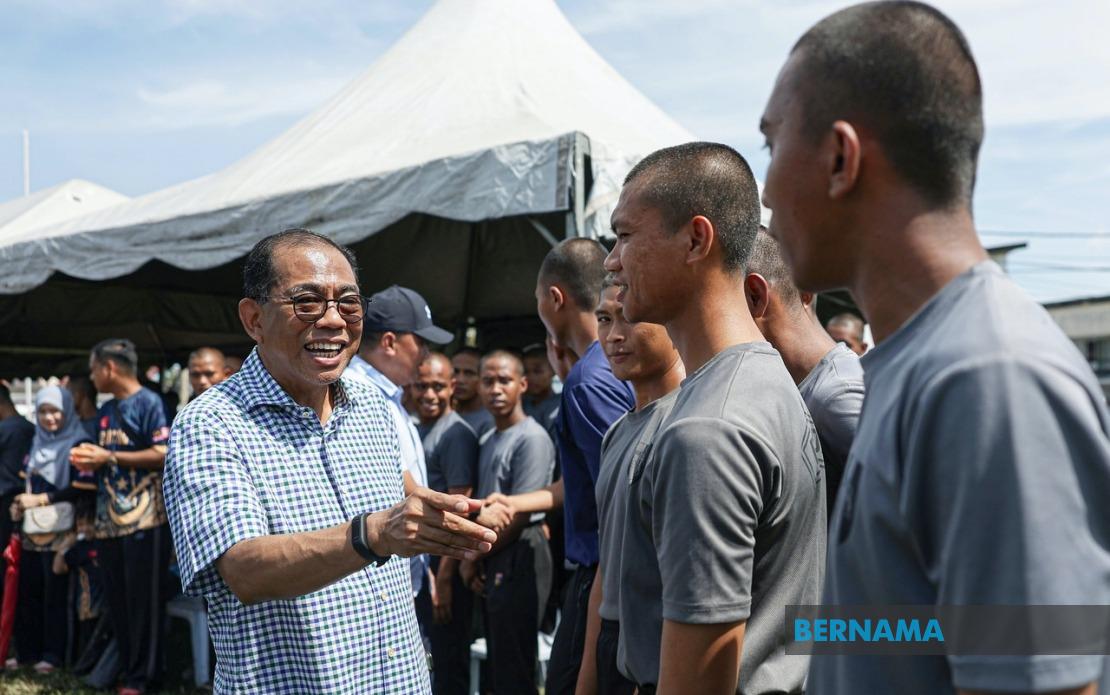
Malaysia has entered into government-to-government defence procurement arrangements with Turkey and South Korea, Defence Minister Datuk Seri Mohamed Khaled Nordin announced at Port Dickson on July 26. The move represents a significant departure from traditional open-tender procurement processes and signals Kuala Lumpur's intention to establish closer strategic partnerships with key defence suppliers while maximising value for money on major military acquisitions.
The shift towards direct G2G arrangements reflects frustration with conventional procurement methods that have historically inflated defence spending through multiple layers of intermediaries. Rather than opening defence projects to competitive bidding among original equipment manufacturers, agents and resellers, Malaysia will now negotiate directly with government-to-government counterparts for selected military projects. This streamlined approach aims to eliminate unnecessary middlemen who have traditionally added significant markups to acquisition costs, a longstanding challenge for Southeast Asian defence budgets.
Turkey and South Korea are not Malaysia's sole partners in this new framework. Defence officials indicated that Italy and France have also expressed interest in conducting defence acquisitions through similar G2G mechanisms. The government has already identified specific projects suitable for this approach and is in preliminary discussions with other potential suppliers. The breadth of interest from established defence manufacturers underscores the appeal of direct government engagement in an increasingly competitive global arms market where efficiency and transparency carry considerable weight.
Prime Minister Datuk Seri Anwar Ibrahim previously highlighted the concrete financial benefits of this methodology, citing a 15 per cent cost reduction achieved on Malaysia's Littoral Mission Ship procurement through direct negotiations with the Turkish government. This substantial saving demonstrates that eliminating intermediaries can translate directly into increased purchasing power for Malaysia's military modernisation efforts. With Malaysia's defence budget facing perpetual constraints, such efficiency gains enable the armed forces to acquire more capable platforms or invest savings into other critical capability areas.
Defence Minister Mohamed Khaled emphasised that the G2G approach delivers multiple advantages beyond mere cost savings. By negotiating directly with foreign governments rather than private vendors, Malaysia gains assurances regarding supply chain continuity and government-backed warranties on supplied equipment. This commitment from foreign governments significantly reduces the risk of supply disruptions or inadequate after-sales support that occasionally plague transactions conducted through commercial intermediaries who may lack direct government backing.
Transparency represents another cornerstone of the new procurement methodology. Direct government-to-government negotiations inherently create clearer accountability pathways compared to complex commercial arrangements involving multiple private parties. This enhanced transparency aligns with broader governmental efforts to improve public governance and combat corruption within defence acquisition processes. The simplified structure also facilitates better oversight by parliamentary committees responsible for scrutinising major defence expenditures.
Crucially, Malaysia's selection criteria for G2G partners extend beyond price considerations. The government prioritises suppliers willing to facilitate technology transfer and contribute to developing Malaysia's indigenous defence industrial capacity. This strategic dimension distinguishes Malaysia's approach from purely commercial procurement considerations. By partnering with suppliers committed to building local expertise and manufacturing capabilities, Malaysia seeks to reduce long-term dependence on foreign defence acquisitions while nurturing a competitive domestic defence sector capable of serving both national requirements and regional export markets.
The Defence Minister emphasised that procurement decisions remain driven by genuine military requirements rather than opportunistic acquisitions. Malaysia's armed services—the Army, Navy and Air Force—maintain responsibility for specifying precise equipment needs based on operational doctrine and strategic threats. This user-driven approach ensures that technology acquisitions directly address identified capability gaps rather than responding to commercial pressure or availability of surplus equipment. The government thus coordinates closely between procurement officials and uniformed service leadership to align defence spending with authentic strategic priorities.
Beyond equipment procurement, Mohamed Khaled articulated a broader vision of national defence encompassing evolving threat landscapes. Traditional security challenges such as armed conflict coexist with emerging hybrid threats including sophisticated social media disinformation campaigns, cyber attacks on critical infrastructure, and disruption to essential services such as electrical grids and water supplies. These modern security challenges require responses extending far beyond military hardware acquisitions. The government recognises that defending Malaysia effectively demands mobilisation of societal resources and public awareness.
This recognition underpins the government's promotion of the Whole-of-Nation Defence, or HANRUH, concept. Rather than concentrating defence responsibility solely within the Malaysian Armed Forces, this framework distributes accountability across government agencies, private sector organisations and individual citizens. Public understanding that national defence depends on collective vigilance—whether through reporting suspicious cyber activities, recognising disinformation, or safeguarding critical infrastructure—strengthens Malaysia's overall security posture. The Defence Minister stressed that cultivating this shared responsibility represents an essential complement to equipment modernisation efforts.
For Malaysia's defence policy, these developments signal strategic maturation in acquisition planning. By moving beyond open tenders dominated by commercial intermediaries towards direct government partnerships, Malaysia joins a cohort of nations prioritising efficiency, transparency and industrial development alongside capability acquisition. The arrangement with Turkey and South Korea, with potential expansion to European partners, diversifies Malaysia's defence supplier base while deepening strategic relationships with key regional and global powers. This multifaceted approach strengthens Malaysia's defence autonomy while managing costs in an increasingly complex security environment where both traditional and emerging threats demand comprehensive national responses.

