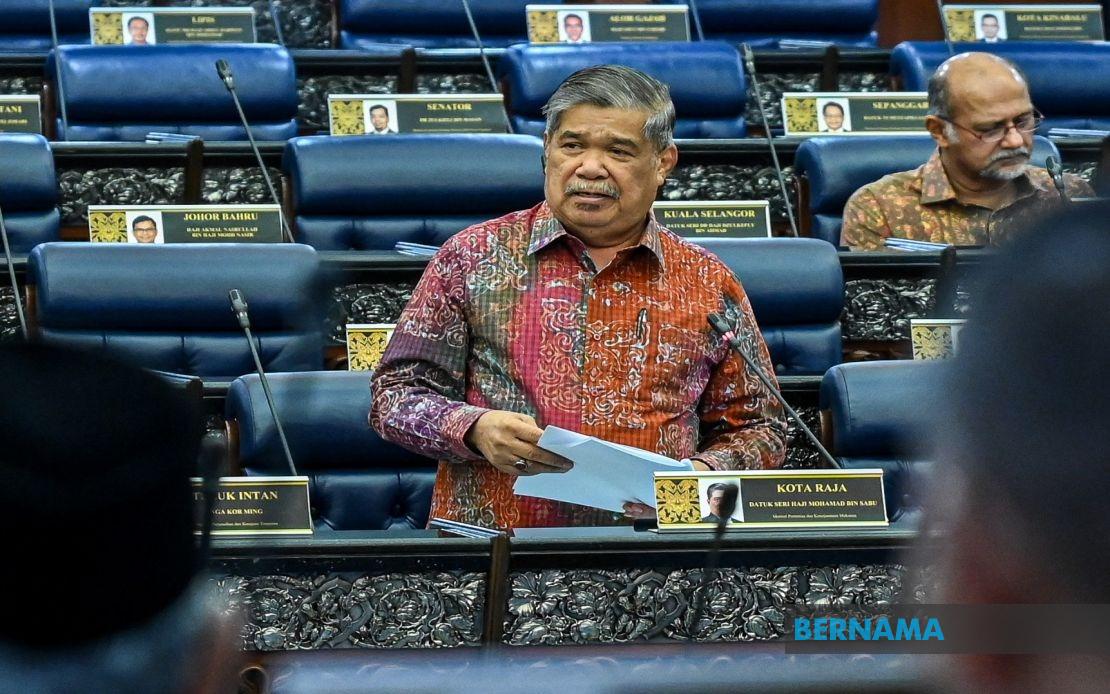
Malaysia is taking decisive action to mitigate the effects of the El Nino phenomenon on its agricultural sector, recognising that climate volatility poses a direct threat to the nation's food security and rural livelihoods. Agriculture and Food Security Minister Datuk Seri Mohamad Sabu outlined a comprehensive strategy during parliamentary proceedings, emphasising that the government views the challenge not as an isolated weather event but as a systematic risk requiring coordinated interventions across water management, crop innovation, and farmer support.
The cornerstone of the government's approach centres on optimising water resource management across the country's agricultural zones. This involves establishing real-time monitoring systems for water levels in dams and catchment areas, allowing authorities to anticipate shortages and allocate supplies more strategically. Rather than relying on ad-hoc responses when drought conditions emerge, the Ministry is implementing integrated water resource management frameworks that coordinate supply across competing demands. This proactive stance reflects growing recognition that Malaysia's tropical climate, while generally water-abundant, is becoming increasingly erratic, making predictive planning essential for agricultural sustainability.
Smart irrigation technology represents a critical component of the efficiency drive. The deployment of drip irrigation systems and advanced monitoring infrastructure enables farmers to apply water far more precisely than traditional flooding methods, potentially reducing consumption by 30 to 50 percent while maintaining yields. These technologies are particularly valuable for rice cultivation, which traditionally accounts for the largest share of agricultural water use. By transitioning to controlled application, the sector can buffer itself against periodic scarcity without necessitating dramatic production cutbacks. The government is actively promoting adoption among smallholder farmers, recognising that technological access, not merely availability, determines resilience at the farm level.
Research and development efforts are simultaneously advancing crop genetics to breed drought-tolerant rice varieties suited to Malaysia's conditions. The Malaysian Agricultural Research and Development Institute (MARDI) has been tasked with accelerating development of new cultivars that maintain productivity even when water availability declines. This represents a longer-term investment in food security, as trait-improved seeds take several years to develop, test, and distribute at scale. The Prime Minister's Food Security Meeting specifically emphasised the urgency of this research agenda, signalling that climate adaptation through agricultural innovation now ranks among the highest national priorities.
Cloud seeding operations provide an additional tactical tool when atmospheric conditions permit. While less predictable than technological or genetic interventions, precipitation enhancement offers immediate relief during critical growth periods. The government coordinates these efforts with weather forecasting and dam management, timing operations to maximise benefits. However, Malaysian policymakers acknowledge that cloud seeding cannot substitute for structural water management improvements and must remain one element within a broader adaptation portfolio.
Direct financial assistance to rice farmers has become increasingly substantial. During the first phase of support measures, the government channelled RM45.24 million to 8,224 rice farmers beginning in 2024. This escalated further, with RM38.53 million distributed to 55,058 farmers by June 30, 2026, covering 16,933 hectares affected by drought in Peninsular Malaysia's north and east regions, historically vulnerable areas. These payments recognise that even efficient farmers face income shocks when environmental conditions deteriorate beyond individual mitigation capacity. By providing targeted relief, the government prevents rural poverty spikes and maintains farmer confidence in continued agricultural engagement.
National rice stockpiling strategy provides a buffer against supply disruptions. Malaysia maintains rice reserves equivalent to approximately six months of domestic consumption, supplemented by continuous imports calibrated to demand fluctuations. This dual approach—combining domestic strategic reserves with flexible international sourcing—insulates consumers from price volatility while avoiding excessive domestic production targets that might strain water resources. The strategy reflects pragmatic acknowledgment that Malaysia's geography and climate do not permit year-round domestic self-sufficiency without intensive resource trade-offs.
Expanding rice production into new geographic areas, particularly Sarawak and Pahang, diversifies cultivation across regions with varying climate patterns and water availability. Concentrating production in historically established areas like the northwest increases systemic vulnerability, as drought affecting those zones simultaneously impacts the bulk of national supply. Geographic diversification allows unaffected regions to compensate when El Nino stress concentrates elsewhere. These development initiatives require substantial infrastructure investment but represent a medium-term productivity enhancement strategy.
Controlled environment agriculture—encompassing greenhouse cultivation, vertical farming, and protected cropping systems—offers additional insurance against weather extremes. These capital-intensive approaches reduce crop exposure to rainfall variability and temperature fluctuations, though they increase production costs. The government is encouraging gradual sector transition toward such methods, particularly for high-value commodities and livestock feed production. The livestock sector itself faces water and feed security pressures during drought periods, making controlled environment approaches relevant beyond crop production alone.
Parallel to these domestic measures, the government is addressing broader agricultural competitiveness through export market expansion. Recent challenges with durian oversupply and consequent price collapses illustrate how import-dependent markets can absorb Malaysian produce when supply chains function smoothly, but also how market saturation creates acute problems for producers. The Minister indicated that China represents significant untapped opportunity, with small-town markets substantially larger than the metropolitan centres currently supplied. Negotiations to streamline logistics and customs clearance for fresh and frozen products would facilitate deeper market penetration, stabilising prices and farmer incomes.
These interconnected measures reflect sophisticated understanding that food security encompasses production resilience, supply chain functionality, farmer economic viability, and consumer price stability simultaneously. No single intervention—whether irrigation technology, crop breeding, financial assistance, or export market development—independently solves the complex challenge posed by climate variability. Rather, the government's multifaceted approach attempts to reinforce vulnerability reduction across the entire agricultural system, from water input through final consumer access. For Malaysian policymakers, El Nino represents not merely a temporary weather pattern but a signal that agriculture must systematically adapt to sustained climate uncertainty.

