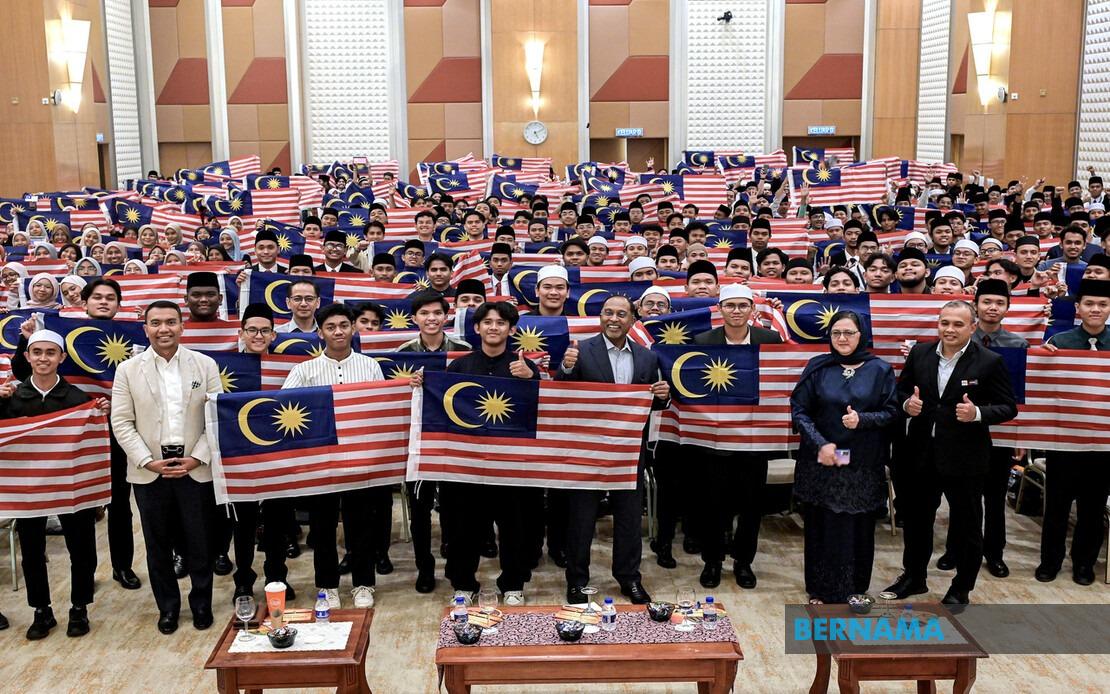
The Ministry of Higher Education has signalled heightened vigilance regarding the welfare of its nationals studying across West Asia, pledging to work closely with Malaysia's diplomatic apparatus to navigate the region's unpredictable security landscape. Higher Education Minister Datuk Seri Dr Zambry Abd Kadir outlined the coordinated approach during remarks at an education programme in Putrajaya on Saturday, emphasizing that precautionary measures would remain fluid as the situation evolves. The announcement reflects growing international concern about safety in the region, particularly following guidance from the United States urging its citizens to consider leaving.
Zambry underscored the inherent unpredictability of the current environment, noting that geopolitical decisions can shift rapidly and consequently alter assessments of regional stability. Rather than operating independently, MOHE has positioned itself to leverage Wisma Putra—the Foreign Ministry—as its primary intelligence source for real-time developments affecting students abroad. This institutional coordination recognizes that diplomatic channels often possess earlier warning indicators of deteriorating conditions than educational authorities. The ministry intends to maintain continuous dialogue with its foreign policy counterpart to track student movements, verify welfare status, and activate contingency protocols if necessary.
Currently, thousands of Malaysian students are distributed across three primary destinations in the region. Egypt hosts the largest concentration, with Malaysian scholars pursuing not only Islamic studies but also professional qualifications in medicine, dentistry, and pharmacy—fields where the country faces acknowledged skill shortages. Jordan accommodates between 1,000 and 2,000 Malaysian students, representing a more established student cohort in the kingdom. Morocco, though hosting a comparatively smaller contingent, has seen enrollments trending upward in recent years, signalling growing interest in North African educational institutions among Malaysian families. The geographic spread necessitates differentiated monitoring strategies, particularly since Malaysia maintains dedicated Education Malaysia offices in Egypt and Jordan but relies on its Egyptian mission to oversee student affairs in Morocco.
A particular cohort of 456 Malaysian students is scheduled to commence their studies across these three countries beginning September 1, having recently participated in the International Charisma Programme organized jointly by MOHE and the Malaysia Nationhood Academy. This pre-departure initiative provides incoming scholars with comprehensive briefings on local conditions, direct engagement with ministry officials, and guidance on welfare support mechanisms available through diplomatic channels. The timing of these departures coincides with heightened international scrutiny of regional developments, making such orientation sessions increasingly valuable for equipping students with situational awareness and emergency protocols.
Zambry indicated that MOHE has detected no reports of immediate threats to students currently in Egypt, Jordan, or Morocco, though the ministry maintains readiness to mobilize rapid responses should circumstances deteriorate. This stance balances operational caution with acknowledgment that present conditions have not yet necessitated emergency interventions such as evacuations or course suspensions. The ministry's preparedness posture reflects lessons learned from previous regional crises affecting Malaysian nationals abroad, suggesting institutional capacity to execute contingency plans if required. Education Malaysia offices are described as continuously prepared for potential escalation scenarios, indicating pre-positioned protocols and communication infrastructure designed to activate quickly.
The institutional architecture supporting student safety extends beyond security monitoring to encompass holistic welfare considerations. The International Charisma Programme emphasized that educational pursuits should encompass not only academic credentials but also character development grounded in the Islamic concepts of ta'lim, tarbiah, and ta'dib—respectively imparting knowledge, fostering personal development, and instilling ethical values. Zambry framed Malaysian students abroad as strategic national assets whose eventual return and professional contributions would strengthen Malaysia's long-term development objectives. This perspective elevates student welfare beyond immediate safety concerns to encompass their broader role as future contributors to national advancement.
Malaysia's own emergence as an educational destination has proceeded in parallel with expanded outbound student mobility, creating reciprocal dimensions to the country's higher education engagement internationally. The country currently attracts students from approximately 180 nations, reflecting competitive positioning of Malaysian institutions in global education markets. This diversified enrollment base insulates domestic institutions from over-reliance on any single geographic market and demonstrates robust international confidence in academic quality and institutional governance. For Malaysian students studying abroad, this parallel strength arguably enhances their credibility as ambassadors when they eventually return, as their educational qualifications derive from institutions increasingly recognized as meeting international standards.
The ministerial statements articulate an implicit recognition that regional instability poses manageable but non-negligible risks to student populations dispersed across geographically significant destinations. The coordination between MOHE and Wisma Putra reflects institutional maturity in acknowledging that educational authorities alone possess insufficient intelligence for comprehensive threat assessment. By establishing Wisma Putra as the authoritative reference point, MOHE defers to diplomatic expertise while maintaining responsibility for translating geopolitical information into student-focused protective measures. This division of labor enhances responsiveness compared to institutional silos where educational and diplomatic agencies operate independently.
The emphasis on continuous monitoring rather than reactive intervention suggests MOHE intends to maintain situational awareness that enables rapid escalation of support if conditions warrant. Pre-positioning staff readiness and ensuring operational capacity at Education Malaysia missions represents proactive institutional preparation. Should regional tensions intensify substantially, the groundwork outlined by Zambry would theoretically enable swift mobilization of additional resources, alternative study arrangements, or coordinated departures. The deliberate framing of current vigilance as non-crisis vigilance—neither dismissing concerns nor declaring emergencies—positions the ministry as professionally calibrated to circumstances rather than prone to either complacency or panic.
For Malaysian families with students or prospective students in West Asian institutions, the ministerial statements offer modest reassurance that institutional mechanisms exist to track welfare and mobilize support. Simultaneously, the acknowledged vulnerabilities and emphasis on evolving security situations present reminders that overseas study carries inherent risks requiring awareness and preparedness. The decision to maintain study programmes in Egypt, Jordan, and Morocco rather than suspend or redirect intakes suggests official assessment that risks remain manageable through enhanced monitoring rather than prohibitive. This calculus may shift as regional conditions develop, but current posturing indicates ministerial confidence that existing coordination frameworks and contingency capacities suffice for present circumstances.

